 303-825-2223

Always Available, Serving 24/7
303-825-2223


Our Boulder car accident lawyer provides dedicated legal representation for collision victims seeking rightful compensation throughout Boulder County. Car accident lawyers conduct comprehensive investigations, gather critical evidence, analyze medical records, coordinate expert testimony, and negotiate assertively with insurance companies under Colorado’s legal statutes. Accomplished car accident lawyers handle establishing liability, calculating damages, managing court proceedings, and utilizing contingency fee structures requiring payment only upon successful case resolution.
Rosenthal Injury Law has experienced car accident lawyers demonstrating extensive proficiency managing automotive collision cases throughout Colorado. These seasoned car accident lawyers possess proven trial experience and a comprehensive understanding of local judicial procedures, establishing them as premier car accident lawyers for accident victims seeking dedicated legal representation and optimal compensation outcomes. Attorney Jeremy Rosenthal brings over two decades of personal injury experience, insider knowledge from previous insurance defense work, and judicial clerkship background, positioning these car accident lawyers to effectively counter insurance company tactics and maximize client recoveries.
No two car accident claims have the same value because every collision affects people differently. The amount of compensation available in a Colorado car accident case depends on numerous legal and factual considerations, many of which are unique to the circumstances of the crash and the injuries involved.
One of the most significant factors is the severity of your injuries. Someone who recovers after a few weeks of treatment will generally have different damages than someone who requires surgery, ongoing rehabilitation, or long-term medical care. The duration of your recovery, whether you suffer permanent physical limitations, and how your injuries affect your ability to work and enjoy daily activities may all influence the value of a claim.
Economic damages can also play an important role. Medical expenses, future treatment costs, lost wages, reduced earning capacity, and other financial losses are commonly evaluated when determining compensation. Depending on the nature of the injury, state law may also allow recovery for non-economic damages, including:
In cases involving permanent physical impairment, Colorado recognizes permanent impairment damages as a separate category of damages that is not subject to the statutory cap applicable to most non-economic damages.
Liability issues may also affect compensation. If there is a dispute over how the accident occurred, or multiple drivers contributed to the collision, additional investigation may be necessary to determine responsibility. Available insurance coverage, policy limits, and the quality of the supporting evidence can also influence how a claim is resolved.
Jeremy Rosenthal personally evaluates each client’s case to identify every available source of compensation. Rather than relying on a one-size-fits-all approach, we develop a legal strategy based on your injuries, your financial losses, and the evidence supporting your claim.
Many accident victims assume they cannot pursue compensation because they believe something about the accident automatically prevents them from bringing a claim. In reality, state law often allows injured people to recover damages even when the circumstances are more complicated than they first appear.
A claim may still be available through your own uninsured or underinsured motorist coverage if you purchased that protection. Other insurance policies or potentially responsible parties may also exist depending on the facts of the collision.
Failing to wear a seatbelt does not necessarily prevent you from pursuing compensation after a Colorado car accident. Depending on the circumstances, the issue may affect certain aspects of the claim, but it does not automatically eliminate your right to seek damages.
Multi-vehicle crashes often involve multiple insurance companies and differing accounts of how the collision occurred. A thorough investigation can help determine whether more than one driver shares legal responsibility for your injuries.
An initial denial does not necessarily mean your case lacks merit. Insurance companies frequently dispute liability, question the extent of injuries, or disagree about the value of a claim. Additional evidence, expert analysis, or litigation may be necessary to pursue the compensation available under state law.
Many people want to know what their case is worth shortly after an accident. While this is understandable, there is no standard settlement amount or formula that applies to every claim. Evaluating the value of a car accident case requires a careful review of the evidence, medical records, insurance coverage, and the long-term effects of the injuries.
Compensation may include both economic and non-economic damages. Depending on the circumstances, permanent impairment damages may also be available under state law.
Future damages are another important consideration. Some injuries continue to affect accident victims long after a settlement is reached. Ongoing medical treatment, future surgeries, permanent work restrictions, or lifelong physical limitations should all be evaluated before resolving a claim. Accepting a settlement before understanding the full extent of an injury may leave an accident victim responsible for future expenses that are no longer recoverable.
At Rosenthal Injury Law, Jeremy Rosenthal works directly with every client to understand how the accident has affected their life—not just today, but in the years ahead. By thoroughly evaluating the medical evidence, financial losses, and long-term impact of the injuries, we pursue compensation that reflects the unique circumstances of each client’s case rather than relying on averages or assumptions.
The benefits of hiring a Boulder auto accident lawyer are listed below:
Partnering with Jeremy Rosenthal means working with a Denver attorney dedicated to putting injury victims first. With a focus on responsive communication and thorough case preparation, clients consistently recognize the firm’s determination to help every accident victim recover the compensation they deserve.
The best car accident lawyers in Boulder deliver focused legal advocacy for collision victims throughout Boulder County and surrounding communities. Rosenthal Injury Law brings over two decades of personal injury experience, including insider knowledge from insurance defense work that enables effective counter-strategies against claim reduction tactics. Admitted to practice in Colorado state and federal courts, Attorney Rosenthal handles all case aspects from initial consultation through settlement or trial, utilizing contingency fee arrangements requiring payment only upon successful recovery.
Attorney Jeremy Rosenthal is dedicated to helping his clients seek just compensation for their injuries regardless of the lengths he has to go to or the distances he may have to travel in order to get it. With over two decades of experience as a personal injury attorney in Colorado, Jeremy has represented clients with a wide variety of claims including slip and falls, car accidents, products liability, and dog bites. Before fighting for plaintiff’s rights, he worked in insurance defense, giving him invaluable insight into the tactics insurance companies use to lower case values. Jeremy is a SuperLawyers Rising Stars Honoree, has been rated in the Top 100 Trial Attorneys by The National Trial Lawyers, and is a member of the Million Dollar Advocates Forum.

Working with car accident attorneys at Rosenthal Injury Law in Boulder provides collision victims access to dedicated legal representation, investigative resources, and strategic advocacy throughout the claims process.
The car accident attorneys at Rosenthal Injury Law possess firsthand understanding of insurance defense strategies from prior insurance company work, enabling them to anticipate and counter tactics designed to minimize settlement values. This background provides significant advantage in negotiations and ensures insurers cannot exploit unfamiliarity with their standard claim reduction methods.
The firm’s car accident attorneys conduct detailed investigations including police report analysis, witness interviews, crash scene documentation, and surveillance footage review to establish clear liability. This comprehensive evidence gathering strengthens claims and provides documentation necessary for pursuing full compensation through settlement negotiations or trial proceedings.
Attorneys at Rosenthal Injury Law maintain established relationships with accident reconstruction specialists, medical professionals, and vocational rehabilitation consultants who provide testimony supporting injury severity and economic impact claims. These professional connections enhance case credibility and help quantify both current and future damages related to collision injuries.
Insurance adjusters frequently contact accident victims early with low settlement offers before full injury extent becomes apparent, hoping to close claims cheaply. Legal representation shields clients from this pressure and ensures settlements account for ongoing medical treatment, future complications, and long-term financial impacts.
These attorneys possess detailed knowledge of Colorado’s modified comparative negligence statute, which bars recovery if a plaintiff bears fifty percent or greater fault. This understanding enables strategic case positioning to minimize assigned fault percentages and preserve clients’ ability to recover compensation.
While most cases settle, having attorneys prepared to proceed through trial demonstrates commitment to pursuing fair compensation and often motivates insurers toward reasonable settlement offers. Trial experience and courtroom familiarity provide leverage during negotiations and ensure strong representation if litigation becomes necessary.
The settlement amounts below reflect potential compensation ranges from successful accident cases and negotiations. No fixed formula calculates individual awards since each collision involves distinct circumstances and variables. Recovery amounts depend on injury severity, liability assessment under Colorado’s modified comparative negligence statute, damage caps effective January 2025, and case-specific elements. Similar injuries may produce varying settlements based on personal impact on career, family dynamics, and life enjoyment. These ranges demonstrate possible outcomes rather than guaranteed awards for specific cases filed in Boulder County courts.
Boulder car collision attorneys can help you recover fair compensation for your accident claim. Contact us today to schedule your free consultation.
Emergency room visits, ambulance transport, surgical procedures, hospitalization stays, diagnostic imaging, prescription medications, and ongoing medical treatments create substantial medical expense claims. Attorneys recover these through detailed billing documentation and physician testimony. Victims injured in collisions often require immediate emergency care followed by extended treatment periods, with attorneys gathering comprehensive medical records demonstrating necessity and reasonableness of all compensatory damages sought for healthcare costs incurred.
Projected lifetime medical care requirements including surgeries, therapies, medications, assistive devices, and home health services create significant future cost claims. Attorneys establish these through medical professionals’ detailed life care plans and economic projections. Accident victims facing permanent injuries requiring ongoing treatment benefit from attorneys who collaborate with medical economists quantifying anticipated healthcare expenditures across remaining life expectancy, ensuring settlements account for inflation and evolving medical needs.
Physical therapy sessions, occupational therapy programs, speech therapy treatments, cognitive rehabilitation services, and specialized recovery equipment generate substantial rehabilitation costs that attorneys document through treatment plans and therapist assessments. Collision victims requiring extensive therapy to regain function and independence rely on attorneys presenting comprehensive evidence of rehabilitation expenses necessary for recovery and return to pre-accident condition.
Missed work shifts, lost salary periods, forfeited commissions, unused sick leave, and reduced income create quantifiable wage loss claims that attorneys calculate using employment documentation, pay stubs, tax returns, and employer verification letters. Workers unable to perform job duties following collisions depend on attorneys who accurately document income disruption and present clear evidence of earnings lost during recovery periods.
Permanent impairments preventing return to previous occupation, reduced work hours, inability to pursue advancement, or forced career changes create substantial future earning losses. Accident victims suffering disabilities affecting long-term employment benefit from attorneys working with vocational specialists who analyze transferable skills, labor market, and earning potential differences before and after injury.
Repair costs, replacement value, diminished resale worth, towing fees, storage charges, and rental expenses create property damage claims that attorneys recover through repair estimates, appraisal reports, and fair market valuations. Collision victims whose vehicles sustained damage rely on attorneys negotiating with insurers to ensure full compensation for replacement or restoration.
Acute injury pain, chronic discomfort, surgical recovery, medication side effects, and ongoing physical limitations create significant non-economic damages under Colorado’s $1.5 million cap (for cases filed after January 1, 2025). Accident victims enduring substantial suffering benefit from attorneys documenting pain severity through records and testimony describing impact on quality of life and abilities throughout recovery.
Anxiety disorders, PTSD, depression, sleep disturbances, relationship issues, and psychological trauma create recoverable pain and suffering damages. Collision victims experiencing emotional distress rely on attorneys presenting mental health evaluations and psychiatric treatment documentation for therapy, counseling, and care addressing accident trauma.
Reduced independence, lifestyle limitations, activity restrictions, hobby abandonment, and diminished enjoyment create significant non-economic damages. Accident victims whose injuries permanently altered life satisfaction depend on attorneys articulating profound well-being and lifestyle impacts.
Inability to participate in recreational sports, family events, social gatherings, travel, and hobbies creates major damages requiring documentation of pre- and post-injury activities. Residents with active lifestyles who can no longer engage in cherished pursuits benefit from evidence of restrictions due to collision injuries.
Permanent facial scarring, visible disfigurement, burn injuries, amputation impacts, and cosmetic deformities create major damages separate from Colorado’s non-economic caps. Victims suffering permanent visible injuries rely on attorneys presenting photographic evidence, surgeon evaluations, and psychological assessments documenting emotional and social impacts.
Paralysis, amputations, brain injuries, spinal cord damage, organ failure, and other catastrophic impairments create life-altering disabilities requiring comprehensive legal representation for full compensation. Victims facing permanent disabilities benefit from lawyers who coordinate with professionals to establish lifetime care costs and economic impact of functional limitations.
Inability to perform housekeeping, yard work, childcare, repairs, meal preparation, and household tasks creates damages for hiring services or relying on family for assistance. Victims unable to maintain homes independently rely on attorneys documenting service needs through logs, invoices, and testimony establishing reasonable costs.
Marital relationship deterioration, intimacy loss, companionship reduction, spousal support absence, and family dynamic changes create damages recoverable by injured parties’ spouses. Victims whose injuries impacted marriages and relationships depend on attorneys pursuing loss of consortium claims through testimony, counseling records, and evaluations documenting effects on marital bonds and family interactions.
Fatal collision losses including funeral expenses, burial costs, lost financial support, loss of parental guidance, grief, and relationship deprivation create wrongful death claims subject to Colorado’s $2.125 million cap for non-economic damages (post-Jan 1, 2025). Families who lost loved ones rely on attorneys to pursue comprehensive damages through economic calculations, testimony, and evidence of the deceased’s contributions and presence in survivors’ lives.
Common injuries in Boulder car accidents create devastating physical, emotional, and financial consequences requiring comprehensive medical treatment and legal representation from a skilled attorney.
Soft tissue damage requires consistent medical documentation proving injury severity and treatment necessity, as these injuries often lack visible evidence on standard imaging studies.
Insurance adjusters minimize soft tissue injury claims by questioning symptom authenticity, attributing discomfort to pre-existing conditions, or disputing prolonged treatment requirements for recovery.
Thorough medical documentation establishes injury legitimacy and demonstrates how soft tissue damage impacts daily activities, employment performance, and quality of life under Colorado’s modified comparative negligence statute.
Visible scarring and permanent disfigurement separate from Colorado’s non-economic damage caps allow additional compensation beyond standard injury settlements for appearance alterations.
Insurers minimize laceration claims by arguing minimal scarring, questioning plastic surgery necessity, or attributing healing complications to improper wound care rather than accident severity.
Photographic documentation throughout healing process strengthens claims by demonstrating scar progression and establishing permanent disfigurement affecting self-esteem and professional presentation.
Ligament injuries often require surgical reconstruction and extended rehabilitation, with attorneys documenting treatment necessity through orthopedic evaluations and demonstrating long-term functional limitations.
Insurance companies dispute surgery necessity, attribute joint damage to degenerative conditions, or question whether collision forces could produce claimed ligament tears.
Expert orthopedic testimony establishes causation between collision mechanics and joint damage while demonstrating how permanent instability affects employment capabilities and recreational activities.
Fracture severity, surgical requirements, and permanent hardware placement significantly influence settlement values, with attorneys presenting orthopedic evidence demonstrating healing complications and functional limitations.
Insurers minimize fracture claims by questioning surgery necessity, attributing healing delays to patient non-compliance, or disputing permanent disability assertions.
Comprehensive documentation demonstrates fracture severity and establishes permanent impairment percentages affecting future earning capacity and daily living activities under Colorado law.
Spinal injuries require extensive medical documentation through neurosurgical evaluations, advanced imaging, and functional assessments demonstrating permanent neurological deficits affecting mobility and independence.
Insurance companies attribute spinal damage to degenerative disc disease, question causation through biomechanical analysis, or dispute surgical intervention necessity for claimed injuries.
Expert neurosurgical testimony establishes causation while life care planners quantify lifetime medical expenses and care requirements for permanent spinal cord injuries under Colorado damage cap provisions.
Internal organ injuries create severe medical emergencies requiring immediate surgical intervention, with attorneys documenting life-threatening complications and permanent organ dysfunction affecting long-term health.
Insurers question injury severity through competing medical opinions, dispute ongoing treatment necessity, or attribute organ dysfunction to pre-existing medical conditions.
Comprehensive medical evidence establishes internal injury severity and demonstrates how permanent organ damage affects life expectancy, ongoing medical needs, and quality of life.
Chest injuries require documentation through thoracic imaging and pulmonary function testing, with attorneys establishing breathing difficulties and demonstrating how respiratory limitations affect physical activities.
Insurance adjusters minimize chest injury claims by questioning symptom duration, disputing pulmonary function testing results, or attributing breathing difficulties to pre-existing respiratory conditions.
Medical evidence demonstrates how chest injuries create permanent respiratory limitations affecting employment capabilities and physical activities requiring exertion.
Brain injuries require neuropsychological testing and expert testimony to demonstrate invisible cognitive deficits affecting employment, relationships, and daily functioning capabilities.
Insurers minimize traumatic brain injury claims by questioning diagnostic validity, attributing cognitive symptoms to psychological factors, or disputing permanent impairment assertions.
Expert neuropsychological testimony establishes cognitive deficits and demonstrates how brain injuries affect earning capacity, independence, and quality of life under Colorado’s damage cap provisions.
Psychological injuries require psychiatric evaluations and therapy documentation demonstrating how mental health symptoms affect daily functioning, relationships, and employment performance.
Insurance companies minimize psychological trauma by attributing symptoms to pre-existing mental health conditions, questioning treatment necessity, or disputing causation between accident and psychological symptoms.
Expert psychiatric testimony establishes psychological injury causation and demonstrates how mental health symptoms create permanent limitations affecting career advancement and personal relationships.
Catastrophic injuries require life care planning demonstrating lifetime medical expenses, attendant care costs, adaptive equipment needs, and home modification requirements.
Insurers attempt limiting settlement values through competing life care plans, questioning care necessity, or disputing projected lifetime expense calculations.
Comprehensive life care planning establishes lifetime care costs and demonstrates how permanent disability affects all life aspects requiring ongoing medical treatment and personal assistance.
Delayed symptom onset makes documentation crucial for proving injury severity and establishing causation between accident and whiplash symptoms affecting daily activities
Insurance companies minimize soft tissue injuries by questioning symptom validity, attributing pain to pre-existing conditions, or disputing treatment necessity
Comprehensive documentation strengthens cases by demonstrating ongoing pain and functional limitations affecting daily activities and employment capabilities under Colorado law.
Burn injuries create permanent scarring separate from Colorado’s non-economic damage caps, allowing additional compensation for disfigurement affecting appearance and self-esteem
Insurers minimize burn claims by disputing burn degree classifications, questioning surgical necessity, or attributing healing complications to improper wound care
Medical evidence establishes burn severity and demonstrates how permanent scarring affects employment opportunities, social interactions, and psychological well-being.
Vision injuries require ophthalmologic evaluations documenting visual acuity loss, with attorneys demonstrating how vision impairment affects employment capabilities and daily independence
Insurance companies dispute causation by attributing vision problems to pre-existing conditions, questioning treatment necessity, or minimizing functional impact claims
Expert ophthalmologic testimony establishes vision loss permanence and demonstrates how visual impairment affects earning capacity and quality of life under Colorado damage provisions.
Dental injuries require documentation through dental evaluations and treatment plans demonstrating restoration costs, with attorneys establishing permanent cosmetic impacts affecting self-confidence.
Insurers minimize dental claims by questioning treatment necessity, disputing cosmetic procedure justification, or attributing dental problems to pre-existing oral health conditions.
Comprehensive dental documentation establishes treatment necessity and demonstrates how facial injuries create permanent cosmetic impacts affecting professional presentation and social interactions
Crush injuries require immediate surgical intervention with attorneys documenting compartment syndrome complications, muscle death, and permanent functional limitations affecting mobility
Insurance companies dispute treatment timing necessity, question amputation justification, or attribute complications to delayed medical intervention rather than injury severity
Medical evidence establishes crush injury severity and demonstrates how permanent functional limitations affect employment capabilities and independence under Colorado law
Nerve injuries require electrodiagnostic testing and neurological evaluations documenting permanent sensory or motor deficits affecting hand function, mobility, or daily activities
Insurers minimize nerve damage claims by questioning diagnostic validity, attributing symptoms to diabetic neuropathy, or disputing permanent impairment assertions
Expert neurological testimony establishes nerve injury permanence and demonstrates how sensory or motor deficits affect employment capabilities and daily living activities.
Amputation cases require life care planning demonstrating prosthetic costs, replacement schedules, rehabilitation needs, and home modification requirements throughout lifetime.
Insurance companies attempt limiting settlements through competing life care plans, questioning prosthetic necessity levels, or disputing projected replacement costs
Comprehensive life care planning establishes lifetime prosthetic costs and demonstrates how permanent limb loss affects all life aspects under Colorado damage cap provisions
Hearing loss requires audiological evaluations documenting decibel loss percentages, with attorneys demonstrating how auditory impairment affects employment and quality of life
Insurers attribute hearing loss to age-related degeneration, noise exposure history, or pre-existing auditory conditions rather than collision trauma
Expert audiological testimony establishes causation and demonstrates how permanent hearing loss affects employment capabilities and social interactions under Colorado law
Pelvic injuries require comprehensive imaging and orthopedic evaluations documenting fracture severity, with attorneys establishing permanent mobility limitations affecting independence
Insurance companies minimize pelvic injury claims by questioning surgical necessity, disputing permanent disability assertions, or attributing complications to patient non-compliance
Medical evidence establishes pelvic injury severity and demonstrates how permanent mobility limitations affect employment capabilities and quality of life
Severe blood loss requires documentation of transfusion volumes, surgical interventions, and complications, with attorneys establishing life-threatening nature affecting long-term health
Insurers question injury severity through competing medical opinions, dispute ongoing treatment necessity, or attribute complications to medical error rather than accident trauma.
Comprehensive medical evidence establishes hemorrhagic trauma severity and demonstrates how blood loss complications affect long-term health outcomes and quality of life.
Car accident statistics in Boulder reveal significant collision patterns requiring attention from motorists, cyclists, and pedestrians throughout Boulder County communities.
Boulder experienced 1,441 traffic accidents in 2023, resulting in over 450 injuries or fatalities Safe Roads USA according to City of Boulder crash data analyzed by the Colorado Crash Data Dashboard. Boulder County recorded 19 traffic fatalities in 2024, with 12 deaths occurring in unincorporated areas and 7 in cities and towns Boulder County based on Boulder County Vision Zero tracking. Approximately 29 percent of traffic crashes in Boulder caused injury or death in 2023, while nearly 90 percent of collisions with vulnerable road users resulted in at least one injury Safe Roads USA according to Colorado Crash Data Dashboard analysis. Boulder averages approximately four collisions daily based on annual totals reported by the City of Boulder.
Of Boulder’s 1,441 total crashes in 2023, 418 caused injury or death Safe Roads USA according to Colorado Crash Data Dashboard data. Rear-end crashes represented over 32 percent of all Boulder collisions in 2023, making them the most common accident type Safe Roads USA based on City of Boulder crash records. Pedestrians and bicyclists were particularly at risk for injuries, with nearly 90 percent of collisions involving these vulnerable road users resulting in at least one injury Safe Roads USA according to the Colorado Crash Data Dashboard.
Boulder’s traffic crash patterns differ from other metro areas like Denver, with the most dangerous time to drive, bike, or walk in Boulder occurring between 2 p.m. and 5 p.m. Safe Roads USA according to Colorado Crash Data Dashboard analysis. The City of Boulder attributes this unique pattern to the city’s large student population traveling from school to work or home during afternoon hours. Weekend days demonstrate lowest crash rates due to reduced road congestion despite increased leisure travel.
The vast majority of car accidents in Boulder resulted from driver errors, like speeding, tailgating, distracted driving accidents, and failing to yield at intersections Safe Roads USA according to City of Boulder crash data. A significant number of traffic crashes in Boulder resulted from running a red light or stop sign Safe Roads USA based on Colorado Crash Data Dashboard reporting. Speeding is one of the top factors for fatal and serious crashes in the City of Boulder according to City of Boulder transportation officials.
The High Risk Network, developed as part of the 2023-2027 Vision Zero Action Plan, represents just 7 percent of city streets but accounts for 48 percent of serious- and fatal-injury crashes in Boulder according to the City of Boulder. The following locations represent Boulder’s highest-risk areas based on crash frequency and severity data from Boulder and Colorado Department of Transportation:
Car accidents occur in Boulder at approximately four collisions daily based on annual collision totals from City of Boulder crash data. The Colorado Crash Data Dashboard reports Boulder experienced 1,441 traffic accidents in 2023, averaging 3.95 crashes per day throughout the year. Daily accident frequency varies significantly based on time periods, with peak collision hours occurring between 2 p.m. and 5 p.m. according to City of Boulder transportation analysis.
Boulder auto accident lawyers provide guidance on Colorado traffic laws, insurance policy requirements, and documentation practices protecting clients from legal complications following collisions. Attorneys educate clients about modified comparative negligence rules, damage cap provisions effective January 2025, and statute of limitations deadlines ensuring timely claim filing. Legal counsel identifies high-risk driving behaviors, reviews insurance coverage adequacy, and explains rights under Colorado law preventing future legal vulnerabilities.
Following proper procedures after car accidents protects health, preserves evidence, and strengthens potential legal claims under Colorado law.
What Is A Car Accident?
Car accidents occur when vehicles collide on roads or property, causing damage, injury, or death. Severity depends on impact speed, restraint use, and collision point.
What Kind Of Attorneys Handle Car Accidents?
A car accident attorney investigates collisions, gathers evidence, and pursues compensation from at-fault drivers throughout Boulder and Boulder County.
Coverage For Car Accidents
What Is An Uber And Lyft Accident?
Uber and Lyft accidents involve rideshare vehicles colliding with other motorists, passengers, or pedestrians during active trips or driver availability periods.
What Kind Of Attorneys Handle Uber And Lyft Accidents?
A rideshare accident attorney determines driver status, examines multiple insurance policies, and establishes liability between rideshare companies and individual drivers.
Coverage For Uber And Lyft Accidents
Rear-end collisions occur when following drivers fail to maintain safe distances or react to stopping traffic ahead. A rear-end collision attorney establishes liability through tailgating evidence and brake failure analysis. Common injuries include whiplash, spinal damage, traumatic brain injuries, and soft tissue trauma. Colorado Revised Statutes Section 42-4-1008 requires reasonable and prudent following distances. City of Boulder crash data reports rear-end crashes represented over 32 percent of all collisions in 2023. Evidence includes police reports, traffic cameras, skid mark analysis, medical documentation, and vehicle damage assessments.
Common Causes
Hit-and-run accidents involve drivers fleeing accident scenes without providing identification or rendering assistance to injured parties. A hit-and-run accident attorney pursues uninsured motorist claims and criminal restitution proceedings. Injuries include severe trauma, brain injuries, spinal cord damage, and life-threatening conditions requiring emergency intervention. Colorado Revised Statutes Section 42-4-1601 criminalizes leaving accident scenes with felony penalties for injury cases. Boulder County Vision Zero tracking documents hit-and-run incidents throughout the county. Evidence includes surveillance footage, witness descriptions, vehicle debris, paint transfer analysis, and uninsured motorist policy documentation.
Common Causes
Drunk driving accidents occur when intoxicated operators cause collisions through impaired judgment, delayed reactions, and diminished motor control. A drunk driving accident attorney pursues enhanced damages and criminal restitution alongside civil compensation claims. Common injuries include catastrophic trauma, brain injuries, spinal damage, internal bleeding, and wrongful death. Colorado Revised Statutes Section 42-4-1301 establishes 0.08 blood alcohol content as legal intoxication limit. Colorado Department of Transportation reports impaired driving causes over one-third of fatal accidents statewide. Evidence includes police reports, breathalyzer results, field sobriety tests, toxicology analysis, and bar/restaurant receipts.
Common Causes
Pedestrian accidents cause severe injuries and high fatality rates because pedestrians lack physical protection when struck by vehicles at crosswalks and roadways. A pedestrian accident attorney gathers intersection camera evidence and driver records establishing fault under Colorado traffic laws. Common injuries include traumatic brain injuries, spinal cord damage, multiple fractures, internal organ trauma, and wrongful death. Colorado Revised Statutes Section 42-4-802 requires drivers to yield to pedestrians in crosswalks. City of Boulder crash data shows pedestrian incidents represented 20 percent of crashes at Pearl Street and 28th Street. Evidence includes traffic signal timing, crosswalk markings, witness statements, medical imaging, and accident reconstruction analysis.
Common Causes
Intersection accidents occur when drivers fail to yield right-of-way, run traffic signals, or misjudge gap distances during turning movements. An intersection accident attorney establishes liability through traffic control analysis and right-of-way violations. Injuries include head trauma, neck injuries, chest trauma, limb fractures, and internal damage. Colorado Revised Statutes Section 42-4-703 governs right-of-way at controlled intersections. City of Boulder Vision Zero Action Plan targets intersection improvements based on crash frequency data. Evidence includes traffic cameras, signal timing records, police citations, witness accounts, and vehicle damage patterns.
Common Causes
Rideshare and taxi accidents involve commercial passenger vehicles colliding during active trips or driver availability periods with passengers aboard. A rideshare accident attorney determines driver status, examines multiple insurance policies, and establishes liability between transportation companies and individual operators. Common injuries include whiplash, fractures, traumatic brain injuries, spinal damage, and psychological trauma. Colorado Public Utilities Commission regulates transportation network companies and taxi operations. Rideshare companies maintain $1 million liability coverage during active trips. Evidence includes app data, GPS tracking, insurance declarations, medical records, and passenger injury documentation.
Common Causes
Side-impact collisions occur when vehicles strike others perpendicular to travel direction, causing severe passenger compartment intrusion and injuries. A side-impact collision attorney proves negligence through intersection control violations and failure to yield evidence. Injuries include rib fractures, internal organ damage, head trauma, pelvic injuries, and spinal cord damage. Colorado Revised Statutes Section 42-4-702 establishes intersection yielding requirements. Side-impact crashes create high injury severity due to limited door panel protection. Evidence includes intersection cameras, impact angle analysis, airbag deployment data, medical imaging, and biomechanical assessments.
Common Causes
Head-on collisions involve vehicles striking each other front-to-front, creating catastrophic force and life-threatening injuries or fatalities. A head-on collision attorney investigates wrong-way driving, lane departure causes, and impairment factors establishing liability. Common injuries include traumatic brain injuries, spinal cord severance, multiple fractures, internal bleeding, and wrongful death. Colorado Revised Statutes Section 42-4-1001 requires driving on right side of roadway. Head-on crashes produce highest fatality rates despite representing small percentage of total accidents. Evidence includes skid marks, vehicle damage, toxicology reports, medical records, and accident reconstruction analysis.
Common Causes
Parking lot accidents occur in commercial and residential parking areas through backing collisions, pedestrian strikes, and intersection failures at low speeds. A parking lot accident attorney establishes negligence through surveillance footage and property maintenance violations. Injuries include soft tissue damage, fractures, head trauma, and pedestrian crush injuries. Colorado premises liability law holds property owners responsible for maintaining safe parking conditions. Parking lot crashes involve shared fault determinations under modified comparative negligence rules. Evidence includes security cameras, witness statements, property inspection reports, medical documentation, and damage photographs.
Common Causes
T-bone accidents occur when vehicle front strikes another vehicle’s side at perpendicular angles during intersection violations or failure to yield situations. A T-bone accident attorney proves fault through traffic control analysis and right-of-way violation evidence. Common injuries include thoracic trauma, head injuries, spinal damage, pelvic fractures, and internal organ rupture. Colorado Revised Statutes Section 42-4-703 establishes intersection right-of-way rules. T-bone collisions create severe injuries due to minimal side protection compared to front or rear impact zones. Evidence includes intersection cameras, traffic signals, police reports, medical imaging, and crash reconstruction analysis.
Common Causes
Car accident settlements involve negotiation between injured parties and insurance companies to resolve claims without trial. Car crash attorneys in Boulder gather evidence, calculate damages, and submit demand letters to insurers. Insurance adjusters evaluate liability under Colorado’s modified comparative negligence statute and make settlement offers. Negotiations continue until parties reach agreement or proceed to litigation for court resolution.
Colorado is not a no-fault state for car accidents. Colorado operates under an at-fault system requiring negligent drivers to compensate injured parties for damages. Injured victims file claims against at-fault driver’s liability insurance or pursue personal injury lawsuits. Colorado’s modified comparative negligence rule bars recovery if victims bear 50% or more fault.
Rights after car accidents protect victims from insurance exploitation and ensure access to compensation under Colorado law.
Understanding attorney necessity depends on injury severity, liability disputes, and insurance company cooperation following Boulder auto collisions.
Catastrophic injuries including brain damage, spinal cord injuries, or permanent disabilities require attorney intervention for life care planning.
Disputed fault determinations or low settlement offers necessitate legal representation to establish negligence and pursue fair compensation.
Multi-vehicle accidents with shared fault require attorneys to allocate liability percentages under Colorado’s comparative negligence statute.
Fleeing driver cases demand legal guidance pursuing uninsured motorist coverage and coordinating with law enforcement investigations.
High medical expenses and lost wages surpassing policy limits require attorneys pursuing additional compensation sources and litigation.
Adjuster pressure tactics attempting to obtain damaging statements or unlimited medical record access warrant immediate attorney consultation.
To find an experienced and reliable car accident attorney near you in Boulder, visit one of the regions listed below.
Boulder, Louisville, Lafayette, Superior, Longmont, Broomfield, Erie, Niwot, Lyons, Nederland

Denver, Thornton, Westminster, Northglenn, Commerce City, Brighton, Arvada, Golden, Wheat Ridge, Lakewood
Fort Collins, Loveland, Greeley, Windsor, Evans, Johnstown, Berthoud, Estes Park
Lakewood, Arvada, Golden, Wheat Ridge, Edgewater, Morrison, Evergreen, Conifer
Choosing car accident attorneys in Boulder requires evaluating credentials, experience, communication, and proven results handling Colorado collision cases.
1. Verify Colorado Bar Admission And Disciplinary History
Check attorney’s active Colorado license status and disciplinary records through state bar association databases.
2. Review Case Results And Settlement Amounts In Similar Cases
Examine attorney’s documented verdicts and settlements in comparable car accident cases throughout Boulder County.
3. Assess Trial Experience And Courtroom Litigation Capabilities
Confirm attorney’s willingness and ability to litigate cases through trial rather than accepting inadequate settlements.
4. Evaluate Communication Responsiveness And Client Accessibility
Test attorney’s response time to initial inquiries and availability for consultation appointments and questions.
5. Confirm Contingency Fee Structure And Cost Transparency
Verify the attorney works on a contingency basis requiring payment only upon successful recovery without upfront costs.
6. Read Independent Client Reviews And Testimonial Feedback
Research unfiltered client experiences through Google reviews, Avvo ratings, and third-party legal directory platforms.
Verifying credentials ensures basic competency while case results demonstrate actual performance. Trial experience separates settlement-focused attorneys from litigation-capable advocates. Communication assessment reveals client service quality while fee structure confirms financial accessibility. Client reviews provide authentic feedback beyond marketing materials.
Review case results and settlement amounts, assess trial experience and litigation capabilities, and verify contingency fee structure provide most reliable indicators of attorney effectiveness for car accident cases.
Boulder car accident attorneys serve Boulder County and surrounding metropolitan areas where vehicle collisions frequently occur.
Bringing documentation to initial consultations enables attorneys to evaluate cases and provide informed legal guidance.
1. Police Accident Report And Traffic Citation Documentation
Provide an official police report including the officer’s fault determination, witness statements, and any citations issued.
2. Insurance Policy Declarations And Correspondence Records
Bring all insurance policies, coverage declarations, claim numbers, and adjuster communications from all involved parties.
3. Medical Records And Treatment Documentation From All Providers
Include emergency room records, diagnostic imaging results, physician notes, therapy records, and prescription documentation.
4. Photographs Of Accident Scene And Vehicle Damage
Provide images showing collision damage, skid marks, traffic controls, weather conditions, and injury photographs.
5. Lost Wage Documentation And Employment Verification Letters
Bring pay stubs, tax returns, employer letters confirming missed work, and documentation of lost income.
6. Contact Information For All Parties And Witnesses
Include names, addresses, phone numbers, insurance information for drivers, passengers, pedestrians, and witnesses.
Legal services when hiring car accident attorneys encompass investigation, negotiation, litigation, and case management activities.
1. Accident Scene Investigation And Evidence Collection
Attorneys gather police reports, photographs, witness statements, surveillance footage, and physical evidence supporting liability claims.
2. Medical Record Review And Expert Consultation Coordination
Legal teams obtain treatment records, coordinate physician evaluations, and retain medical professionals supporting injury causation.
3. Insurance Claim Filing And Adjuster Negotiation Management
Attorneys submit claims, respond to adjuster inquiries, and negotiate settlement offers protecting clients from exploitation.
4. Damage Calculation Including Economic And Noneconomic Losses
Legal counsel quantifies medical expenses, lost wages, future care costs, pain and suffering under Colorado law.
5. Lawsuit Preparation And Court Litigation Representation
Attorneys file complaints, conduct discovery, depose witnesses, and represent clients through trial when settlements fail.
6. Settlement Negotiation And Final Agreement Documentation
Legal teams negotiate favorable settlements, review release agreements, and ensure proper compensation distribution to clients.
Distracted driving involves activities diverting attention from operating vehicles safely, including texting, GPS navigation, or phone calls while driving. The Colorado Department of Transportation reports distracted driving causes significant percentages of Boulder accidents, with cell phone use substantially increasing crash likelihood. Colorado Revised Statutes Section 42-4-239 prohibits texting while driving, creating automatic negligence when violations cause collisions. Car accident attorneys establish clear liability by proving drivers violated this statute while approaching intersections or traffic areas. Evidence that can strengthen your case includes phone records showing activity during accident time, dashcam footage, witness statements, police reports, and testimony about driver phone use.
Driving under the influence involves operating vehicles while impaired by alcohol or drugs, reducing judgment, reaction time, and vehicle control capabilities. The Colorado Department of Transportation reports impaired driving causes over one-third of fatal accidents statewide, with blood alcohol content above 0.08% constituting legal intoxication. Colorado Revised Statutes Section 42-4-1301 prohibits DUI operation, establishing negligence per se supporting enhanced damage claims including punitive damages. Impairment violations create strong liability cases and potentially gross negligence claims for egregious intoxication levels endangering others. Evidence that can strengthen your case includes police reports documenting intoxication, breathalyzer results, field sobriety tests, toxicology analysis, bar receipts, and witness observations of impaired behavior.
Running red lights and stop signs involves drivers entering intersections without yielding to traffic control devices, causing T-bone collisions and intersection crashes. The City of Boulder crash data reports significant numbers of traffic crashes resulted from running red lights or stop signs due to inattention or impatience. Colorado Revised Statutes Section 21453 prohibits traffic signal violations, creating presumptive negligence against drivers who disregard control devices. Traffic control violations establish clear liability against drivers who fail to obey signals at controlled intersections throughout Boulder. Evidence that can strengthen your case includes traffic signal records, intersection cameras, witness statements about signal status, police citations for violations, and red light camera footage.

Unsafe lane changes involve drivers switching lanes without proper signaling, checking blind spots, or yielding to traffic already occupying target lanes. The Colorado Department of Transportation reports improper lane changes cause side-swipe collisions and multi-vehicle accidents on Boulder’s major corridors. Colorado Revised Statutes Section 42-4-1007 requires safe lane change procedures including signaling and yielding to existing traffic in target lanes. Lane change violations support negligence claims demonstrating failure to exercise reasonable care when changing travel positions. Evidence that can strengthen your case includes dashcam footage, witness statements about signaling absence, vehicle damage patterns, police reports, and traffic camera recordings.
Reckless driving involves willful disregard for safety through excessive speeds, aggressive maneuvers, or dangerous vehicle operation endangering persons or property. The Colorado State Patrol reports reckless operation contributes to severe collisions throughout Boulder County requiring emergency response and hospitalization. Colorado Revised Statutes Section 42-4-1401 prohibits reckless driving with criminal penalties supporting enhanced civil liability and punitive damage claims. Reckless conduct establishes gross negligence supporting increased compensation beyond standard negligence damages under Colorado law. Evidence that can strengthen your case includes police reports documenting reckless behavior, witness statements describing aggressive driving, speed data, video footage, and criminal citations.
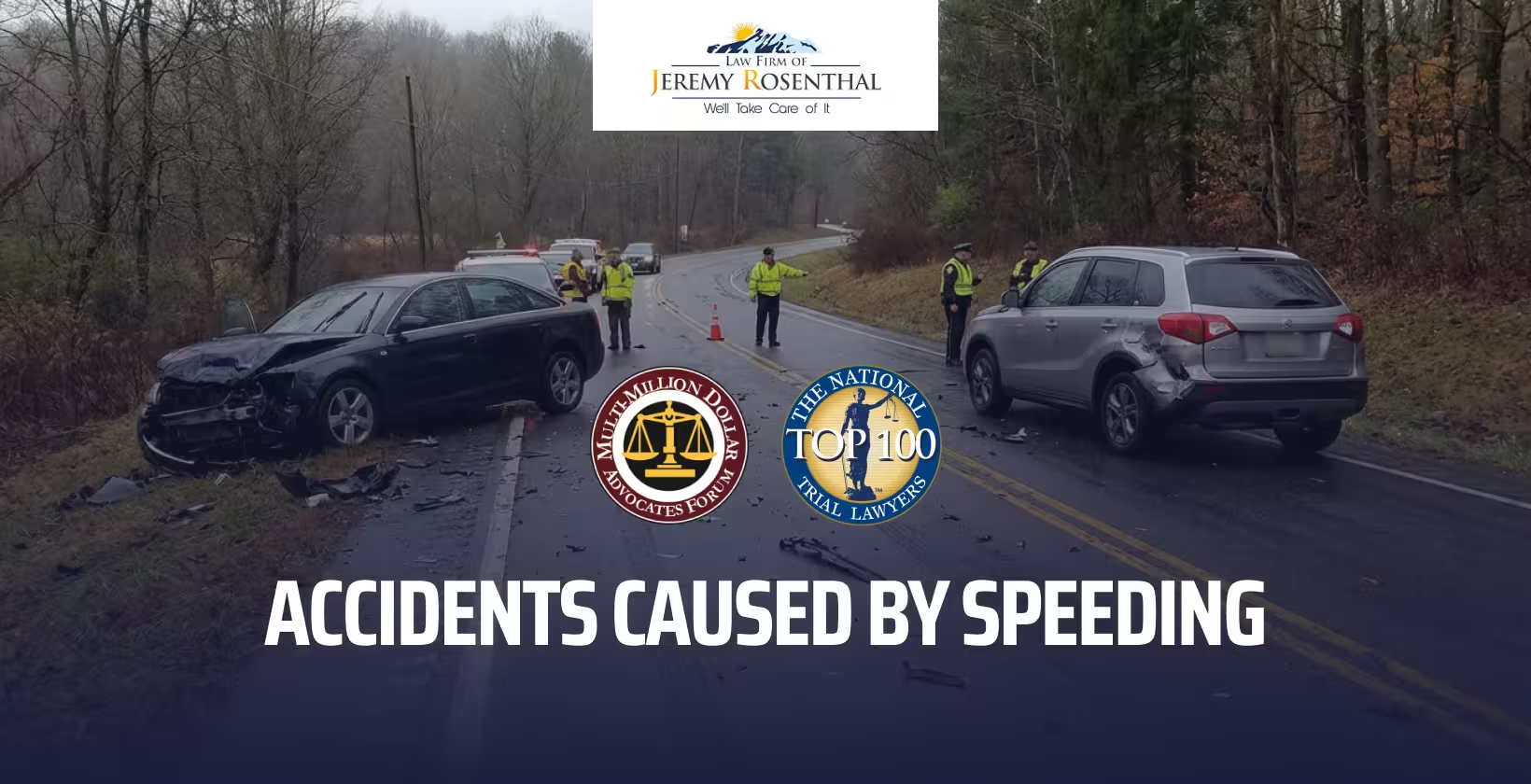
Speeding involves drivers exceeding posted limits or driving too fast for conditions, reducing reaction time and increasing collision severity. The City of Boulder reports speeding is one of the top factors for fatal and serious crashes throughout the city. Colorado Revised Statutes Section 42-4-1101 establishes speed limits and reasonable speed requirements creating presumptive negligence against speeding drivers. Speed violations support negligence claims and potentially gross negligence for excessive speeds endangering other roadway users. Evidence that can strengthen your case includes police reports showing speeds, skid marks, vehicle computer data, witness observations of excessive velocity, and traffic camera footage.
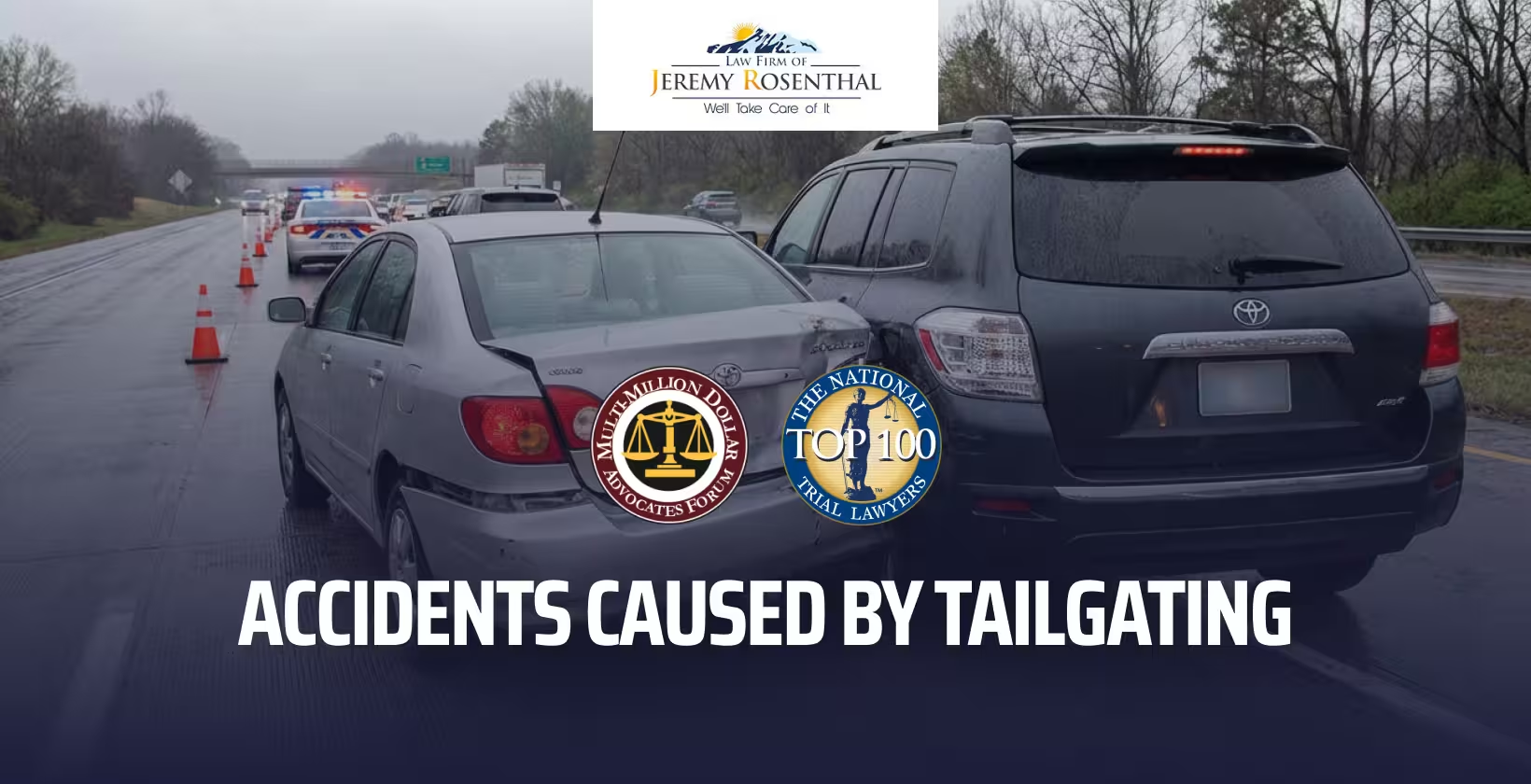
Tailgating involves drivers following too closely without maintaining reasonable and prudent distances to avoid rear-end collisions under varying traffic conditions. The City of Boulder crash data reports rear-end crashes were the most common type in 2023, representing over 32 percent of all collisions. Colorado Revised Statutes Section 42-4-1008 requires safe following distances creating legal presumption that following drivers bear fault for rear-end accidents. Following distance violations establish presumptive liability against trailing drivers unless extraordinary circumstances overcome this legal presumption. Evidence that can strengthen your case includes police reports, traffic cameras, skid mark analysis, witness statements about following distances, and vehicle damage assessments.
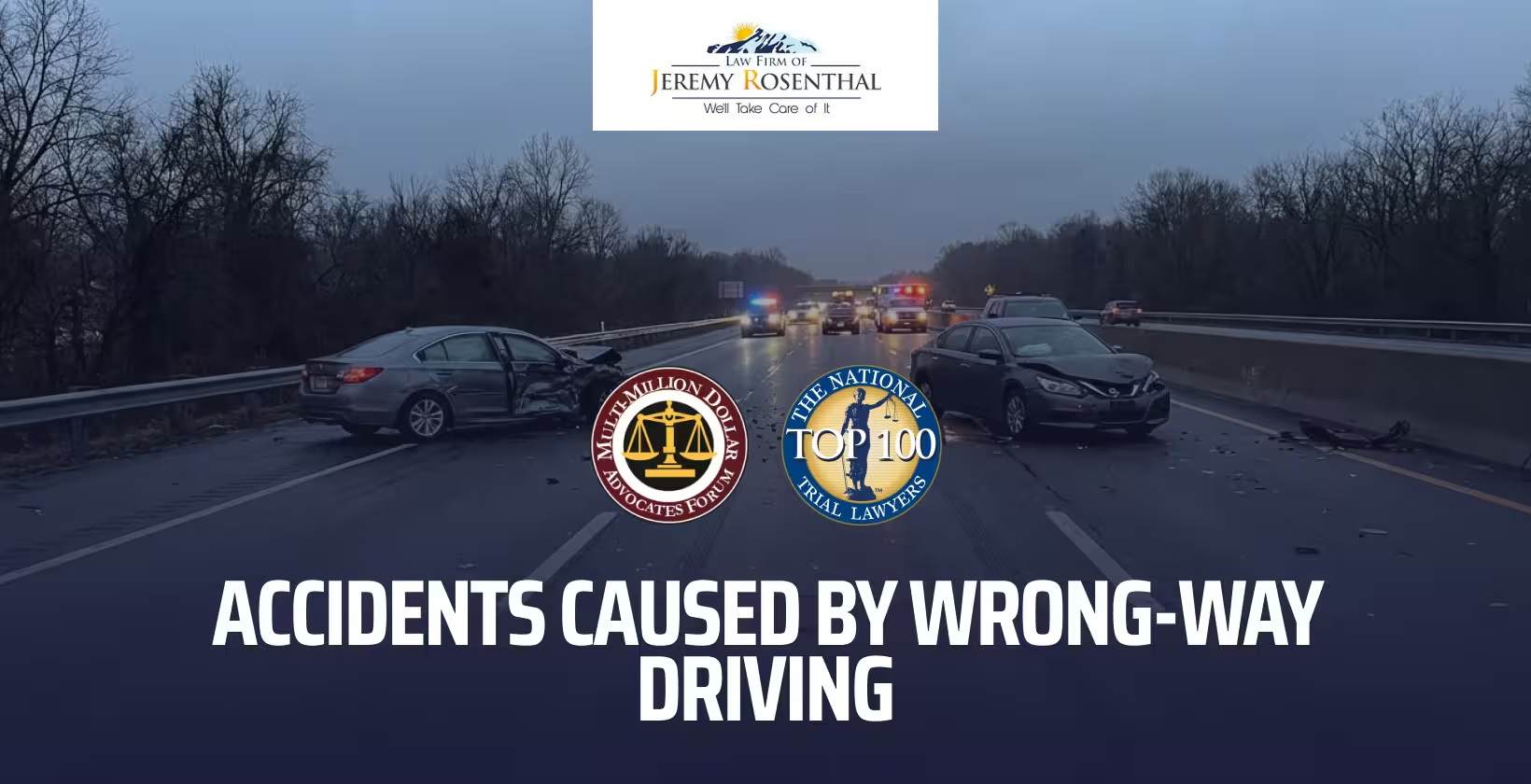
Wrong-way driving involves vehicles traveling against designated traffic flow on one-way streets, highway ramps, or divided roadways causing head-on collisions. The Colorado State Patrol reports wrong-way incidents create catastrophic force and life-threatening injuries with high fatality rates. Colorado Revised Statutes Section 42-4-1001 requires driving on right side of roadway establishing clear negligence against wrong-way operators. Wrong-way violations create strong liability cases often involving impairment, confusion, or intentional dangerous conduct supporting enhanced damages. Evidence that can strengthen your case includes police reports, witness statements, traffic signage documentation, surveillance footage, toxicology results, and accident reconstruction analysis.
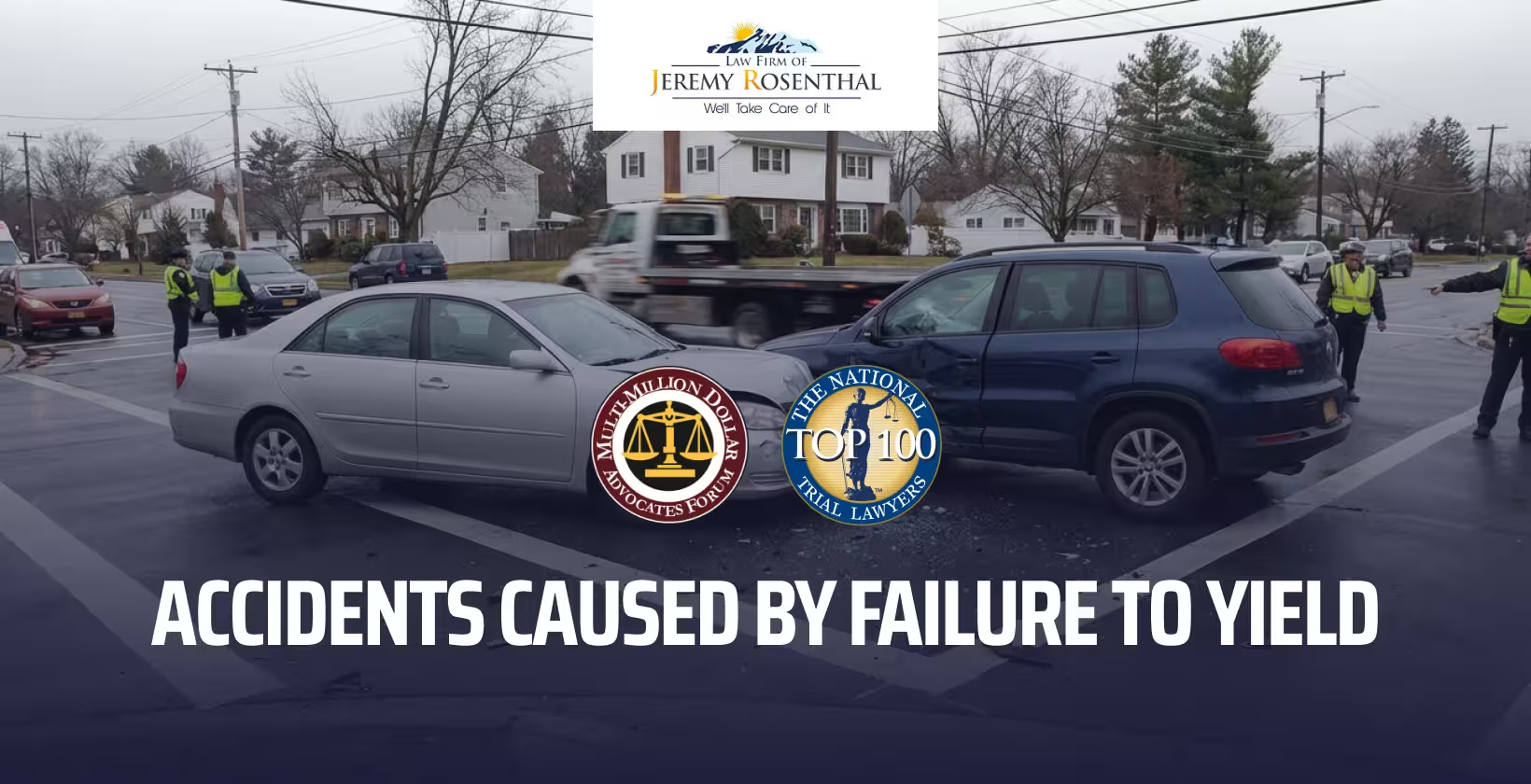
Failure to yield involves drivers not granting right-of-way to pedestrians, vehicles, or cyclists with legal priority at intersections and crosswalks. The City of Boulder crash data reports most intersection crashes happen when drivers fail to yield to another driver with right-of-way. Colorado Revised Statutes Sections 42-4-702 and 42-4-703 establish intersection yielding requirements creating presumptive negligence when violations cause injuries. Right-of-way violations establish clear liability against drivers who fail to yield to lawfully proceeding traffic or pedestrians. Evidence that can strengthen your case includes intersection cameras, traffic signal timing, witness statements, police citations for violations, and crosswalk markings documentation.
Poor weather conditions involve rain, snow, ice, fog, or wind reducing visibility and traction requiring reduced speeds and increased caution. Boulder County experiences variable weather including sudden snowstorms and black ice conditions affecting roadway safety throughout winter months. Colorado Revised Statutes Section 42-4-1101 requires reasonable speeds for conditions establishing negligence when drivers fail to adjust for weather hazards. Weather-related crashes require proving driver failed to exercise reasonable care given existing conditions rather than claiming weather alone caused collision. Evidence that can strengthen your case includes weather reports, road condition documentation, photographs showing precipitation or ice, witness observations, and vehicle control system data.
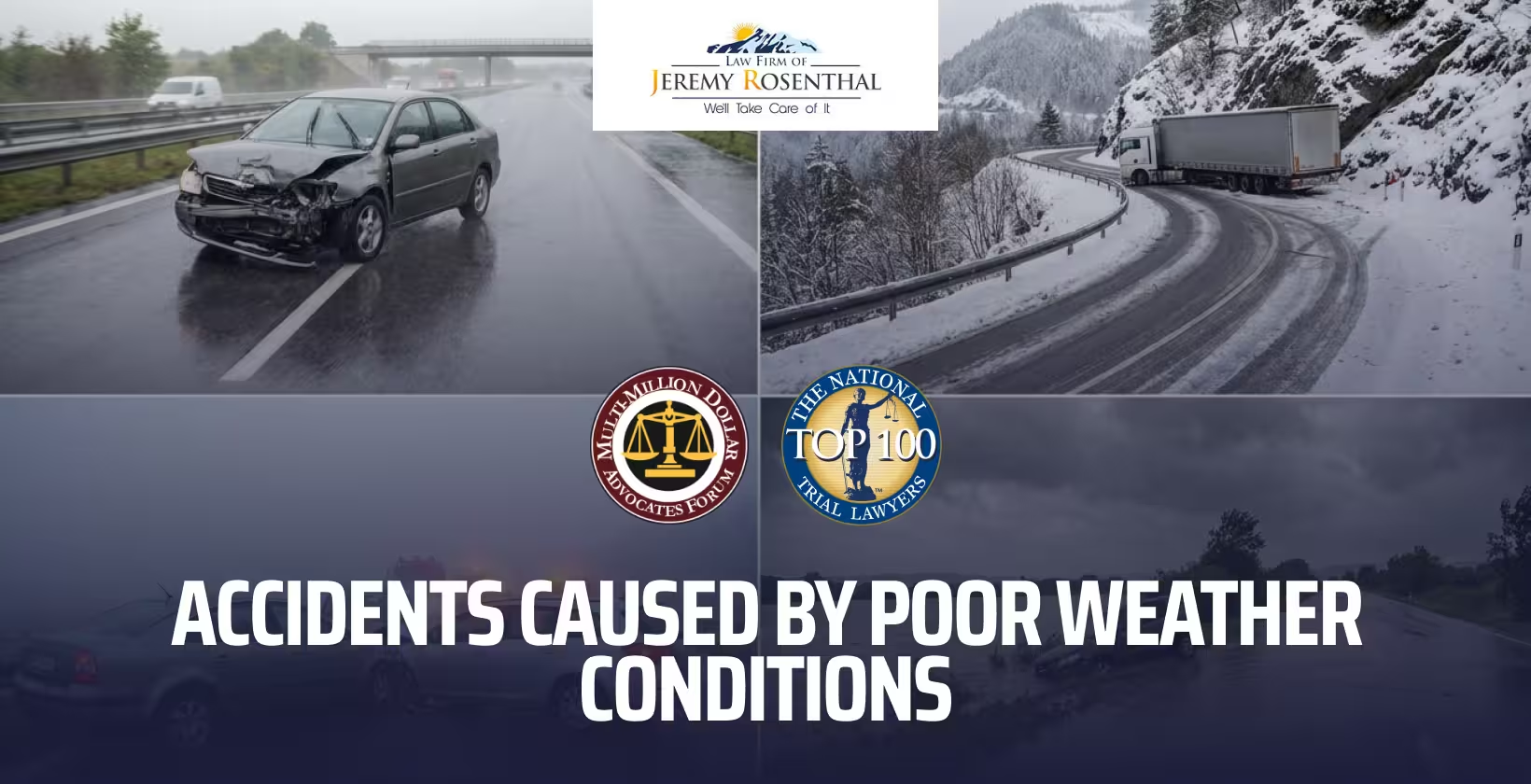
Traffic accident lawyer services encompass legal representation, claim management, evidence gathering, negotiation, and litigation for Boulder collision victims.
Tort law plays a fundamental role in auto accident cases by establishing negligence standards, duty of care requirements, and liability frameworks governing compensation recovery. Colorado tort principles require proving defendant owed duty, breached that duty through careless conduct, caused plaintiff’s injuries, and created compensable damages under statutory provisions.
Legal protections under car accident laws include modified comparative negligence preventing unfair liability, mandatory insurance coverage ensuring compensation availability, statute of limitations preserving claim rights, and damage cap provisions protecting defendants from excessive judgments. Colorado Revised Statutes establish driver duties, traffic regulations, and insurance requirements creating accountability frameworks. Boulder’s Vision Zero initiatives implement safety improvements targeting high-risk corridors.
Colorado traffic laws applying to Boulder drivers include following distance requirements under CRS 42-4-1008, speed limit regulations under CRS 42-4-1101, DUI prohibitions under CRS 42-4-1301, and intersection yielding rules under CRS 42-4-702. Boulder implements automated speed enforcement, traffic signal timing standards, and pedestrian protection ordinances. State regulations establish insurance requirements, accident reporting duties, and safety equipment standards applicable throughout Boulder County.
Vehicle owners can be held liable when someone else caused accidents under negligent entrustment doctrine if owners knowingly allowed incompetent, inexperienced, or intoxicated drivers to operate vehicles. Colorado law permits vicarious liability claims against owners who provided vehicles to unfit operators creating foreseeable harm risks.
Negligence determination in car accident cases requires proving four elements: defendant owed duty of reasonable care to plaintiff, defendant breached that duty through careless conduct, breach directly caused plaintiff’s injuries, and plaintiff suffered actual damages. Colorado courts evaluate driver conduct against reasonable person standard under similar circumstances.
Steps attorneys take to assess liability include investigation, analysis, and evidence evaluation procedures.
Evidence types gathered to prove liability include documentation, testimony, and physical proof establishing fault.
Typical car accident lawsuits take 12-24 months from filing to resolution depending on case complexity, injury severity, and settlement negotiation progress. Simple cases with clear liability settle within 6-12 months while complex multi-party accidents requiring extensive discovery proceed 18-36 months through litigation.
Typical court procedures for car accident lawsuits include complaint filing, defendant service, answer submission, discovery exchanges, depositions, mediation attempts, pretrial motions, and trial proceedings. Colorado Rules of Civil Procedure govern timeline requirements, evidence disclosure, motion practice, and courtroom protocols. Boulder District Court handles cases exceeding $25,000 while County Court addresses smaller claims under simplified procedures.
The statute of limitations for filing car accident lawsuits is three years from the accident date under Colorado Revised Statutes Section 13-80-101. Medical malpractice claims have two-year limitations while wrongful death cases allow two years from death date. Missing deadlines permanently bars recovery rights.
Compensation types victims can recover include economic damages, noneconomic damages, and physical impairment categories under Colorado law.
1. Medical Expenses For Emergency Treatment And Ongoing Care
Past and future medical costs including hospitalization, surgery, therapy, medications, and assistive devices.
2. Lost Wages And Diminished Earning Capacity
Income loss from missed work and reduced future earning ability due to permanent injuries.
3. Property Damage For Vehicle Repair Or Replacement
Repair costs, total loss value, diminished resale worth, and rental car expenses.
4. Pain And Suffering For Physical Discomfort
Noneconomic damages for injury pain, treatment discomfort, and ongoing physical limitations.
5. Emotional Distress For Psychological Trauma
Mental anguish, anxiety, depression, and post-traumatic stress from accident trauma.
6. Loss Of Quality Of Life And Activity Enjoyment
Inability to participate in hobbies, recreation, and activities previously enjoyed.
7. Scarring And Disfigurement For Permanent Appearance Alterations
Permanent visible injuries affecting self-esteem separate from noneconomic damage caps.
8. Loss Of Consortium For Marital Relationship Impacts
Spouse claims for companionship loss, intimacy reduction, and relationship deterioration.
Punitive damages are available in car accident lawsuits but are rarely awarded. They require clear and convincing evidence of willful, wanton conduct or fraud. Colorado caps punitive damages at compensatory damage levels, but these may increase up to three times the compensatory damages if exceptional misconduct is proven under CRS 13-21-102.
Partial fault reduces compensation by the plaintiff’s negligence percentage under Colorado’s modified comparative negligence statute. Plaintiffs bearing 50% or more fault cannot recover damages; those under 50% receive reduced awards proportional to their assigned fault percentage.
When an at-fault driver leaves the scene, this creates a hit-and-run violation. Victims may pursue uninsured motorist coverage claims through their own insurance. Colorado law requires uninsured motorist coverage to match liability limits, providing compensation if the fleeing driver is not found. Attorneys collaborate with law enforcement and insurance providers to ensure victims receive compensation despite the driver leaving the scene.
Evaluating car accident lawyers requires examining credentials, results, communication, and client feedback systematically.
Legal responsibilities of car accident lawyers include representation duties, ethical obligations, and client advocacy requirements.
Car accident settlement value calculation encompasses economic damages including medical expenses, lost wages, and property damage plus noneconomic damages for pain, suffering, and quality of life impacts. Attorneys multiply medical costs by severity multipliers (1.5-5x), add wage loss, then incorporate noneconomic factors including injury permanence, disability ratings, and life impacts while considering Colorado’s $1.5 million noneconomic damage cap.
Average settlement for car accidents in Colorado ranges $15,000-$50,000 for minor injuries, $50,000-$200,000 for moderate injuries, and $200,000-$1,000,000+ for severe or catastrophic injuries. Settlement amounts vary significantly based on injury severity, liability clarity, insurance policy limits, and case-specific factors including permanent impairment and economic losses.
Car accident attorneys negotiate with insurance companies by submitting detailed demand packages documenting liability, injuries, and damages then responding to adjuster counteroffers through evidence-supported arguments. Lawyers leverage trial readiness, comparable verdicts, and policy limits while addressing adjuster tactics minimizing claim values through persistent advocacy.
Insurance companies take 2-6 months settling straightforward car accident claims with clear liability and documented injuries. Complex cases involving disputed fault, severe injuries, or policy limit disputes require 6-18 months resolution. Colorado insurance regulations require reasonable investigation periods but do not mandate specific settlement timeframes. Attorneys expedite processes through comprehensive documentation and persistent negotiation while maintaining litigation readiness if insurers delay unreasonably.
Insurance law affects Colorado car accident claims through mandatory coverage requirements, uninsured motorist provisions, and claim handling regulations under CRS 10-4-705. Colorado requires minimum $25,000/$50,000/$15,000 liability coverage. Statutes prohibit unfair claim practices, require good faith negotiations, and establish bad faith remedies for unreasonable claim denials.
Boulder auto wreck attorneys use negotiation strategies including comprehensive demand packages with medical documentation, liability evidence, and damage calculations supported by comparable verdicts and expert opinions. Lawyers emphasize trial readiness, policy limit exposure, and bad faith liability while countering adjuster tactics through persistent evidence-based advocacy. Attorneys leverage Colorado’s modified comparative negligence laws, damage cap provisions, and insurance regulations creating settlement pressure while maintaining litigation preparedness ensuring favorable outcomes.
Avoid saying anything admitting fault, minimizing injuries, providing recorded statements without attorney consultation, or accepting immediate settlement offers after car crashes. Never state you feel fine, apologize for accidents, speculate about causation, or grant unlimited medical record authorizations. Decline discussing accident details beyond basic information until legal representation reviews claims under Colorado law protecting victim rights.
The sooner you take action, the easier it may be to preserve evidence and build a strong car accident claim. Get in touch with us today.
Our experienced Denver personal injury attorneys are ready to help you recover the compensation you deserve. Whether you’ve been injured in a car accident, motorcycle crash, or any other incident, we’re here to fight for your rights. Contact our Denver office to schedule your free consultation today.
At Rosenthal Injury Law, we fight tirelessly for personal injury victims throughout Denver and Colorado. Our commitment is simple: put you first, respond quickly, and pursue maximum compensation for your injuries. We don’t get paid unless you win.
Law Firm of Jeremy Rosenthal
600 17th Street, Suite 2803K,
Denver, CO, 80202
*By Appointment Only


