Jeremy Rosenthal
Fundador

When motorcycle accidents occur in Denver, victims need dedicated legal representation to recover fair compensation while navigating insurance claims, medical documentation, and Colorado liability laws. Motorcycle riders face devastating physical trauma including road rash requiring skin grafts, traumatic brain injuries from helmet impacts, shattered bones demanding surgical repair with hardware placement, spinal cord damage causing permanent mobility loss, and internal organ injuries that threaten life itself, while insurance adjusters attempt to blame riders for crashes caused by distracted drivers who failed to yield right-of-way at intersections or changed lanes without checking blind spots on Interstate 25 or Speer Boulevard. Denver County courts apply Colorado’s modified comparative negligence rule under C.R.S. § 13-21-111, which bars compensation recovery if a motorcyclist bears more than 50 percent fault for the collision, making liability determination critically important when adjusters scrutinize helmet use, lane positioning, speed estimates from skid marks, and witness statements to shift blame away from their insured drivers.
Motorcycle accident lawyers at Rosenthal Injury Law conduct independent crash investigations by photographing skid patterns, photographing vehicle damage, interviewing witnesses who saw the collision unfold, obtaining surveillance footage from nearby businesses along Colfax Avenue or Federal Boulevard, consulting accident reconstruction specialists who calculate speeds and impact forces, and reviewing police reports for errors or omissions that favor insurance companies. Attorneys gather medical records documenting fractures visible on X-rays, soft tissue injuries shown through MRI imaging, surgical reports detailing orthopedic procedures, neurological assessments measuring cognitive deficits, and treatment plans outlining years of physical therapy, then present this documentation to insurance carriers during settlement negotiations or to Denver County juries during trial proceedings when insurers refuse fair payment. Legal counsel protects riders from recorded statements that adjusters manipulate to reduce claim values, ensures compliance with Colorado’s three-year statute of limitations under C.R.S. § 13-80-101 for filing civil lawsuits, and pursues full compensation for emergency room bills, ongoing specialist appointments, prescription medications, lost wages during recovery periods, diminished earning capacity from permanent disabilities, motorcycle repair costs, and the physical pain plus emotional trauma that crashes inflict on victims and their families.
The benefits of hiring a Denver motorcycle accident lawyer are listed below:
Nuestros abogados, con amplia experiencia, se pondrán en contacto con usted para una consulta legal gratuita.
Colaborar con Jeremy Rosenthal significa trabajar con un abogado de Denver dedicado a priorizar a las víctimas de lesiones. Gracias a su enfoque en la comunicación eficaz y la preparación minuciosa de cada caso, los clientes reconocen constantemente la determinación del bufete para ayudar a cada víctima de accidente a obtener la compensación que merece.
Jeremy Rosenthal handles motorcycle crash cases throughout Denver County with a focus on holding negligent drivers accountable when they cause serious injuries to riders. Rosenthal Injury Law understands that motorcyclists face unique dangers on Denver’s busy streets, including Speer Boulevard, Federal Boulevard, and Interstate 25, where distracted drivers frequently fail to see two-wheeled vehicles in adjacent lanes. Crash victims often sustain catastrophic injuries including road rash, fractured bones, traumatic brain injuries, and spinal cord damage that require immediate legal action to preserve evidence and protect their rights.
Jeremy Rosenthal brings trial experience to every motorcycle accident case, whether the claim involves insurance negotiations or courtroom litigation against defendants who refuse fair settlements. The firm conducts thorough crash investigations that include obtaining police reports, interviewing witnesses, reviewing traffic camera footage, consulting with accident reconstruction specialists, and working with medical professionals who can document the full extent of injuries. Rosenthal coordinates with treating physicians to ensure that injury documentation supports compensation claims for medical expenses, lost wages, pain and suffering, and future care needs that motorcyclists face during lengthy recovery periods.
Fundador
Rosenthal Injury Law fights for motorcycle accident victims against insurance companies who try to minimize payouts and shift blame. The firm’s attorneys bring proven courtroom experience and recognition from Super Lawyers for eight consecutive years to every case they handle in Denver County.
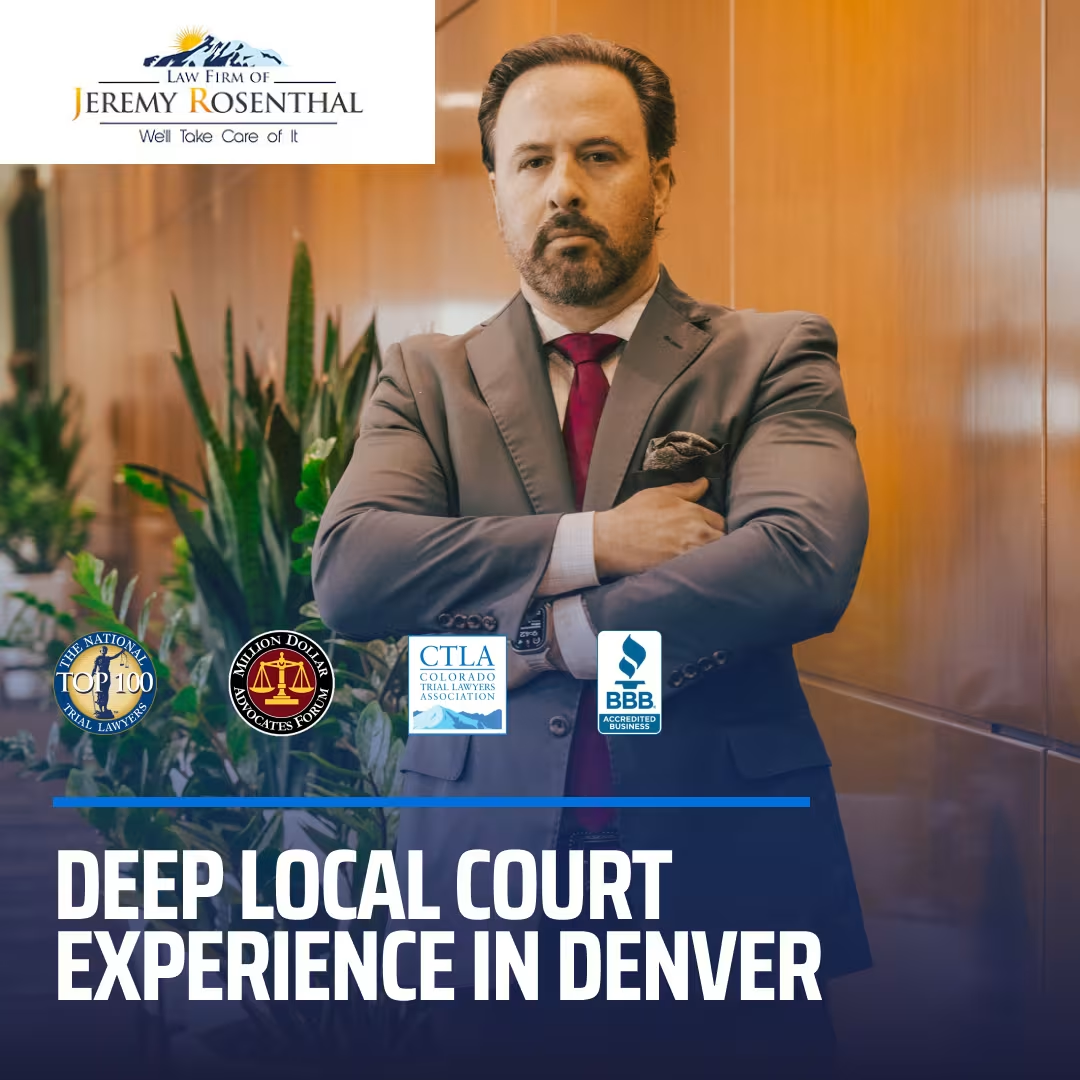
Familiaridad con los tribunales locales
The attorneys at Rosenthal Injury Law practice regularly in Denver County courts and maintain working relationships with judges, court staff, and opposing counsel throughout the jurisdiction. This familiarity accelerates case processing and helps attorneys anticipate procedural requirements specific to Denver’s court system. Jeremy Rosenthal earned his J.D. From University of Denver Sturm College of Law, giving him deep roots in Colorado’s legal community.
Preservación de pruebas
Preservación de pruebas
Rosenthal Injury Law acts immediately to secure crash scene photographs, surveillance footage, witness statements, and police reports before this material disappears or degrades. The firm dispatches investigators to accident locations within hours when cases involve disputed liability or serious injuries. Prompt evidence collection strengthens settlement negotiations and trial presentations if insurance companies refuse fair offers.
Acceso directo a abogados
Clients communicate directly with Jeremy Rosenthal and other attorneys throughout the legal process rather than being passed to paralegals or intake coordinators. The firm’s reputation as the most responsive law firm in Denver reflects its commitment to answering client questions within 24 hours. Personal attorney involvement allows for strategic adjustments as medical treatment progresses and damage valuations change.
Experiencia de prueba
The attorneys at Rosenthal Injury Law prepare every case for trial rather than assuming settlement will occur, which pressures insurance adjusters to make reasonable offers before litigation costs escalate. The firm’s recognition in the Top 100 National Trial Lawyers and Million Dollar Advocates Forum demonstrates its ability to obtain favorable jury verdicts when negotiations fail. Insurance companies evaluate claims differently when opposing counsel has documented courtroom success.
Coordinación médica
The firm works with physicians, accident reconstruction specialists, vocational experts, and economists to document the full extent of injuries and their financial impact on victims’ lives. These professional relationships allow attorneys to obtain detailed medical opinions that support higher damage calculations during settlement talks. Medical coordination becomes particularly valuable in motorcycle cases where insurance companies claim pre-existing conditions caused the injuries rather than the collision.
The settlement amounts below reflect potential settlement ranges from successful motorcycle accident cases and negotiations. No fixed formula calculates individual awards since each motorcycle accident case involves distinct circumstances and variables.
Los abogados de lesiones personales de Denver pueden ayudarle a obtener una compensación justa por su accidente. Contáctenos hoy para programar su consulta gratuita.
Motorcycle accident medical bills accumulate from emergency transport, hospital admission, surgical intervention, diagnostic testing, and extended rehabilitation following collisions on Denver roads. Colorado law permits recovery of all reasonable and necessary treatment costs directly resulting from crash injuries, which attorneys document through medical records, billing statements, and provider testimony. Victims recover compensation for past expenses already incurred, ongoing treatment currently required, and future medical care projected by physicians. Denver hospitals including Denver Health Medical Center and Swedish Medical Center treat thousands of injured riders annually, creating substantial documentation for damage claims.
Common injuries in Denver motorcycle accident cases create devastating physical, emotional, and financial consequences requiring comprehensive medical treatment and legal representation.
Proving traumatic brain injuries requires neuropsychological testing, baseline cognitive assessments, and documented functional limitations showing how the injury affects employment capacity and daily living activities.
Insurance adjusters challenge TBI claims by attributing symptoms to pre-existing conditions, arguing symptoms lack objective medical evidence, or claiming the injured person failed to seek timely medical treatment after the crash.
TBI cases require proving causation through biomechanical expert testimony linking crash forces to specific brain injuries, particularly when symptoms manifest days or weeks after the collision rather than immediately at the accident scene.
Get a free consultation with our experienced Denver motorcycle accident attorneys and secure the compensation you deserve for traumatic brain injuries.
Denver motorcycle accident rates reflect the city’s position as Colorado’s largest metropolitan center, where over 700,000 residents navigate an expanding network of interstate highways, arterial roads, and densely populated urban corridors. The combination of high-altitude weather conditions, tourist traffic through mountain access routes, and heavy commercial freight movement along I-25 and I-70 creates persistent hazards for motorcyclists throughout Denver County.
Denver experiences approximately 420 motorcycle crashes annually according to Colorado Department of Transportation (CDOT) collision data, translating to roughly 1.2 incidents daily across the metropolitan area. Denver motorcycle accident frequency increased 18 percent between 2019 and 2023 based on CDOT Traffic Safety Annual Reports, outpacing the statewide growth rate of 12 percent during the same period. Fatal motorcycle collisions account for 8.3 percent of all Denver motorcycle accident cases according to National Highway Traffic Safety Administration (NHTSA) regional statistics, while serious injury crashes requiring hospitalization represent 34 percent of reported incidents.
Downtown Denver records the highest concentration of motorcycle collisions, with approximately 85 crashes occurring annually in the central business district according to Denver Police Department traffic division reports. Capitol Hill sees elevated accident rates along Colfax Avenue and surrounding arterial streets, where older road infrastructure and frequent pedestrian crossings create visibility challenges for motorcyclists during peak commute hours. Cherry Creek attracts significant motorcycle traffic through retail corridors and recreational paths, resulting in an estimated 42 Denver motorcycle accident reports each year when commercial delivery vehicles interact with two-wheeled traffic. LoDo experiences frequent crashes near interstate on-ramps and warehouse district intersections, particularly where 20th Street intersects with I-25 access points serving both commuter and freight traffic. Highland neighborhood collision rates remain moderate compared to downtown zones, though motorcyclists face hazards at Federal Boulevard crossings and along Speer Boulevard where multiple lanes converge without adequate merge distance.
Colfax Avenue and I-25 Access Ramps – Stop-and-go traffic conditions and angled on-ramp approaches create rear-end collision risks when drivers fail to check mirrors before merging.
Motorcycle accidents in Denver occur at approximately 1.4 collisions per day based on Colorado Department of Transportation data showing 516 motorcycle crashes in Denver County during 2022. The daily frequency varies significantly by season since warm weather months (May through September) account for roughly 72% of annual motorcycle crashes when riders travel more frequently and tourism increases throughout the metro area. Summer weekends experience the highest concentration of collisions, with Friday through Sunday accounting for nearly 55% of weekly motorcycle accidents according to Denver Police Department crash statistics. Road conditions, visibility, and traffic volume directly affect collision rates because wet pavement during spring months, construction zones on major corridors like Interstate 25 and Interstate 70, and rush hour congestion between 7:00 AM to 9:00 AM and 4:00 PM to 6:00 PM create heightened risks for riders. Urban intersections near downtown Denver, particularly along Colfax Avenue, Speer Boulevard, and Federal Boulevard, represent high-frequency crash zones where turning vehicles fail to yield right-of-way to oncoming motorcycles.
A Denver motorcycle accident lawyer helps riders avoid future accidents by identifying dangerous riding patterns, equipment deficiencies, and legal vulnerabilities that contributed to previous collisions. Attorneys review accident reconstructions to determine whether inadequate protective gear, visibility issues, or hazardous road conditions created preventable risks during your crash. Legal professionals analyze police reports, witness statements, and collision diagrams to identify specific behavioral changes or equipment upgrades that reduce future accident likelihood, including improved helmet quality, reflective clothing adoption, or defensive riding course enrollment. Attorneys also protect clients from legal pitfalls by documenting injury severity, preserving evidence before statutes of limitation expire, and preventing recorded statements to insurance adjusters that undermine future claims if complications arise from accident injuries years later
Taking immediate protective actions after a motorcycle crash preserves evidence and protects your legal rights under Colorado law

1. Move to Safety and Check for Injuries (Immediately):
Move yourself and your motorcycle to a safe location away from traffic if possible, then assess whether you or others sustained injuries requiring emergency medical attention.
2. Call 911 and Report the Crash (Within 1-2 Minutes):
Contact Denver Police Department to file an official accident report, which documents crash details, road conditions, and preliminary fault assessments that become critical evidence later.

3. Document the Accident Scene (Within 5-10 Minutes):
Photograph vehicle positions, skid marks, road hazards, traffic signals, weather conditions, and all visible injuries before vehicles move or conditions change.

4. Exchange Information with Other Parties (Within 10 Minutes):
Collect driver names, insurance policy numbers, vehicle registration details, and contact information from all involved parties without discussing fault or liability.

5. Identify and Interview Witnesses (Within 15 Minutes):
Obtain names and phone numbers from bystanders who observed the collision, as their accounts corroborate your version of events during insurance negotiations.

6. Seek Medical Evaluation (Within 24 Hours):
Visit an emergency room or urgent care facility even if injuries seem minor, as delayed symptoms like internal bleeding or traumatic brain injuries emerge hours after impact.

7. Preserve All Physical Evidence (Within 48 Hours):
Keep damaged helmets, torn clothing, and broken gear in secure storage, as these items demonstrate crash severity and injury mechanisms.

8. Notify Your Insurance Company (Within 72 Hours):
Report the accident to your insurer without providing recorded statements or admitting fault, which protects coverage eligibility under your policy terms.

9. Consult a Motorcycle Accident Attorney (Within 1 Week):
Contact legal counsel before insurance adjusters pressure you into settlements that undervalue your claim or recorded statements that damage your case.
Common types of motorcycle accidents that occur in Denver are listed below.
Rango de asentamiento
$1.000 – $900.000+
Duración: 10-24 meses
Left-turn crashes occur when drivers turn across traffic lanes and strike motorcycles traveling straight through intersections, often because the turning driver fails to yield right-of-way or misjudges the motorcycle’s speed and distance. A skilled left-turn accidents lawyer establishes liability through intersection design analysis, traffic signal timing records, and collision reconstruction that demonstrates the turning driver violated Colorado Revised Statute § 42-4-901, which requires yielding to oncoming traffic when turning left. Motorcycle riders suffer severe injuries in these collisions, including fractured pelvis, compound leg fractures, spinal cord damage, and traumatic brain injuries that require multiple surgeries and extended rehabilitation. Denver County reports left-turn crashes as the leading cause of motorcycle collisions at controlled intersections according to Colorado Department of Transportation data. Evidence collection focuses on traffic camera footage, witness statements from nearby vehicles, police accident reports documenting point of impact, medical records showing injury severity, motorcycle damage assessment indicating impact angle, and cell phone records showing whether the turning driver was distracted.
Causas comunes:
Tasa de victorias: 88%
Rango de asentamiento
$1.000 – $900.000+
Duración: 10-24 meses
Lane-Change Accidents Attorney
Lane-change collisions happen when drivers merge into occupied lanes and sideswipe motorcycles or force motorcycle operators off the roadway, particularly on Denver’s congested highways like I-25 and I-70 where traffic density increases crash risk. An experienced lane-change accidents attorney proves negligence through vehicle positioning analysis, highway surveillance footage, and demonstrating the merging driver violated Colorado Revised Statute § 42-4-1007, which mandates checking blind spots and signaling before changing lanes. These crashes cause road rash requiring skin grafts, shoulder dislocations, broken collarbones, and knee injuries when motorcycles slide across pavement after impact or when riders are thrown from their motorcycles. Denver County experiences these crashes frequently during rush hour periods when multiple lanes compress traffic flow and reduce reaction time. Evidence includes dashcam recordings from nearby vehicles, police reports indicating lane positions, photographs of road debris and skid marks, medical documentation of injuries, witness accounts from adjacent lane drivers, motorcycle damage showing point of contact, and accident scene measurements.
Causas comunes:
Tasa de victorias: 85%
Rango de asentamiento
$1.000 – $900.000+
Duración: 10-24 meses
Rear-end crashes strike motorcycles from behind when following drivers fail to maintain safe distances or cannot stop in time, often throwing motorcycle riders forward or crushing them between vehicles in multi-vehicle pileups on highways like I-225 and I-76. A skilled rear-end collisions accident lawyer demonstrates the following driver’s liability through stopping distance calculations, vehicle damage analysis, and applying Colorado Revised Statute § 42-4-1008, which requires maintaining assured clear distance between vehicles. Motorcycle operators sustain whiplash injuries, lumbar spine fractures, traumatic brain injuries from secondary impacts, and leg crush injuries when trapped between vehicles during the collision sequence. The Colorado Department of Transportation reports rear-end crashes account for approximately 23 percent of motorcycle collisions statewide, with higher rates during heavy traffic conditions and adverse weather. Evidence collection includes rear-facing camera footage from the motorcycle, police accident reports documenting following distance, witness statements from adjacent lanes, medical records showing impact injuries, photographs of vehicle damage patterns, traffic conditions at crash time, and brake analysis from the striking vehicle.
Causas comunes:
Tasa de victorias: 92%
Rango de asentamiento
$1.000 – $900.000+
Duración: 10-24 meses
dooring Accidents Attorney
Dooring crashes occur when parked vehicle occupants open doors directly into the path of passing motorcycles without checking mirrors or looking over shoulders, creating sudden obstacles that motorcycle riders cannot avoid on narrow Denver streets with parallel parking. An experienced dooring accidents attorney establishes fault through door opening angle analysis, parking area measurements, and citing Colorado Revised Statute § 42-4-1207, which prohibits opening vehicle doors unless reasonably safe to do so without interfering with moving traffic. Motorcyclists suffer facial fractures, broken wrists and arms, rib fractures, and shoulder injuries when striking opened doors at speed or when falling to avoid collision with the door. Denver County sees these accidents concentrated in downtown areas, Capitol Hill, and the Highlands neighborhoods where street parking creates hazardous conditions for motorcycle traffic. Evidence includes security camera footage from nearby businesses, photographs of the parked vehicle and door damage, police reports documenting door position, witness statements from pedestrians, medical records detailing injury mechanisms, measurements of street width and parking configuration, and damage assessment showing impact location on the motorcycle.
Causas comunes:
Tasa de victorias: 90%
Rango de asentamiento
$1.000 – $900.000+
Duración: 10-24 meses
Head-On Collisions Accident Lawyer
Head-on crashes happen when vehicles cross center lines or median barriers and strike motorcycles traveling in opposite directions, creating the most catastrophic collision type because combined speeds multiply impact forces on exposed motorcycle riders. A skilled head-on collisions accident lawyer proves liability through roadway position analysis, tire mark examination, and applying Colorado Revised Statute § 42-4-1001, which requires drivers to stay right of center lines except when passing or avoiding obstructions. These collisions produce catastrophic injuries including multiple bone fractures, internal organ damage, severe traumatic brain injuries, and spinal cord injuries that result in permanent disability or wrongful death. Denver County records head-on motorcycle crashes primarily on mountain approach roads and rural highways where curved sections and passing zones increase crossing risks according to local traffic safety data. Evidence collection includes accident reconstruction reports, witness statements from oncoming traffic, police reports documenting vehicle positions, medical records showing catastrophic injury patterns, photographs of roadway markings and sight distances, toxicology results if impairment is suspected, and vehicle damage analysis indicating impact forces.
Causas comunes:
Tasa de victorias: 87%
Rango de asentamiento
$15,000 – $850,000+
Duración: 12-22 months
Side-impact collisions occur when motorcycles cross intersections and other vehicles strike them from the left or right, typically at intersections controlled by traffic signals or stop signs where one driver runs a red light or fails to yield the right of way. A skilled T-bone or side-impact accidents lawyer establishes liability through intersection camera footage, traffic signal timing records, police accident reports, witness testimony from nearby drivers or pedestrians, motorcycle damage patterns, and accident reconstruction analysis that demonstrates the at-fault driver violated Colorado Revised Statute § 42-4-703, which requires drivers to yield right of way to vehicles already in the intersection. These crashes frequently result in severe injuries including fractured ribs, collapsed lungs, pelvic fractures, and traumatic brain injuries because motorcycle riders lack the protective metal frame that surrounds car occupants. Denver County experiences these crashes regularly at high-traffic intersections along Colfax Avenue, Federal Boulevard, and where I-25 feeds into surface streets during rush hour periods when drivers rush through yellow lights or misjudge gaps in oncoming traffic.
Causas comunes:
Tasa de victorias: 88%
Rango de asentamiento
$15,000 – $900,000+
Duración: 14-24 months
Impaired driving crashes devastate motorcycle riders when drivers under the influence of alcohol or drugs fail to maintain lane position, misjudge distances, or run traffic control devices, striking motorcycles they never see until impact occurs. An experienced drunk or drugged driving accidents attorney proves negligence through police reports documenting field sobriety tests, blood alcohol content (BAC) results, toxicology screens showing controlled substances, surveillance footage from bars or restaurants where the driver consumed alcohol, cell phone records showing erratic communication patterns, and witness statements from other drivers who observed dangerous operation before the collision. Motorcycle riders suffer catastrophic injuries including spinal cord damage, severe road rash requiring skin grafts, compound fractures, and permanent scarring because impaired drivers typically strike at high speeds without attempting to brake or avoid the collision. Colorado Revised Statute § 42-4-1301 establishes that drivers with BAC levels of 0.08% or higher commit DUI, creating clear liability when chemical tests document intoxication, and Denver County reports 127 alcohol-related motorcycle crashes annually according to Colorado Department of Transportation data.
Causas comunes:
Tasa de victorias: 92%
Rango de asentamiento
$5,000 – $450,000+
Duración: 10-20 months
Road hazard crashes occur when motorcycle operators strike potholes, loose gravel, metal debris, uneven pavement transitions, or unmarked construction zones that cause loss of control and single-vehicle crashes, often involving government entities or private contractors responsible for roadway maintenance. A skilled road hazard accidents attorney establishes liability through photographs documenting the hazardous condition, maintenance records from the Colorado Department of Transportation or Denver Public Works showing prior complaints or scheduled repairs, witness statements from other riders who reported the same hazard, medical records documenting injuries consistent with loss of control, meteorological data showing weather conditions at the time, and engineering expert analysis that demonstrates the hazard violated minimum safety standards under Colorado Revised Statute § 43-2-135, which requires state and local governments to maintain roadways in reasonably safe condition. These crashes produce injuries including clavicle fractures, wrist and hand injuries from attempting to catch falls, shoulder dislocations, and severe abrasions because motorcycles offer no protection when riders separate from their machines after striking obstacles. Denver experiences these hazards frequently along older sections of I-70 near downtown where winter freeze-thaw cycles create deep potholes and along construction zones on I-25 where lane transitions lack proper signage or warning markers.
Causas comunes:
Tasa de victorias: 73%
Rango de asentamiento
$10,000 – $900,000+
Duración: 16-24 months
High-velocity collisions between motorcycles and vehicles traveling at speeds exceeding posted limits create devastating crashes with severe trauma because kinetic energy increases exponentially with speed, leaving riders with catastrophic injuries when struck by drivers who cannot stop in time to avoid impact. An experienced high-speed accidents attorney proves negligence through police accident reports documenting skid marks and vehicle rest positions, event data recorder downloads from the at-fault vehicle showing exact speed at impact, traffic camera footage capturing the moments before collision, medical records documenting injuries consistent with high-energy trauma, accident reconstruction expert testimony calculating velocity based on physical evidence, and citations issued under Colorado Revised Statute § 42-4-1101, which prohibits driving at speeds greater than reasonable and prudent under existing conditions. Motorcycle operators suffer life-altering injuries including traumatic brain injuries requiring long-term care, spinal cord injuries causing paralysis, multiple bone fractures requiring surgical repair with hardware placement, and internal organ damage from blunt force trauma. Denver County sees these crashes regularly on I-25 through the Tech Center corridor and along I-70 in the Stapleton area where drivers exceed 80 mph in 55 mph zones, and the Colorado State Patrol reports that speed contributes to 28% of fatal motorcycle crashes statewide according to their annual traffic safety report.
Causas comunes:
Tasa de victorias: 85%
Rango de asentamiento
$10,000 – $900,000+
Duración: 18-24 months
Chain-reaction collisions trap motorcycle riders between multiple vehicles during pileup crashes when initial impacts trigger secondary collisions, typically occurring during heavy traffic conditions on interstate highways where following distances shrink and drivers cannot stop before striking vehicles ahead. A skilled multi-vehicle pileups accident attorney establishes liability for all negligent parties through commercial truck electronic logging device data, traffic camera footage showing the sequence of impacts, police reports identifying each driver’s role in the collision chain, witness statements from occupants of surrounding vehicles, cell phone records documenting distracted driving by multiple operators, weather reports showing visibility and road conditions, and claims against all at-fault drivers under Colorado Revised Statute § 42-4-1008, which requires operators to maintain assured clear distance ahead. These complex crashes produce catastrophic injuries including crush injuries to legs and torsos, severe burns when fuel ignites during pileups, traumatic amputations, and fatal injuries because motorcycle riders have nowhere to escape when surrounded by colliding vehicles weighing thousands of pounds. Denver County experiences dangerous pileup conditions on I-25 through the downtown corridor during morning rush hour, on I-70 near the I-25 interchange where merging traffic creates bottlenecks, and on I-225 where sudden braking triggers chain reactions, with the Colorado Department of Transportation documenting 89 multi-vehicle crashes involving motorcycles along Denver metro interstates in 2023.
Causas comunes:
Tasa de victorias: 78%
Rango de asentamiento
$15,000 – $750,000+
Duración: 12-24 months
Hit-and-run crashes occur when drivers strike motorcycles and flee the scene without providing identification or rendering aid, leaving motorcycle riders with severe injuries and no clear path to compensation. A skilled hit-and-run accidents lawyer establishes liability through uninsured motorist (UM) claims, investigates surveillance footage to identify fleeing drivers, and pursues full compensation when negligent parties abandon the crash scene in violation of Colorado Revised Statute § 42-4-1601, which mandates that drivers remain at accident scenes and exchange information with injured parties. These collisions cause traumatic brain injuries, spinal cord damage, multiple fractures, and road rash requiring skin grafts when motorcycle operators absorb the full impact without protection. Denver County experiences approximately 2,800 hit-and-run crashes annually according to Colorado Department of Transportation data, with Interstate 25 and Interstate 70 corridors showing elevated incident rates during evening hours. Evidence includes traffic camera recordings, witness statements identifying vehicle descriptions, police reports documenting scene conditions, medical records showing injury severity, uninsured motorist policy documents, surveillance footage from nearby businesses, and accident reconstruction analysis determining impact dynamics.
Causas comunes:
Tasa de victorias: 78%
Rango de asentamiento
$8,000 – $500,000+
Duración: 10-18 months
Unsafe lane splitting crashes happen when motorcycle riders travel between lanes of slower or stopped traffic under dangerous conditions, or when motorists change lanes without checking blind spots while motorcycles filter through congestion on Denver highways. An experienced unsafe lane splitting accident attorney proves negligence through traffic pattern analysis, demonstrates whether the motorcycle operator maintained reasonable speed differentials under Colorado law (which does not explicitly legalize or prohibit lane splitting, creating gray areas in liability determination), and establishes that either the motorcycle rider exceeded safe filtering speeds or that the lane-changing driver failed to verify clearance before maneuvering. These accidents produce shoulder separations, clavicle fractures, leg injuries from vehicle contact, and crush injuries when motorcycles become pinned between cars. Lane splitting incidents occur frequently during rush hour congestion on Interstate 25 through downtown Denver and Interstate 70 near the Mousetrap interchange, where stop-and-go traffic creates conditions where motorcyclists attempt to filter forward. Evidence includes dashcam footage showing lane positions, traffic flow data establishing congestion levels, witness accounts of pre-crash movements, vehicle damage patterns indicating impact angles, police reports noting road conditions, and expert testimony on safe filtering practices.
Causas comunes:
Tasa de victorias: 72%
Rango de asentamiento
$20,000 – $900,000+
Duración: 14-24 months
Intersection collisions occur when drivers turning left fail to yield right-of-way to oncoming motorcycles, when motorists run red lights or stop signs, or when drivers misjudge motorcycle approach speeds at crossroads throughout Denver County. A skilled intersection accidents lawyer establishes fault through traffic signal timing records, applies Colorado Revised Statute § 42-4-703 (which requires drivers to yield when turning left across oncoming traffic), and demonstrates how visibility, speed estimation errors, or deliberate signal violations caused the crash. These crashes cause catastrophic injuries including femur fractures, pelvic damage, internal organ trauma, and severe head injuries when motorcycle riders strike turning vehicles broadside or get thrown from their bikes during sudden impact. Denver experiences intersection crashes daily at high-volume crossings along Colfax Avenue, Speer Boulevard, and Federal Boulevard, where complex traffic patterns and multiple turn lanes create collision opportunities. Evidence includes intersection camera footage, traffic signal phase records, witness statements from other drivers, police crash reports documenting right-of-way violations, medical imaging showing injury severity, motorcycle damage assessment, and accident reconstruction determining pre-impact speeds.
Causas comunes:
Tasa de victorias: 85%
Rango de asentamiento
$12,000 – $650,000+
Duración: 11-20 months
Distracted driving crashes happen when motorists using cell phones, adjusting navigation systems, or engaging with passengers fail to notice motorcycles sharing the roadway, resulting in rear-end collisions, sideswipe impacts, or lane departure crashes. An experienced distracted driving accidents attorney proves negligence through cell phone records subpoenaed under discovery rules, applies Colorado Revised Statute § 42-4-239 (which prohibits texting while driving for all Colorado motorists), and demonstrates how visual, manual, or cognitive distractions prevented the driver from maintaining proper awareness of surrounding traffic. These collisions produce whiplash injuries, compression fractures, shoulder trauma, and lower extremity damage when motorcycle riders get struck from behind or sideswiped into barriers. The Colorado Department of Transportation reports that distracted driving contributes to 15% of all traffic crashes statewide, with Interstate 25 and Interstate 225 showing elevated rates during commute hours when drivers multitask behind the wheel. Evidence includes cell phone usage logs showing calls or texts at crash time, witness observations of driver behavior before impact, police reports citing distraction as contributing factor, in-vehicle technology data from infotainment systems, medical records documenting injuries, motorcycle damage analysis, and traffic camera footage capturing pre-crash vehicle movements.
Causas comunes:
Tasa de victorias: 82%
Rango de asentamiento
$25,000 – $800,000+
Duración: 16-24 months
Motorcycle defect crashes occur when manufacturing flaws, design defects, or inadequate maintenance cause critical system failures including brake malfunctions, tire blowouts, throttle sticking, or steering component failures that result in loss of control and subsequent collisions or crashes. A skilled motorcycle defect accidents lawyer pursues product liability claims against manufacturers under strict liability principles, obtains Technical Service Bulletins (TSBs) and recall notices documenting known defects, and engages mechanical engineers to examine failed components and establish that design flaws or manufacturing errors caused the crash rather than rider error. These accidents cause severe injuries including spinal fractures, traumatic amputations, burn injuries from fuel system failures, and fatal trauma when riders lose control at highway speeds on Interstate 70 through the Denver metro area or Interstate 76 heading toward rural Colorado. The National Highway Traffic Safety Administration (NHTSA) documents thousands of motorcycle recalls annually for safety defects, with brake system failures and tire degradation representing common issues affecting rider safety. Evidence includes the failed motorcycle component preserved for inspection, manufacturer recall notices and safety bulletins, maintenance records showing proper upkeep, expert mechanical analysis reports, medical records showing crash injuries, witness statements describing the mechanical failure, and accident reconstruction determining that equipment failure preceded the loss of control.
Causas comunes:
Tasa de victorias: 74%
Rango de asentamiento
$15,000 – $850,000+
Duración: 12-22 months
Blind spot collisions occur when drivers change lanes or merge without detecting motorcycles positioned in areas obscured from their mirrors, resulting in sudden contact that forces motorcycle riders off their intended path or causes direct impact. A skilled blind spot accidents attorney establishes liability through lane position analysis, mirror adjustment documentation, and driver admission statements showing failure to perform adequate shoulder checks before maneuvering. These crashes produce traumatic brain injuries, fractured clavicles, road rash requiring skin grafts, and spinal compression fractures when motorcycle operators get struck at highway speeds along I-25 or I-70 corridors. Colorado Revised Statutes § 42-4-1007 requires drivers to verify lane availability before changing position, creating clear negligence standards when motorists merge into occupied space. Denver County traffic data shows blind spot collisions account for 18% of motorcycle crashes on urban highways according to Colorado Department of Transportation (CDOT) 2023 reporting. Evidence collection includes traffic camera footage from highway monitoring systems, dashboard camera recordings from surrounding vehicles, police accident reconstruction reports, medical imaging showing impact-side injuries, motorcycle damage patterns indicating lateral force, witness statements from adjacent lane drivers, and cell phone records establishing driver distraction at collision time.
Causas comunes:
Tasa de victorias: 82%
Rango de asentamiento
$1,000 – $750,000+
Duración: 10-20 months
Sudden stop accidents happen when lead vehicles brake abruptly without warning, leaving following motorcycles insufficient distance to stop safely given reduced traction and longer stopping requirements compared to automobiles. An experienced sudden stop accidents attorney proves negligence through brake light functionality testing, following distance calculations based on speed data, and driver testimony regarding sudden deceleration without visible hazard justification. Motorcycle riders suffer wrist fractures from bracing during impact, chest contusions from handlebar contact, knee injuries requiring ligament reconstruction, and cervical spine damage from compression forces. Colorado Revised Statutes § 42-4-1008 mandates drivers maintain assured clear distance, establishing fault when rear motorcycles cannot stop despite reasonable following gaps. These collisions occur frequently on Denver metro stop-and-go traffic corridors during rush hour periods when flow changes rapidly. Evidence includes event data recorder information from lead vehicles, motorcycle maintenance records showing proper brake function, traffic flow camera footage demonstrating sudden speed changes, witness statements from parallel lane drivers, police reports documenting point of impact, medical records linking injuries to forward collision mechanics, and roadway condition photos showing no debris or hazards justifying emergency stops.
Causas comunes:
Tasa de victorias: 78%
Rango de asentamiento
$12,000 – $900,000+
Duración: 14-24 months
Crosswalk or pedestrian lane incidents involve collisions between motorcycles and pedestrians at marked crossing zones, sidewalk interfaces, or shared pathway areas where both parties hold right-of-way claims creating complex liability analysis. A skilled Abogado de accidentes de peatones en Denver analyzes pedestrian signal timing, motorcycle approach speeds, sight line obstructions, and comparative negligence factors when pedestrians enter crosswalks against signals or motorcycle operators fail to yield at designated crossing points. These crashes cause traumatic brain injuries to pedestrians from pavement impact, multiple bone fractures requiring surgical fixation, internal organ damage from blunt force trauma, and severe road rash to motorcycle riders thrown from their bikes during evasive maneuvers. Colorado Revised Statutes § 42-4-802 grants pedestrians right-of-way in marked crosswalks while requiring them to yield when crossing against traffic control devices. Denver experiences pedestrian-motorcycle collisions primarily in downtown corridors and residential neighborhoods where foot traffic density increases collision probability. Evidence collection includes intersection camera footage showing signal phases and pedestrian movement, surveillance video from adjacent businesses capturing approach speeds, witness statements from other crosswalk users, police accident reports documenting final positions, medical records establishing injury severity and causation, motorcycle brake analysis showing stopping attempt, and crosswalk design documentation showing visibility limitations or signal timing issues.
Causas comunes:
Tasa de victorias: 74%
Rango de asentamiento
$8,000 – $800,000+
Duración: 12-22 months
Group riding accidents occur when multiple motorcycles traveling together collide due to coordination failures, following distance errors, or individual rider mistakes that cascade through the formation creating multi-vehicle impacts. An experienced group riding accidents attorney establishes fault through riding formation analysis, individual rider skill assessments, group communication system recordings when available, and determination of which motorcycle operator initiated the collision sequence through improper spacing or sudden maneuvers. These crashes produce multiple traumatic injuries including femur fractures, pelvic ring disruptions, severe abrasion injuries across large body surface areas, and crush injuries when fallen riders get struck by trailing motorcycles unable to avoid obstacles. Colorado Revised Statutes § 42-4-1008 applies to group formations requiring each rider maintain independent control and assured clear distance regardless of group coordination attempts. Denver County mountain corridor routes and recreational highways see elevated group riding crash rates during weekend periods when motorcycle clubs organize rides. Evidence includes helmet camera footage from group participants showing formation positions and spacing, GPS tracking data from multiple motorcycles documenting speeds and proximity, witness statements from non-group riders observing the formation, police reports identifying collision sequence and initial impact point, motorcycle damage patterns showing impact angles and forces, medical records correlating injuries to specific collision phases, and group ride planning documents establishing experience levels and formation protocols.
Causas comunes:
Tasa de victorias: 76%
Laws related to Denver motorcycle accidents encompass Colorado Revised Statutes governing motorcycle operation, licensing requirements, liability determination, and compensation recovery following collisions. These laws establish the legal framework for determining fault, establishing negligence, and securing damages after motorcycle accidents occur in the Denver metropolitan area.
– Valid motorcycle endorsement or license is mandatory
– Under 18: Must complete approved Basic Rider Course and obtain parental consent
– Operating a motorcycle without proper endorsement is punishable under C.R.S. § 42-2-101(10)
– May result in presumptions of negligence in accident claims
– Possible license suspension and increased insurance rates
Lack of proper endorsement is evidence of negligence in lawsuits, which may reduce or eliminate the chance of recovery due to comparative fault arguments.
Verify riders have proper endorsements before riding; keep documentation of completed safety courses; emphasize training when facing fault allegations; argue endorsement violations alone do not prove accident causation.
Understanding these Denver motorcycle accident laws helps victims protect their legal rights, navigate insurance claims effectively, and determine eligibility for fair compensation. Knowledge of Colorado’s modified comparative negligence system, damage caps, and filing deadlines proves essential for preserving valuable claims and avoiding costly procedural mistakes that could bar recovery entirely.
Motorcycle accident settlements work through negotiation between your attorney and the at-fault party’s insurance company to resolve your claim without going to trial. Your attorney calculates total damages by adding economic losses (medical bills, lost wages, motorcycle repairs) to non-economic losses (pain, suffering, permanent scarring) and presents a demand package with supporting evidence to the insurer. The insurance company typically responds with a lower counteroffer, beginning rounds of negotiation where attorneys use medical records, accident reconstruction reports, and comparative settlement data to justify higher amounts. Denver County cases follow Colorado’s modified comparative negligence rule, which reduces your settlement by your percentage of fault if you share responsibility below 50 percent (you receive nothing if fault exceeds 50 percent). Settlement discussions often intensify as trial dates approach because both parties face uncertainty and expense from courtroom proceedings. Most motorcycle accident claims settle within three to nine months after reaching maximum medical improvement, though complex cases involving permanent disabilities or disputed liability take longer to resolve through structured negotiations.
Colorado operates under a fault-based system rather than no-fault insurance for motorcycle accidents, requiring injured riders to prove another party caused their collision to recover compensation. The at-fault driver’s liability insurance pays for your medical expenses, lost income, and motorcycle damage after you establish negligence through evidence showing duty breach, causation, and resulting harm. Colorado law mandates minimum liability coverage of $25,000 per person and $50,000 per accident for bodily injury, though many Denver crashes involve damages exceeding these limits, making underinsured motorist coverage valuable for serious injuries. You file claims directly against the responsible driver’s insurer or pursue lawsuits when settlement negotiations fail to produce fair compensation offers. This fault-based approach differs from no-fault states where your own insurance pays medical bills regardless of who caused the accident, giving Colorado motorcyclists greater recovery potential but requiring stronger evidence to succeed.
Your rights following a motorcycle collision include pursuing compensation from at-fault parties and protecting yourself from insurance company tactics designed to minimize payouts.
1. Derecho a recibir tratamiento médico:
You receive necessary medical care immediately following the collision regardless of ability to pay upfront costs, with treatment expenses recovered through subsequent injury claims against responsible parties.

2. Right to Compensation:
Colorado law entitles you to recover economic damages (medical bills, lost wages, property damage) and non-economic damages (pain, suffering, disfigurement) from negligent drivers who caused your injuries through reckless, distracted, or impaired operation.
3. Derecho a representación legal:
You hire attorneys without upfront fees through contingency arrangements where lawyers receive payment only after securing settlements or verdicts, ensuring access to experienced legal counsel regardless of financial circumstances.

4. Right to Refuse Statements:
Insurance adjusters cannot compel you to provide recorded statements or sign medical authorization forms, protecting you from saying things adjusters twist to reduce claim values or deny coverage entirely.

5. Right to Fair Settlement:
You accept or reject settlement offers without pressure, maintaining full control over whether proposed amounts adequately compensate your injuries, future medical needs, and diminished quality of life.

6. Right to File Lawsuits:
You pursue trials when insurance companies refuse reasonable settlements, presenting evidence to Denver County juries who determine fault percentages and award appropriate compensation based on testimony and documentation.

7. Derecho a la privacidad:
Medical providers cannot release your health records to insurance companies without written authorization, preventing adjusters from mining unrelated conditions to argue pre-existing injuries caused your current complaints.
Understanding whether you need a motorcycle accident attorney depends on evaluating specific case factors that indicate professional legal representation produces better outcomes than handling claims independently.

1. Serious Injury Severity:
Hire attorneys when crashes cause broken bones, traumatic brain injuries, spinal damage, or permanent disabilities requiring long-term medical treatment because these cases involve complex damage calculations exceeding your ability to quantify future expenses accurately.

2. Disputed Liability Claims:
Retain lawyers when insurance companies blame you partially or entirely for causing the collision through comparative negligence arguments, requiring investigation evidence and accident reconstruction to prove the other driver's responsibility.

3. Multiple Responsible Parties:
Seek legal counsel when accidents involve several negligent parties (distracted driver, impaired motorist, road maintenance failures) because coordinating claims against multiple insurers demands strategic filing and settlement timing knowledge.

4. Insufficient Insurance Coverage:
Contact attorneys when at-fault drivers carry minimum liability limits of $25,000 that fail to cover your mounting medical bills, lost income, and motorcycle replacement costs, requiring pursuit of underinsured motorist claims or personal assets.

5. Settlement Pressure Tactics:
Hire representation when adjusters push quick settlement offers within days of your crash before you understand injury severity or make lowball proposals dismissing legitimate pain, suffering, and future medical needs.

6. Claim Denial Issues:
Retain lawyers when insurance companies deny coverage citing policy exclusions, late reporting, or lack of medical causation connections between the collision and your documented injuries requiring appeals and litigation threats.
The common causes of motorcycle accidents in Denver are listed below.
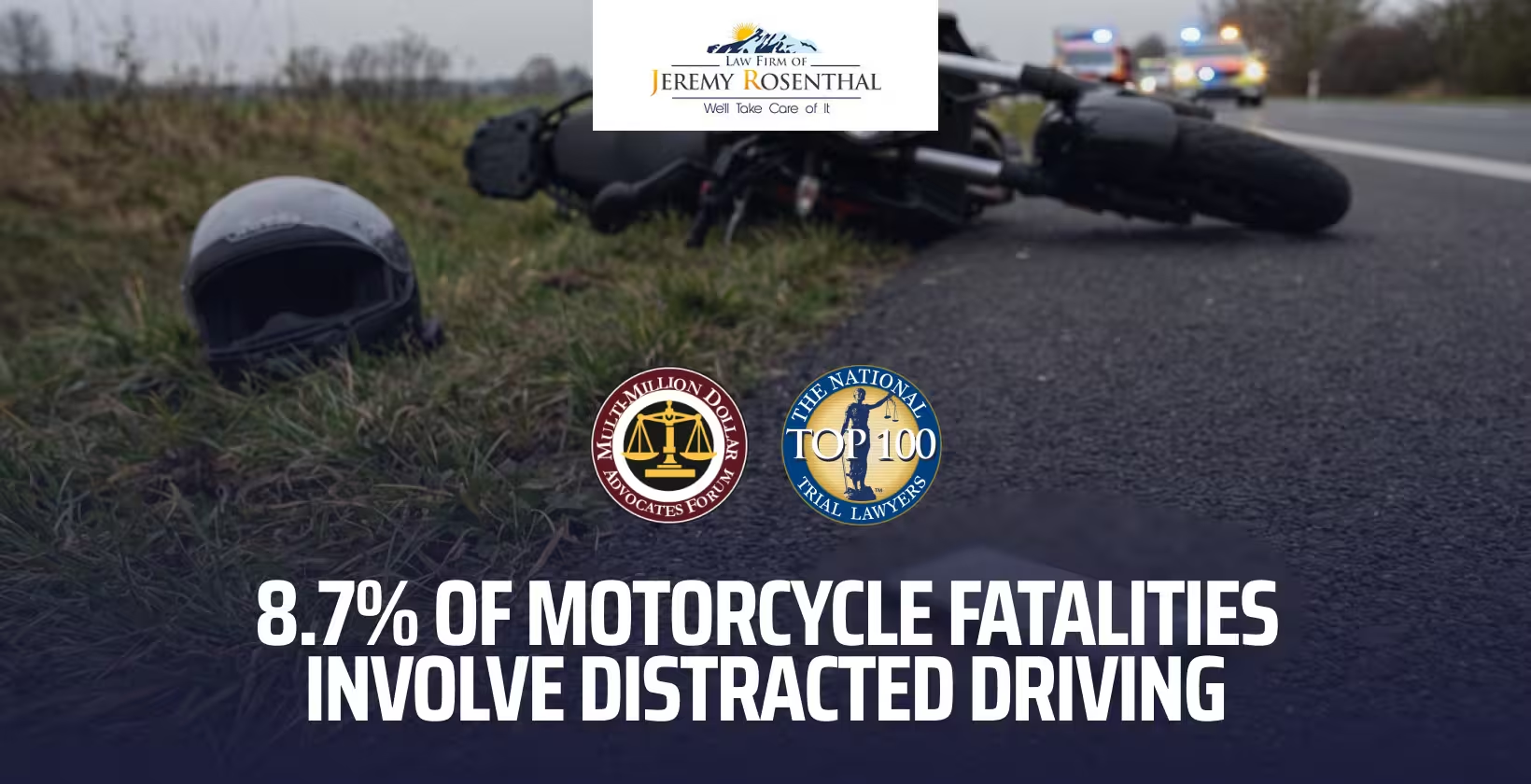
Driver inattention poses catastrophic risks to motorcyclists in Denver, occurring when motorists divert attention from the road to cell phones, GPS devices, passengers, or in-vehicle entertainment systems while operating a vehicle near two-wheeled riders. Distracted driving contributes to 8.7% of all motorcycle fatalities according to National Highway Traffic Safety Administration (NHTSA) data, and Colorado Revised Statute § 42-4-239 prohibits drivers under 18 from using wireless devices while operating vehicles though adult enforcement remains limited. Motorists owe motorcyclists a duty of reasonable care under Colorado law, meaning any deviation from attentive driving that causes a collision establishes negligence liability. Evidence that can strengthen your case includes cell phone records showing active use at crash time, witness statements describing the driver’s head position or hand movements, traffic camera footage capturing the vehicle’s erratic path, dashboard camera recordings from nearby vehicles, and crash reconstruction analysis demonstrating reaction time failures.
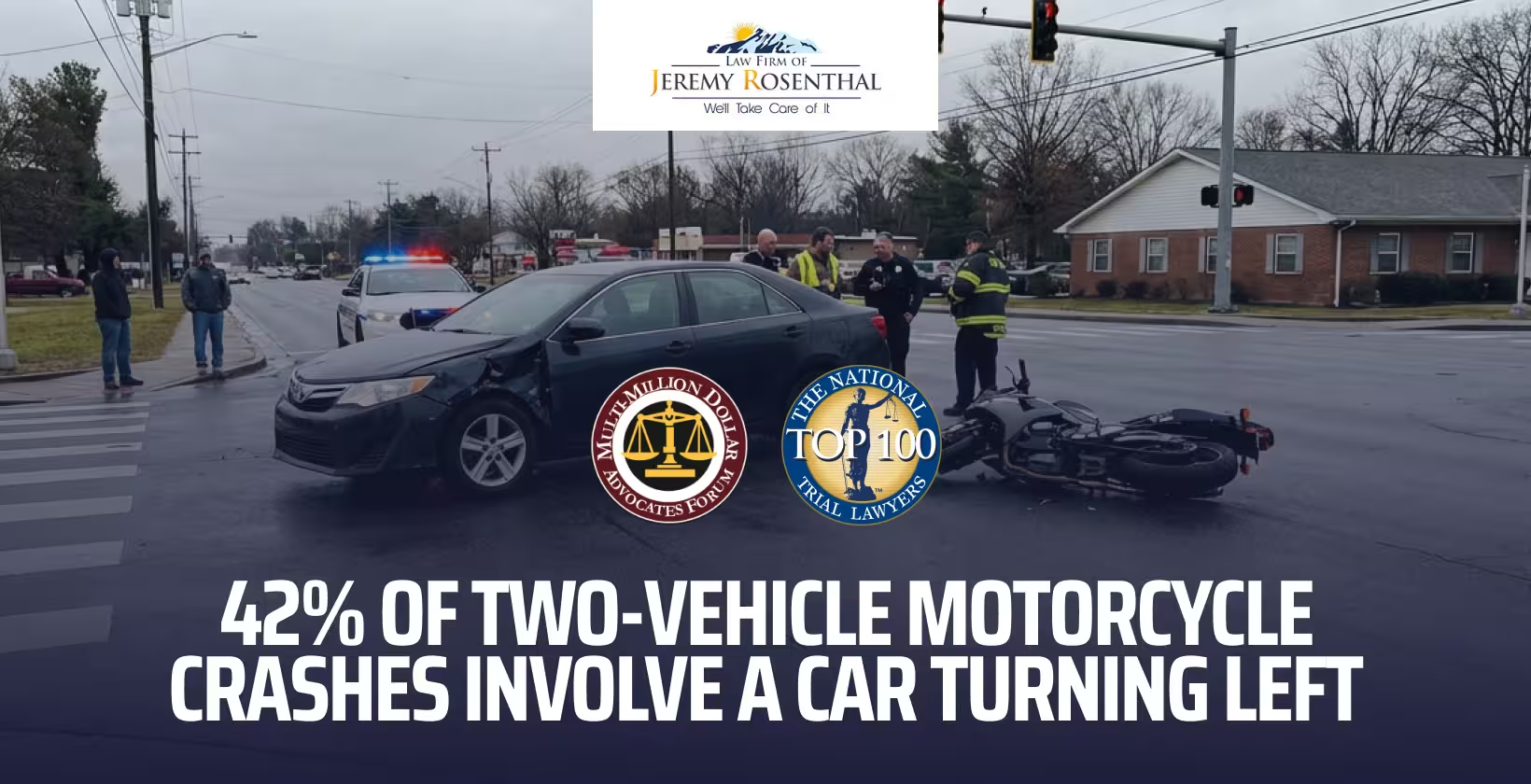
Failure to yield creates deadly left-turn collisions when Denver motorists disregard motorcycles approaching intersections, misjudging their speed and distance due to size bias that makes two-wheeled vehicles appear farther away than four-wheeled cars. The NHTSA reports that 42% of two-vehicle motorcycle crashes involve another vehicle turning left while the motorcycle travels straight, and Colorado Revised Statute § 42-4-703 mandates that drivers yield right-of-way to oncoming traffic when making left turns at intersections. Violating this statute establishes negligence per se in Colorado courts, shifting the burden of proof to the driver who failed to yield. Evidence that can strengthen your case includes intersection surveillance footage, skid mark analysis showing point of impact, traffic signal timing records, witness accounts of signal compliance, vehicle damage patterns indicating travel direction, and accident reconstruction reports calculating approach speeds.
3. Speeding by Either Party
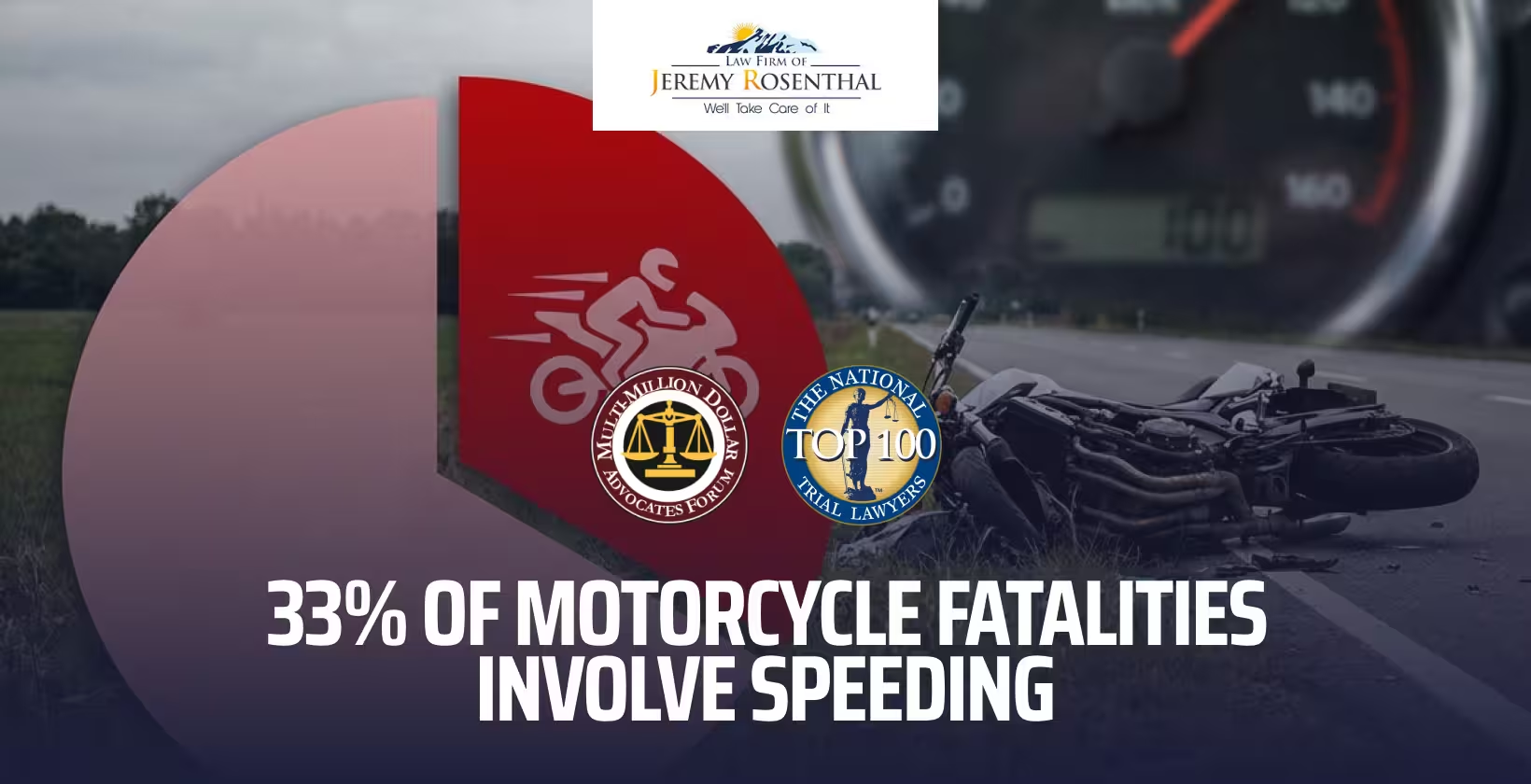
Speeding reduces reaction time and increases impact force in Denver County motorcycle accidents, transforming survivable crashes into catastrophic injury events when either the motorcyclist or other driver exceeds posted limits on urban streets or Interstate 25 corridors. Speed-related crashes account for 33% of all motorcycle fatalities according to NHTSA statistics, and Colorado Revised Statute § 42-4-1101 establishes basic speed rules requiring drivers to operate at speeds reasonable and prudent for conditions regardless of posted maximums. Excessive speed by either party complicates liability determinations in Colorado’s modified comparative negligence system, potentially reducing recovery if the motorcyclist’s speed contributed to the collision. Evidence that can strengthen your case includes crash data recorder information from involved vehicles, surveillance footage establishing travel speed, roadway design studies showing appropriate speed for conditions, police speed estimates based on debris scatter patterns, tire mark measurements indicating deceleration distance, and expert testimony calculating velocity at impact.
4. Unsafe Lane Changes
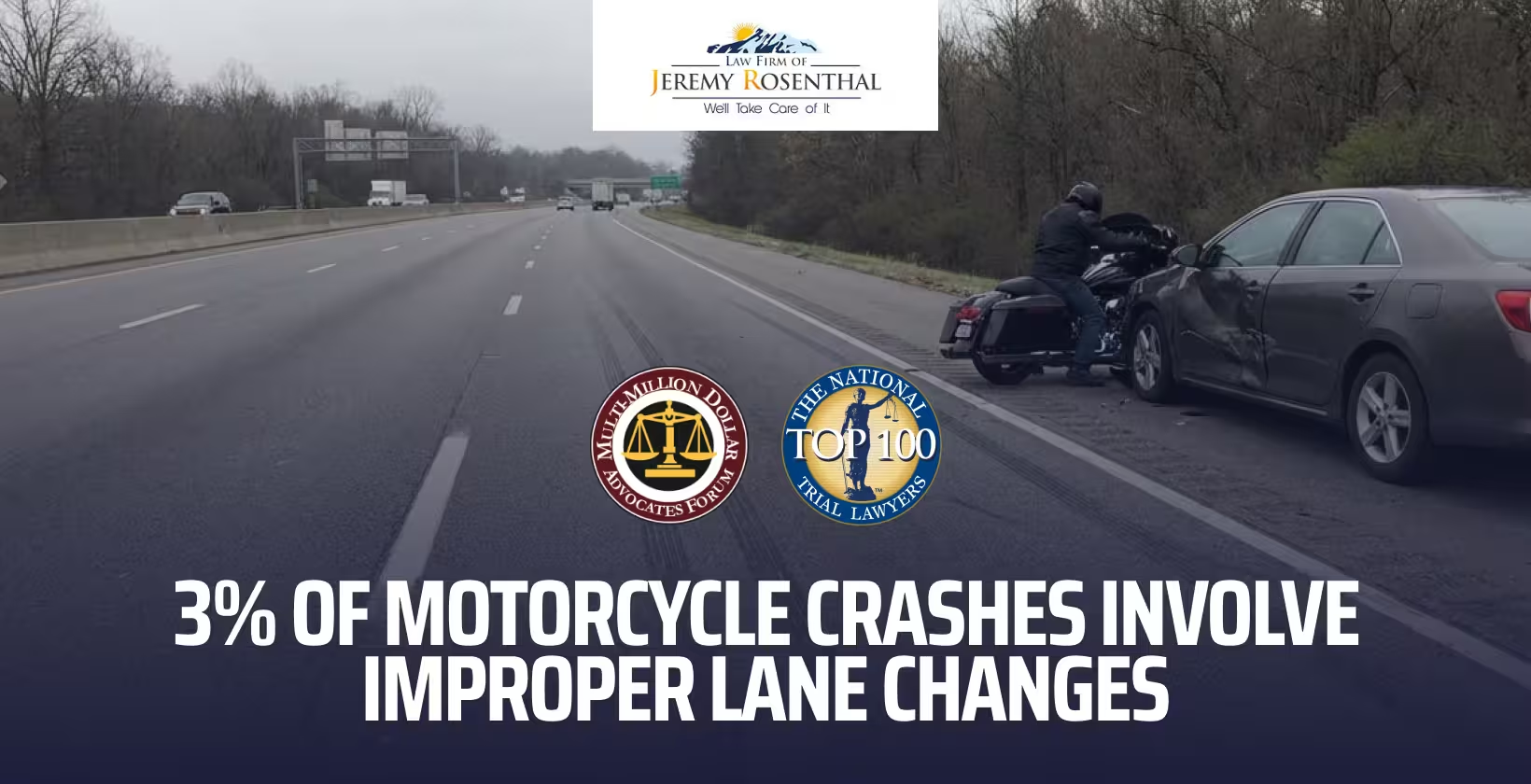
Unsafe lane changes cause sideswipe and blind spot collisions when Denver drivers merge into adjacent lanes without checking mirrors or blind spots, failing to detect motorcycles occupying spaces that larger vehicles would fill more visibly. The Federal Motor Carrier Safety Administration (FMCSA) identifies improper lane changes as contributing factors in 23% of vehicle crashes involving motorcycles, and Colorado Revised Statute § 42-4-1007 requires drivers to ensure lane changes can be made safely and to signal continuously during the maneuver. Violating these requirements establishes prima facie negligence in Colorado personal injury claims against motorists who strike motorcyclists during lane changes. Evidence that can strengthen your case includes video footage from dashcams or helmet cameras, vehicle damage locations indicating point of contact, turn signal activation records from event data recorders, witness testimony regarding signal use, paint transfer analysis between vehicles, and traffic engineering reports on blind spot dimensions for the defendant’s vehicle type.
5. Driving Under the Influence of Alcohol or Drugs
Driving under the influence of alcohol or drugs impairs judgment, reaction time, and depth perception in ways that make Denver motorists unable to detect and respond appropriately to motorcycles sharing the roadway. The NHTSA reports that 29% of motorcyclists killed in crashes had blood alcohol concentrations above 0.08 grams per deciliter while 29% of other drivers involved in fatal motorcycle crashes were alcohol-impaired, and Colorado Revised Statute § 42-4-1301 prohibits operating vehicles with BAC of 0.08% or higher or while ability is impaired by controlled substances. Chemical test results showing impairment establish negligence per se, allowing injured motorcyclists to recover damages without proving the standard of care separately. Evidence that can strengthen your case includes police reports documenting field sobriety test results, blood or breath test records, bar or restaurant receipts showing alcohol purchases, testimony from witnesses who observed erratic driving, toxicology reports identifying drug presence, and surveillance footage capturing impaired behavior before the crash.
6. Tailgating or Following Too Closely
Tailgating eliminates safe stopping distance when Denver motorists follow motorcycles too closely on congested urban streets or highway corridors, creating rear-end collision risks when riders brake suddenly for traffic conditions, road hazards, or emergency vehicles. The NHTSA documents that rear-end crashes account for 7% of motorcycle accidents but cause disproportionate injuries because riders get thrown from their bikes upon impact, and Colorado Revised Statute § 42-4-1008 requires drivers to follow at reasonable and prudent distances considering speed, traffic, and road conditions. Violating the assured clear distance statute establishes presumptive negligence in Colorado courts, placing liability on the following driver absent evidence of sudden emergency conditions. Evidence that can strengthen your case includes dashcam footage showing following distance, event data recorder information indicating speed and braking, witness statements describing the gap between vehicles, skid mark measurements demonstrating insufficient stopping room, accident reconstruction calculating required following distance, and traffic density reports showing congestion levels at crash time.

7. Poor Road Conditions
Poor road conditions multiply motorcycle crash risks in Denver County when potholes, uneven pavement, loose gravel, oil slicks, or construction debris create hazards that destabilize two-wheeled vehicles relying on continuous tire contact for balance and control. The Colorado Department of Transportation (CDOT) recorded 14,387 crashes attributed to road surface conditions statewide in recent years, and governmental entities can face liability under Colorado Revised Statute § 24-10-106 when they receive notice of dangerous conditions and fail to remedy them within reasonable timeframes. Establishing municipal or state liability requires proving the entity knew or should have known about the hazard, had reasonable time to address it, and breached its duty of reasonable care in maintaining public roadways. Evidence that can strengthen your case includes maintenance records showing complaint history, photographs documenting the specific defect, weather reports indicating contributing conditions, expert testimony on roadway design standards, prior accident reports at the same location, and public works inspection logs showing delayed maintenance responses.
8. Weather Conditions
Weather conditions create hazardous riding environments for motorcyclists in Denver, reducing tire traction on wet pavement, limiting visibility during rain or snow, and increasing stopping distances on slick roads. Colorado experiences approximately 89 days of precipitation annually according to the National Weather Service, and motorcyclists face heightened crash risks during adverse weather because Colorado Revised Statute § 42-4-1002 requires all drivers to reduce speed and increase following distance when conditions deteriorate. Motorists who fail to adjust their driving behavior for weather-related hazards breach their duty of reasonable care, establishing negligence when crashes occur. Evidence that can strengthen your case includes weather reports from the National Weather Service for the accident time and location, photographs showing road surface conditions, witness statements describing visibility limitations, police accident reports noting weather factors, and vehicle maintenance records proving tire tread depth and brake functionality.

9. Mechanical Failures
Mechanical failures on motorcycles cause Denver riders to lose control suddenly, experiencing brake malfunctions that prevent stopping, tire blowouts that destabilize the vehicle, throttle problems that create unexpected acceleration, or steering failures that eliminate directional control. The National Transportation Safety Board (NTSB) reports that mechanical defects contribute to 3 percent of motorcycle crashes nationwide, and Colorado law under § 42-4-235 mandates that vehicle owners maintain functional brakes, tires, and safety equipment. Liability extends beyond the rider to manufacturers who produce defective parts, mechanics who perform substandard repairs, or parts distributors who sell faulty components, creating potential product liability or negligence claims. Evidence that can strengthen your case includes motorcycle maintenance records showing recent service, photographs of failed components, expert mechanical inspections identifying the defect cause, recall notices for affected parts, and testimony from certified mechanics establishing maintenance standards.
10. Lack of Visibility or Blind Spots
Visibility limitations create dangerous situations when Denver motorists fail to see motorcyclists approaching from adjacent lanes, emerging from blind spots near vehicle pillars, or traveling behind larger vehicles that obscure the rider’s presence. According to Federal Motor Carrier Safety Administration (FMCSA) research, approximately 35 percent of multi-vehicle motorcycle crashes occur when other drivers report they “didn’t see” the motorcyclist, violating Colorado Revised Statute § 42-4-1007 which requires drivers to yield right-of-way to vehicles already in the intersection or lane. Courts consistently rule that failure to maintain proper lookout establishes negligence regardless of whether the motorcyclist wore bright clothing or used headlights, placing responsibility on all drivers to check mirrors and blind spots before changing lanes. Evidence that can strengthen your case includes dashboard camera footage showing the motorcycle’s position, witness statements confirming the motorcycle’s visibility, photographs demonstrating lighting conditions, accident reconstruction analysis calculating sight lines, and cell phone records proving the at-fault driver faced distractions.

11. Opening Car Doors Without Checking
Car door openings create sudden obstacles in traffic lanes when Denver drivers or passengers exit parked vehicles without checking for approaching motorcyclists, causing riders to collide with doors or swerve into adjacent traffic while attempting evasive maneuvers. The National Highway Traffic Safety Administration (NHTSA) estimates that dooring incidents cause hundreds of serious injuries annually, and Colorado Revised Statute § 42-4-1207 specifically prohibits opening vehicle doors “unless and until it is reasonably safe to do so and can be done without interfering with the movement of other traffic.” Violations of this statute establish negligence per se, meaning the door-opener bears automatic fault when crashes occur because they breached a safety law designed to protect road users. Evidence that can strengthen your case includes photographs showing the parked vehicle’s position relative to the travel lane, witness statements describing the door opening sequence, damage patterns on the motorcycle and vehicle door, surveillance video from nearby businesses, and medical records documenting impact injuries consistent with door collisions.
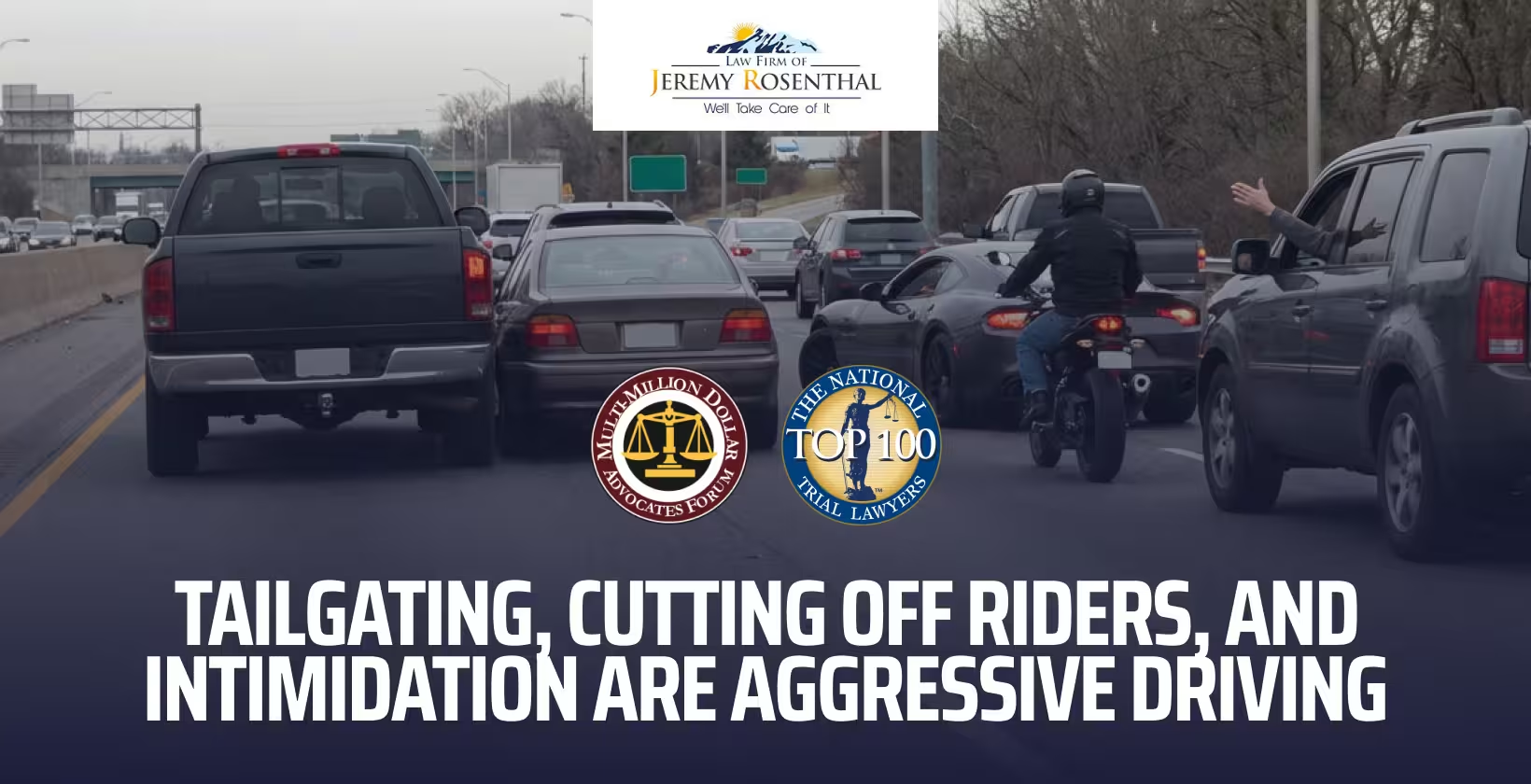
12. Conducción agresiva o ira al volante
Aggressive driving behaviors escalate tensions on Denver roads when motorists tailgate motorcyclists, make threatening gestures, deliberately cut off riders during lane changes, or engage in retaliatory actions that force motorcyclists into dangerous positions. Colorado experiences significant aggressive driving incidents, and the state’s traffic laws under § 42-4-1401 prohibit careless driving that endangers persons or property, while § 18-9-111 addresses harassment charges when drivers intentionally alarm or harass others. Motorists who engage in road rage face both civil liability for resulting crashes and potential criminal charges, strengthening injury claims through punitive damages that punish egregious conduct beyond compensating actual losses. Evidence that can strengthen your case includes witness statements describing aggressive maneuvers, dashboard camera footage capturing the driver’s behavior, police reports documenting road rage elements, social media posts or communications threatening harm, and medical records showing injury severity consistent with high-speed or intentional collisions.
13. Inexperience or Lack of Motorcycle Training
Inexperienced riders struggle with Denver’s varied traffic conditions, failing to execute emergency braking properly, misjudging curve speeds on mountain roads, or making poor decisions about lane positioning and gap acceptance. The Motorcycle Safety Foundation reports that riders who complete formal training courses face 50 percent fewer crashes during their first two years of riding compared to untrained operators, and Colorado law under § 42-2-108 requires motorcycle endorsements demonstrating basic riding competency through written and skills testing. When inexperienced riders cause crashes that injure themselves or others, their lack of training may establish contributory negligence that reduces recovery, though injured third parties maintain full rights to compensation regardless of the rider’s skill level. Evidence that can strengthen your case includes the rider’s licensing history showing endorsement dates, training course records or their absence, accident reconstruction demonstrating rider error patterns, witness statements describing erratic riding behavior, and expert testimony explaining how proper training would have prevented the crash outcome.

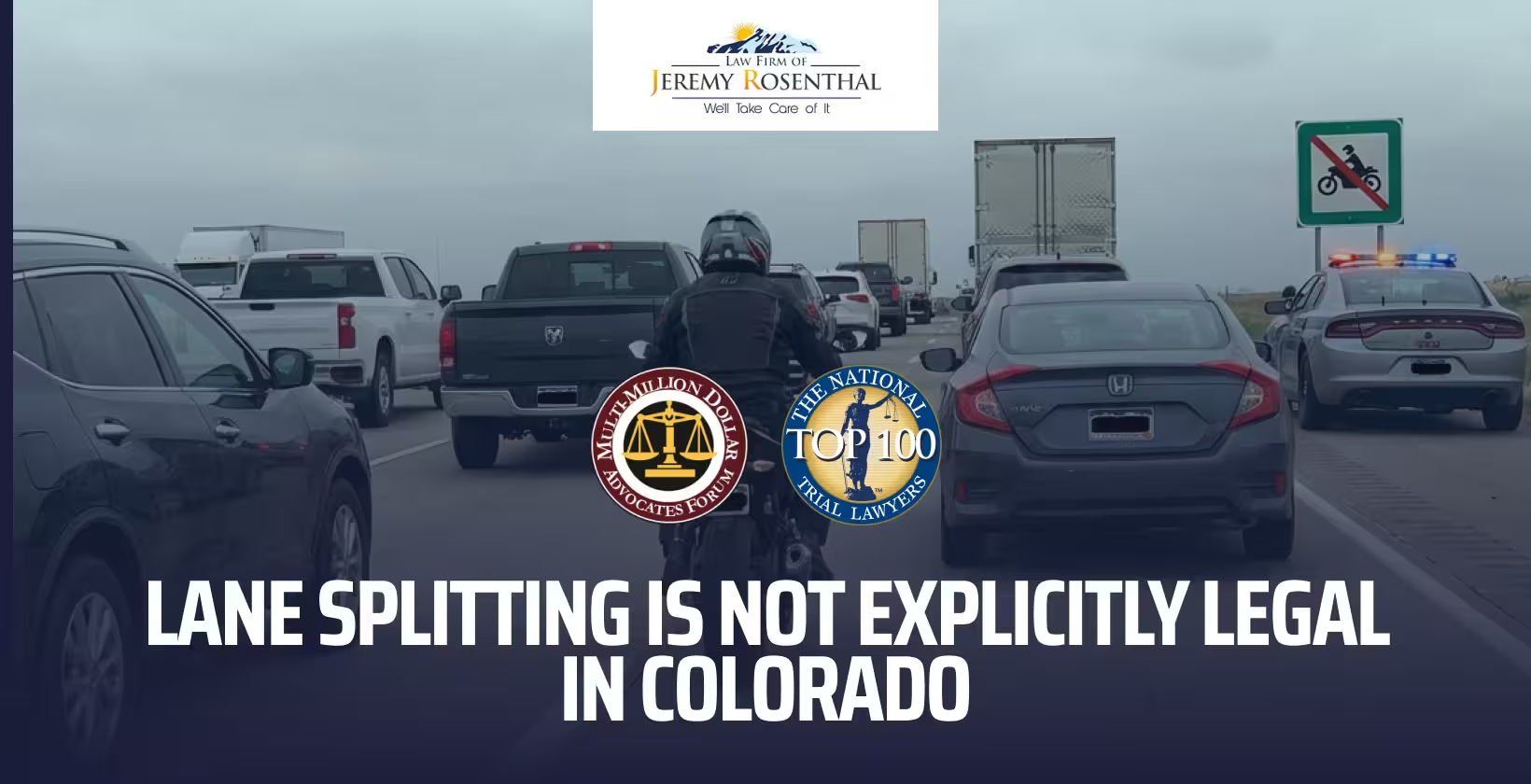
14. Lane Splitting or Filtering
Lane splitting occurs when Denver motorcyclists ride between lanes of stopped or slow-moving traffic, creating conflicts with drivers who change lanes unexpectedly or open doors without anticipating a motorcycle’s presence in the space between vehicles. Colorado law does not explicitly authorize lane splitting, distinguishing it from California where the practice receives legal recognition, and § 42-4-1007 requires vehicles to operate within single lanes except when overtaking and passing. Motorcyclists who lane split in Denver may face allegations of contributory negligence that reduce their recovery even when another driver’s actions primarily caused the crash, though liability analysis examines whether the driver could have prevented the collision through reasonable care. Evidence that can strengthen your case includes traffic camera footage showing vehicle positions and speeds, witness testimony describing lane configurations, accident reconstruction calculating available space, medical records indicating impact angles consistent with specific crash scenarios, and expert analysis comparing the rider’s actions to accepted safety practices.
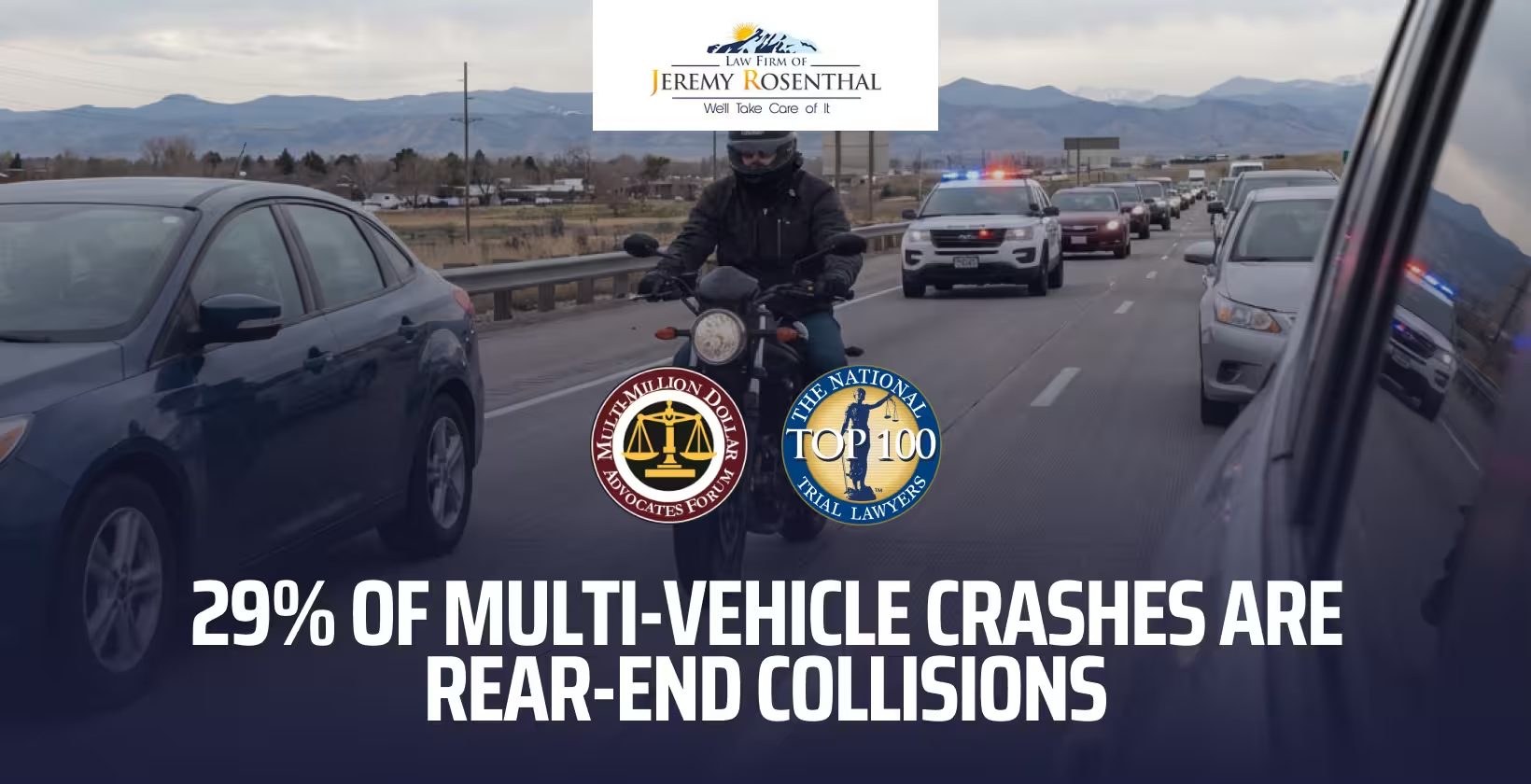
15. Sudden Stops by Other Drivers
Sudden stops by other drivers create dangerous conditions for motorcyclists in Denver, particularly when motorists fail to maintain adequate following distances or brake abruptly without warning in congested traffic. The National Highway Traffic Safety Administration (NHTSA) reports that rear-end collisions account for 29% of all multi-vehicle crashes, and motorcyclists face severe injury risks if they cannot stop in time or must swerve into adjacent lanes to avoid impact. Colorado Revised Statute § 42-4-1008 requires drivers to maintain assured clear distances between vehicles, making sudden stops without justification a violation that establishes negligence when crashes occur. Evidence that can strengthen your case includes traffic camera footage showing the sudden deceleration, witness statements from nearby drivers, vehicle event data recorder information, skid mark measurements, accident reconstruction analysis, and medical records documenting your injuries.
16. Improper Group Riding Etiquette
Improper group riding etiquette among motorcyclists in Denver causes crashes when riders fail to maintain proper formation, execute synchronized lane changes without communication, or ride beyond their skill levels to keep pace with more experienced group members. Research from the Motorcycle Safety Foundation shows that group riding incidents account for 18% of multi-motorcycle accidents according to their 2022 safety analysis, and Colorado traffic law under C.R.S. § 42-4-1502 prohibits motorcycles from operating more than two abreast in a single lane unless on a roadway with multiple designated lanes. Group riding accidents establish shared liability between riders when improper spacing, unsafe passing maneuvers, or failure to signal creates collision conditions that affect other group members or motorists. Evidence that can strengthen your case includes helmet camera footage from group participants, cell phone records showing pre-ride planning messages, statements from experienced riders about group protocols, photos of motorcycle damage patterns, witness accounts of the group’s riding behavior, and expert testimony about proper formation standards.

Denver motorcycle accident lawyers provide investigation services, liability determination, insurance negotiations, medical documentation, settlement advocacy, and trial representation for injured riders pursuing compensation after collisions caused by negligent drivers, road hazards, or defective motorcycle components.

Investigación del caso y recopilación de pruebas
Attorneys gather crash scene photographs, witness statements, police reports, surveillance footage, and accident reconstruction data that establishes fault through skid mark analysis, vehicle damage patterns, and helmet camera recordings. These investigation services document negligence comprehensively by securing evidence before it disappears, interviewing witnesses while memories remain fresh, and obtaining traffic camera footage from the City and County of Denver before automatic deletion occurs.

Determinación de responsabilidad y análisis de fallas
Lawyers examine Colorado traffic laws, duty of care violations, and negligent actions such as left-turn failures, lane change errors, and following too closely to establish legal responsibility for motorcycle crashes. Fault analysis identifies all liable parties including negligent drivers, trucking companies, government entities responsible for road maintenance, and motorcycle manufacturers if defective parts contributed to the collision.

Presentación y gestión de reclamaciones de seguros
Attorneys handle all communications with insurance companies, submit demand packages with medical records and wage loss documentation, and prevent clients from making recorded statements that adjusters use to deny claims or reduce settlement offers. Insurance claim management includes filing first-party claims under the rider's own uninsured motorist coverage when at-fault drivers lack adequate liability limits and pursuing bad faith claims when insurers engage in unreasonable delay tactics.

Documentación médica y coordinación del tratamiento
Lawyers work with treating physicians to obtain complete medical records documenting road rash injuries, fractures, traumatic brain injuries, and spinal cord damage while arranging independent medical examinations when insurance companies dispute injury severity. Treatment coordination includes calculating future medical costs through life care planning experts who project the expenses of ongoing physical therapy, pain management, and adaptive equipment needed after permanent motorcycle accident injuries.

Negociación de acuerdos y cartas de reclamación
Attorneys present evidence-backed settlement demands that detail how negligent drivers violated Colorado Revised Statutes § 42-4-1003 (unsafe lane changes) or § 42-4-1007 (following too closely) while countering lowball offers with motorcycle crash statistics from the Colorado Department of Transportation showing injury severity. Settlement negotiation recovers fair compensation for emergency room treatment, surgical procedures, lost wages during recovery periods, property damage to custom motorcycle modifications, and pain and suffering from permanent scarring or disability.

Preparación de juicios y representación en sala
Lawyers file civil complaints in Denver District Court, conduct discovery through depositions of at-fault drivers and expert interrogatories, and retain accident reconstruction specialists and biomechanical engineers who testify about collision dynamics and injury causation. Courtroom representation presents cases to Denver juries through opening statements that establish duty and breach, direct examination of medical experts who explain injury treatment, and closing arguments that connect defendant negligence to client damages when settlement negotiations produce inadequate offers.

Cálculo de daños y análisis económico
Attorneys calculate past medical expenses including ambulance transport, emergency department treatment, and orthopedic surgery costs while projecting future treatment through vocational rehabilitation experts who determine lost earning capacity when injuries prevent return to construction, delivery driving, or manual labor occupations. Economic analysis quantifies property damage to motorcycle fairings, frames, and custom paint jobs while documenting non-economic losses such as chronic pain, PTSD from the crash, and loss of enjoyment of recreational riding activities.

Resolución de gravámenes y gestión de facturas médicas
Lawyers negotiate reductions on medical liens from health insurance carriers including Kaiser Permanente, Cigna, and United Healthcare while resolving hospital liens from Denver Health Medical Center, UCHealth University of Colorado Hospital, and other facilities treating crash victims. Medical bills management ensures fair client recovery occurs after lien payoffs by using Colorado's make-whole doctrine to reduce subrogation claims when settlements fail to compensate victims completely for all economic and non-economic damages.

Cumplimiento del plazo de prescripción
Attorneys ensure all legal filings meet the three-year deadline under Colorado Revised Statutes § 13-80-101 for personal injury claims and the two-year limit for wrongful death actions while protecting clients' rights to pursue compensation before court-imposed time restrictions expire. Statute compliance includes filing earlier deadlines when cases involve government entities such as the Regional Transportation District or Denver Public Works, which require notice within 182 days under the Colorado Governmental Immunity Act.

Defensa por negligencia comparativa
Lawyers counter insurance company arguments that motorcycle riders contributed to crashes by speeding, lane splitting, or operating without proper endorsements by presenting evidence that minimizes or eliminates client liability percentages under Colorado's modified comparative negligence rule in § 13-21-111. Comparative negligence defense includes obtaining traffic engineering reports showing that road defects, faded lane markings, or inadequate signage caused the collision while challenging prejudiced assumptions that motorcycle riders engage in reckless behavior despite safe operation practices and proper licensing.
Tort law provides the legal foundation for motorcycle accident victims to pursue compensation from parties whose negligence caused their injuries and financial losses. Colorado operates under a modified comparative negligence system where injured riders can recover damages if they bear less than 50 percent fault for the collision, according to Colorado Revised Statutes § 13-21-111. The tort framework establishes that negligent drivers who breach their duty of care by violating traffic laws, driving distracted, or failing to yield owe compensation to motorcyclists who suffer harm as a direct result of those violations. Attorneys build tort claims by proving four elements: the at-fault party owed a duty of care, that duty was breached through negligent actions, the breach directly caused the collision, and quantifiable damages resulted from the crash. A motorcyclist struck by a driver who ran a red light at Colfax Avenue and Federal Boulevard demonstrates classic tort liability where the driver’s traffic violation breached the duty to obey signals, causing collision-related injuries. Denver County courts hear these tort claims and award compensation for medical expenses, lost income, property damage, and pain and suffering when evidence establishes liability and damages meet legal standards for recovery.
Colorado-specific tort rules create distinct advantages and limitations for motorcycle accident victims pursuing compensation through the state’s legal system compared to other jurisdictions. The state’s modified comparative negligence standard under C.R.S. § 13-21-111 bars recovery if a motorcyclist’s fault reaches or exceeds 50 percent, while reducing damage awards proportionally for any contributing negligence below that threshold. Colorado also applies a two-year statute of limitations under C.R.S. § 13-80-102 for personal injury claims, requiring victims to file lawsuits within two years from the accident date or lose their right to compensation permanently. The state recognizes the collateral source rule, allowing juries to award full damages without reduction for insurance payments the victim receives from their own coverage. A rider who suffers $80,000 in medical bills after being struck by a left-turning vehicle at Broadway and Evans Avenue can pursue full recovery even if their health insurance covered $60,000 of those expenses under Colorado’s collateral source doctrine.
Motorcycle accident victims in Denver possess specific legal protections that enable them to seek compensation and hold negligent parties accountable for collision-related harm. Colorado law grants injured riders the same rights as other vehicle occupants despite persistent bias suggesting motorcyclists assume greater risk on public roads.
1. Right to Full Compensation: Colorado law entitles victims to recover economic damages (medical expenses, lost wages, property damage) and non-economic damages (pain, suffering, emotional distress) from at-fault parties without arbitrary caps on most personal injury claims.
2. Right to Refuse Recorded Statements: Accident victims may decline giving recorded statements to insurance adjusters without penalty, preserving their claim while gathering evidence and consulting legal professionals before making formal declarations.
3. Right to Medical Treatment Choice: Injured motorcyclists select their own treating physicians and specialists rather than accepting insurance company recommendations that may prioritize cost reduction over quality care.
4. Derecho a representación legal: Victims can hire attorneys on contingency fee arrangements where legal fees come from settlement or verdict proceeds rather than requiring upfront payment.
5. Right to Jury Trial: Colorado guarantees the right to present injury claims before a jury of peers if settlement negotiations fail to produce fair compensation offers.
6. Right to Inspect Evidence: Accident victims can access police reports, witness statements, surveillance footage, and other evidence through discovery processes that compel disclosure from opposing parties.
7. Derecho a rechazar las ofertas de conciliación: Injured riders maintain control over case resolution and may reject inadequate settlement proposals to pursue larger awards through trial if offers fail to cover actual damages.
Motorcycle operators in Denver must comply with both federal safety standards and Colorado-specific regulations that govern equipment, licensing, and operation on public roads.
1. Federal Motor Vehicle Safety Standards: The National Highway Traffic Safety Administration establishes manufacturing standards for motorcycle helmets (FMVSS No. 218), lighting systems, and brake performance that all motorcycles sold in the United States must meet before legal road operation.
2. Colorado Helmet Law (C.R.S. § 42-4-1502): Colorado requires riders under 18 years old to wear DOT-approved helmets while operating or riding as passengers on motorcycles, though adult riders may legally ride without helmets.
3. Motorcycle Endorsement Requirement (C.R.S. § 42-2-102): Colorado law mandates that motorcycle operators obtain a Class M endorsement on their driver’s license by passing written knowledge tests and on-cycle skills evaluations before legally riding on public roads.
4. Lane Splitting Prohibition (C.R.S. § 42-4-1007): Colorado prohibits motorcycles from operating between lanes of traffic moving in the same direction, requiring riders to occupy full lane positions like other vehicles.
5. Equipment Requirements (C.R.S. § 42-4-204 through 42-4-225): Colorado mandates working headlights, taillights, turn signals, mirrors, and mufflers that limit exhaust noise below 86 decibels for street-legal motorcycle operation.
6. Insurance Minimums (C.R.S. § 10-4-620): Colorado requires motorcyclists to carry liability insurance with minimum limits of $25,000 per person, $50,000 per accident for bodily injury, and $15,000 for property damage.
7. BAC Limits (C.R.S. § 42-4-1301): Colorado enforces a 0.08 percent blood alcohol concentration limit for motorcycle operators, with enhanced penalties for riders exceeding 0.15 percent who face aggravated DUI charges.
Vicarious liability extends financial responsibility for motorcycle accident damages to parties who did not directly cause the collision but maintain legal relationships with negligent operators under Colorado law. Employers face liability for employee negligence under the doctrine of respondeat superior when workers cause crashes while performing job duties, making delivery companies financially responsible if their motorcycle courier strikes another rider while making restaurant deliveries along 16th Street Mall. Parents may face vicarious liability for motorcycle accidents caused by minor children operating bikes with parental permission under Colorado’s parental responsibility statute C.R.S. § 13-21-107, though this liability caps at $3,500 for property damage per occurrence. Vehicle owners who loan motorcycles to unqualified or intoxicated operators face potential negligent entrustment liability if they knew or should have known the borrower posed unreasonable risk to other road users. The doctrine allows injury victims to pursue compensation from defendants with greater financial resources or insurance coverage when direct tortfeasors lack sufficient assets to cover damages.
Multiple defendants can face liability in a single motorcycle accident lawsuit when evidence establishes that several parties contributed to the collision through independent acts of negligence under Colorado’s joint and several liability framework. A motorcyclist injured at the intersection of Speer Boulevard and Auraria Parkway might sue both the driver who turned left without yielding and the city of Denver if poorly timed traffic signals contributed to the crash circumstances. Colorado law under C.R.S. § 13-21-111.5 applies joint and several liability differently based on defendant fault percentages, holding defendants who bear more than 50 percent responsibility jointly liable for all economic damages while limiting defendants with lesser fault percentages to their proportional share. Common multi-defendant scenarios involve driver negligence combined with vehicle manufacturer defects, bar over-service contributing to drunk driving crashes, or employer liability alongside employee driver fault. The legal team investigates all potential sources of liability to maximize available insurance coverage and assets for satisfying damage awards when a single defendant lacks sufficient resources to compensate victims fully.
To find an experienced and reliable motorcycle accident attorney near you, visit one of the regions listed below.
Condado de Denver
Condado de Adams
Condado de Arapahoe
Condado de Jefferson
Condado de Douglas
Condado de Boulder
Bring to your first meeting with a Denver motorcycle accident lawyer police reports, medical records, accident scene photographs, insurance policies, witness information, and wage loss documentation. Include prescription records, repair estimates, insurance correspondence, and event timelines. Organized evidence helps attorneys evaluate case strength, identify liable parties, and develop effective strategies for pursuing full compensation through settlement negotiations or trial.

Legal representation for motorcycle crashes encompasses comprehensive services protecting your rights from initial consultation through final settlement or verdict.
1. Case Investigation: Attorneys examine police reports, interview witnesses, visit accident scenes, review traffic camera footage, and hire accident reconstruction specialists to establish how the collision occurred.
2. Medical Documentation Review: Your legal team analyzes treatment records, consults medical professionals, calculates future care costs, and connects injuries directly to the accident to build a complete damages profile.
3. Insurance Communication: Lawyers handle all correspondence with insurance adjusters, review policy coverage limits, submit claims properly, and prevent insurers from exploiting statements you make during the claims process.
4. Liability Determination: Attorneys identify all responsible parties including negligent drivers, government entities maintaining roads, and vehicle manufacturers if defects contributed to your crash.
5. Negociación de acuerdo: Your legal team calculates fair compensation, presents demand packages, counters lowball offers, and negotiates persistently until insurers offer adequate settlements reflecting your actual losses.
6. Litigation Representation: Lawyers file lawsuits, conduct depositions, prepare expert witnesses, argue motions, and present your case at trial when settlement negotiations fail to produce fair compensation.
7. Damage Recovery: Attorneys pursue compensation for medical expenses, lost income, property damage, pain and suffering, and reduced quality of life resulting from your motorcycle accident injuries.
Denver attorneys at Rosenthal Injury Law offer 24/7 availability recognizing that motorcycle crashes occur during late-night rides, weekend trips, and early morning commutes requiring immediate legal guidance. Riders need access to legal counsel when evidence grows stale, insurance adjusters call unexpectedly, or urgent questions arise about medical treatment choices that affect claim value. Experienced attorneys provide emergency contact numbers, online intake forms, and rapid response protocols ensuring accident victims receive timely advice regardless of when their collision occurs, particularly during the first critical hours when preserving evidence and avoiding damaging statements to insurers matters most.
Clients possess the absolute right to change attorneys at any time during their motorcycle accident case, even after signing representation agreements. You may terminate your current lawyer by sending written notice, then hire new counsel who will file a substitution of attorney form with the court and contact your previous lawyer to transfer case files. Your original attorney may claim a percentage of the final settlement or verdict for work already completed under quantum meruit principles, though this amount typically gets resolved through negotiation or court determination. Switching counsel makes sense when your lawyer misses deadlines, fails to communicate, lacks motorcycle accident experience, or demonstrates inadequate preparation, though frequent attorney changes can delay your case and create complications during settlement negotiations or trial preparation.
Your case merits legal consultation when another party’s negligence caused your motorcycle crash resulting in injuries, property damage, or financial losses exceeding minor amounts. Attorneys evaluate case strength by examining liability evidence, injury severity, available insurance coverage, and whether you share fault under Colorado’s modified comparative negligence rules allowing recovery if you bear less than 50 percent responsibility. Strong cases feature clear liability proof like police citations against the other driver, documented injuries requiring substantial medical treatment, and witnesses confirming the other party violated traffic laws. Even crashes involving shared fault, disputed liability, or relatively moderate injuries deserve legal review since attorneys often identify compensation sources and liability factors that injured riders miss, particularly regarding uninsured motorist coverage, third-party liability, or road defects contributing to collisions.
Finding qualified motorcycle accident representation requires evaluating multiple sources to identify attorneys with relevant courtroom experience and proven settlement results.
Attorney Referrals from Other Lawyers: Legal professionals in different practice areas refer clients to skilled motorcycle accident attorneys they trust based on firsthand knowledge of trial abilities and negotiation success.
State Bar Association Resources: The Colorado Bar Association provides lawyer referral services connecting accident victims with pre-screened attorneys who meet specific experience requirements and maintain good standing.
Directorios legales en línea: Platforms like Avvo, Martindale-Hubbell, and Super Lawyers publish attorney profiles, peer ratings, client reviews, and case results helping you compare credentials across multiple lawyers.
Past Client Recommendations: Friends, family members, or colleagues who previously hired motorcycle accident attorneys share direct experiences about communication quality, settlement outcomes, and overall satisfaction with legal representation.
Internet Search Reviews: Google reviews, Yelp ratings, and law firm websites reveal client testimonials, case victories, and attorney backgrounds providing insight into how lawyers handle motorcycle crash claims.
Motorcycle Community Networks: Local riding groups, motorcycle shops, and cycling organizations often maintain informal referral networks identifying attorneys who understand rider perspectives and motorcycle accident dynamics.
Rosenthal Injury Law serves Denver County communities and surrounding metropolitan areas providing comprehensive motorcycle accident representation across urban corridors and mountain highways.
Comunidades del condado de Denver: La ciudad de Denver, Capitol Hill, Highland, Cherry Creek, Five Points, Washington Park, University Hills y los barrios de Montbello a lo largo de la Interestatal 25, la Interestatal 70, la Avenida Colfax y el Bulevar Federal.
Adams County: Commerce City, Thornton, Westminster, Northglenn, and Brighton communities where motorcycle crashes occur on Interstate 76, Highway 85, and 120th Avenue.
Arapahoe County: Aurora, Centennial, Littleton, Englewood, and Greenwood Village areas covering major routes including Interstate 225, Arapahoe Road, and Parker Road.
Jefferson County: Lakewood, Arvada, Golden, Wheat Ridge, and Edgewater communities along Highway 6, Interstate 70 through the mountains, and Highway 93.
Douglas County: Castle Rock, Highlands Ranch, Parker, and Lone Tree covering Interstate 25 corridor and Highway 83 through rural areas where motorcycle accidents occur on winding roads.
Regional Coverage: Statewide representation extends to Colorado residents injured anywhere in the state including mountain passes, rural highways, and resort communities where scenic routes attract motorcyclists facing unique hazards.
Nuestros abogados especializados en lesiones personales en Denver están listos para ayudarle a obtener la compensación que merece. Ya sea que haya sufrido lesiones en un accidente automovilístico, de motocicleta o cualquier otro incidente, estamos aquí para defender sus derechos. Comuníquese con nuestra oficina en Denver para programar su consulta gratuita hoy mismo.