
Jeremy Rosenthal
Fundador

When pedestrian accidents occur in Denver, victims need dedicated legal representation to recover fair compensation while facing insurance company resistance, mounting medical expenses, and Colorado’s modified comparative negligence rules that can reduce settlements if victims share any fault for the collision. Pedestrian injuries from vehicle strikes create immediate financial pressure through emergency room treatment, diagnostic imaging, orthopedic consultations, and surgical interventions that insurers frequently undervalue or dispute, particularly when drivers claim pedestrians violated traffic signals or crossed outside marked crosswalks in Denver County’s downtown corridor or residential neighborhoods. Colorado law requires accident victims to file personal injury claims within three years, while evidence deteriorates, witnesses become unavailable, and surveillance footage gets deleted, creating urgent timelines that insurers exploit by delaying investigations and offering inadequate settlements before victims understand the full extent of their injuries and future medical needs.
The pedestrian accident lawyers at Rosenthal Injury Law address these challenges by conducting independent crash scene investigations to document skid marks, traffic control device visibility, crosswalk conditions, and driver sight line obstructions that establish liability, while simultaneously securing medical records, consulting with orthopedic surgeons and neurologists to project lifetime treatment costs, and filing comprehensive claims that account for current bills, future procedures, wage losses during recovery periods, and diminished earning capacity if injuries create permanent limitations. Legal representation prevents insurance adjusters from obtaining recorded statements that undermine claims, protects victims from signing releases that waive future recovery rights, and ensures compliance with Colorado’s statutory notice requirements and court filing deadlines that bar compensation if missed. Attorneys negotiate settlements based on documented medical evidence and economic projections rather than accepting initial offers that reflect insurer profit margins instead of victim needs, pursuing litigation when responsible parties refuse fair recovery for injuries caused by their negligence.
The benefits of hiring a Denver pedestrian accident lawyer are listed below:

Nuestros abogados, con amplia experiencia, se pondrán en contacto con usted para una consulta legal gratuita.
Colaborar con Jeremy Rosenthal significa trabajar con un abogado de Denver dedicado a priorizar a las víctimas de lesiones. Gracias a su enfoque en la comunicación eficaz y la preparación minuciosa de cada caso, los clientes reconocen constantemente la determinación del bufete para ayudar a cada víctima de accidente a obtener la compensación que merece.
Jeremy Rosenthal leads Rosenthal Injury Law in representing pedestrians who suffer injuries when vehicles strike them in Denver crosswalks, parking lots, and residential streets throughout Denver County. The firm understands that pedestrians face catastrophic injuries such as traumatic brain damage, spinal cord trauma, multiple fractures, and internal organ damage because they lack any protection when drivers fail to yield or operate vehicles recklessly. Pedestrian victims often require immediate hospitalization, emergency surgery, extended rehabilitation, and permanent lifestyle modifications that create financial strain on families who depend on steady income.
Jeremy Rosenthal brings focused trial preparation and courtroom advocacy to pedestrian injury claims, handling everything from initial crash scene investigation through insurance negotiations and jury trials if settlement offers fall short of fair compensation. The attorney coordinates medical evaluations with orthopedic surgeons, neurologists, and rehabilitation specialists who document the full extent of injuries, while accident reconstruction professionals analyze vehicle speeds, driver sight lines, traffic signal timing, and roadway conditions that contributed to the collision. Rosenthal handles direct communication with insurance adjusters, files court pleadings within Colorado statute deadlines, deposes negligent drivers under oath, and presents evidence that establishes liability and damages in pedestrian accident cases.
Fundador
The attorneys at Rosenthal Injury Law protect pedestrian accident clients from insurance company tactics designed to minimize payouts and shift blame. The firm brings decades of combined litigation experience to every case in Denver County.
Client-First Representation
At Rosenthal Injury Law, you work directly with your attorney—not just paralegals or case managers. Jeremy Rosenthal personally handles your case and remains accessible throughout the legal process, providing his cell phone number for urgent matters and returning calls within hours. This direct communication means you get real answers about your case strategy and settlement options when you need them, not days later through intermediaries.
No Upfront Costs
You pay nothing unless you win. The firm handles all case expenses upfront, including expert witness fees, medical record costs, and court filing fees. This contingency fee structure means you can pursue justice without financial risk, regardless of your current economic situation.
Experienced Legal Representation
Jeremy Rosenthal brings over two decades of personal injury experience to every pedestrian accident case. His background includes working as an insurance defense attorney, giving him insider knowledge of the tactics insurers use to minimize payouts. He’s earned recognition as a SuperLawyers Rising Stars Honoree and has been rated among the Top 100 Trial Attorneys by The National Trial Lawyers. He’s been a member of the Million Dollar Advocates Forum since 2014.
Deep Local Knowledge
Jeremy earned his J.D. from the University of Denver Sturm College of Law and is admitted to practice in Colorado state and federal courts. He practices regularly in Denver County District Court and understands the local procedural requirements, filing deadlines, and judicial preferences that impact case outcomes. This familiarity allows him to position your claim strategically and anticipate defense tactics specific to Denver courts.
Proven Trial Experience
Insurance companies settle more favorably when they know your attorney will take your case to trial if necessary. Jeremy has tried dozens of cases to verdict and knows how to present pedestrian accident claims effectively to juries. His track record includes a Top 10 verdict in Colorado, demonstrating his ability to secure substantial compensation when cases go to trial.
Strong Advocacy from Day One
The firm acts immediately to protect your interests. Within 24 to 48 hours after your accident, Jeremy sends preservation letters to secure surveillance footage, traffic camera recordings, and witness statements before this evidence disappears. He also stands between you and aggressive insurance adjusters, handling all communications so you can focus on recovery.
Thorough Investigation
The firm conducts comprehensive investigations to build the strongest possible case. Jeremy works with accident reconstruction experts, secures witness statements, and analyzes traffic patterns and road conditions at the accident scene. He reviews police reports for inaccuracies and obtains surveillance footage from nearby businesses and traffic cameras. This approach to evidence gathering strengthens your claim and counters insurance company attempts to shift blame or minimize the severity of the accident.
The settlement amounts below reflect potential settlement ranges from successful pedestrian accident cases and negotiations. No fixed formula calculates individual awards since each pedestrian accident case involves distinct circumstances and variables.
Los abogados de lesiones personales de Denver pueden ayudarle a obtener una compensación justa por su accidente. Contáctenos hoy para programar su consulta gratuita.
Medical expenses after pedestrian accidents accumulate through emergency room visits, hospitalization stays, surgical interventions, diagnostic imaging, and ongoing treatment protocols that injured victims require following vehicle collisions in Denver. Colorado law permits recovery of all reasonable and necessary medical costs directly caused by the defendant’s negligence, including future treatment expenses if your injuries require long-term care or additional surgeries. Attorneys compile medical records, billing statements, and physician testimony to document the full scope of treatment expenses and negotiate reductions on outstanding balances to increase your net recovery. Health insurance companies and medical providers often place liens on settlements, requiring skilled negotiation to preserve your compensation.
Common injuries in Denver pedestrian accident cases create devastating physical, emotional, and financial consequences requiring comprehensive medical treatment and legal representation.
Proving types of fractures requires X-rays, CT scans, and orthopedic documentation showing fracture classification (comminuted, compound, greenstick, or spiral patterns) with mechanical relationship to vehicle contact points.
Insurance adjusters argue pre-existing osteoporosis, bone density deficiencies, or previous fractures caused the break rather than vehicle impact forces.
Fracture cases succeed when biomechanical evidence links vehicle contact points to specific bone breaks, and delayed treatment claims face scrutiny under Colorado's statute requiring immediate medical correlation documentation.
Get medical documentation and protect your compensation claim with legal help from experienced attorneys. Request your free injury evaluation today.
Denver pedestrian accident rates have climbed steadily as the city’s population surpassed 715,000 residents according to U.S. Census Bureau data, creating dangerous conditions where foot traffic intersects with major freight corridors and commuter highways. The confluence of I-25, I-70, and I-76 through Denver’s urban core generates heavy vehicle volumes that contribute to 287 pedestrian crashes annually according to Colorado Department of Transportation (CDOT) statistics, translating to nearly one collision every 30 hours across the city’s neighborhoods and commercial districts.
Alameda Avenue and Santa Fe Drive (US-85) – Industrial truck traffic serving railyards conflicts with residential pedestrian crossing patterns near this major intersection.
Denver experiences approximately three to four pedestrian accidents daily based on Colorado Department of Transportation data showing 1,237 pedestrian crashes occurred throughout the city in 2022. Peak collision periods concentrate during morning commutes between 7:00 AM and 9:00 AM and evening hours from 5:00 PM to 7:00 PM when pedestrian traffic intersects with rush hour vehicle volumes. High-risk corridors include Colfax Avenue, Federal Boulevard, and Broadway where commercial density creates frequent crosswalk interactions, limited visibility conditions, and driver distraction factors that contribute to collision frequency. Winter months see elevated accident rates when shorter daylight hours reduce pedestrian visibility and icy conditions impair both driver control and pedestrian footing stability across crosswalks and intersection approaches.
Denver pedestrian accident lawyers provide preventive legal guidance by educating clients about pedestrian safety regulations, identifying hazardous conditions that justify premises liability claims, and documenting dangerous intersections or crosswalk violations to support future municipal improvement petitions. Attorneys review accident circumstances to determine whether inadequate signage, poorly maintained crosswalks, or timing failures at traffic signals contributed to the collision, then advise clients on reporting these hazards to Denver Public Works for remediation. Legal professionals also counsel injured pedestrians on Colorado’s modified comparative negligence rule (C.R.S. § 13-21-111), explaining how certain behaviors like jaywalking or crossing against signals can reduce future claim values if accidents recur.
Taking immediate action after a pedestrian accident protects your health and preserves evidence needed for compensation claims.

1. Call 911 and Request Emergency Services:
Contact police and paramedics immediately to document the accident scene and obtain medical evaluation, even if injuries appear minor at first.
2. Move to Safety if Able:
Step away from traffic lanes to prevent additional collisions, but avoid leaving the immediate accident area before police arrive.

3. Document the Scene with Photographs:
Capture images of vehicle positions, traffic signals, crosswalk markings, road conditions, visible injuries, and your torn or damaged clothing before conditions change.

4. Collect Driver and Witness Information:
Record the driver's name, insurance details, license plate number, and contact information from witnesses who saw the collision occur.

5. Seek Complete Medical Evaluation:
Visit an emergency room or urgent care facility within hours of the accident to identify internal injuries, document your condition, and establish the connection between the collision and your harm.

6. Preserve Physical Evidence:
Save damaged clothing, shoes, and personal items in sealed bags as proof of impact severity and collision circumstances.

7. Report the Accident to Insurance:
Notify relevant insurance companies about the collision within required timeframes, but provide only basic facts without discussing fault or injury severity.

8. Avoid Recorded Statements:
Decline recorded interviews with insurance adjusters until consulting with attorneys who protect your rights during the claims process.

9. Maintain an Injury Journal:
Document daily symptoms, treatment appointments, medication side effects, and activities you cannot perform due to injuries sustained in the crash.

10. Consult with Legal Counsel:
Contact attorneys within days of the accident to understand your rights, preserve evidence, and meet Colorado's filing deadlines before critical time limits expire.
Common types of pedestrian accidents in Denver are listed below.
$1.000 – $900.000+
Duración: 10-24 meses
Crosswalk accidents occur when drivers strike pedestrians who are using marked or unmarked crosswalks at intersections, or when pedestrians cross roadways outside designated crossing areas and suffer injuries from vehicle impacts. A skilled crosswalk accidents lawyer establishes liability through detailed analysis of traffic signal patterns, driver behavior, and pedestrian right-of-way rules under Colorado Revised Statutes § 42-4-802, which requires motorists to yield to pedestrians in crosswalks. Denver County experiences approximately 200 pedestrian-vehicle collisions in crosswalk zones annually according to Denver Police Department traffic data, with injuries ranging from soft tissue damage and contusions to fractured bones, traumatic brain injuries, spinal cord damage, and internal organ trauma. Evidence collection focuses on intersection surveillance footage, traffic signal timing records, witness statements from bystanders, police accident reports, pedestrian clothing visibility analysis, vehicle damage documentation, and medical records showing injury progression.
Tasa de victorias: 82%
$1.000 – $900.000+
Duración: 10-24 meses
Hit-and-run accidents involve drivers who strike pedestrians and flee the scene without stopping to render aid or exchange information, leaving victims injured on roadways or sidewalks throughout Denver County. An experienced hit-and-run accidents attorney pursues compensation through uninsured motorist coverage claims while working with law enforcement to identify fleeing drivers using surveillance systems, witness accounts, and vehicle debris analysis as required under Colorado Revised Statutes § 42-4-1601, which mandates drivers stop after accidents involving injuries. Denver experiences these crashes frequently along I-25 corridors and downtown streets, causing injuries including road rash and abrasions, broken ribs and clavicles, head trauma with concussions, internal bleeding, and psychological trauma from abandonment. Evidence preservation requires immediate collection of nearby security camera footage, business surveillance recordings, witness contact information, vehicle paint transfer samples, broken headlight or mirror fragments, 911 call recordings, and emergency medical documentation.
Tasa de victorias: 74%
$1.000 – $900.000+
Duración: 10-24 meses
Backing-up accidents occur when drivers reverse vehicles in parking lots, driveways, alleys, and loading zones without detecting pedestrians in their blind spots, causing impacts that knock victims to the ground or trap them between vehicles and fixed objects. A skilled backing-up accidents lawyer demonstrates driver negligence through parking lot camera analysis, vehicle backup sensor data, and eyewitness testimony while citing Colorado Revised Statutes § 42-4-1008, which requires drivers to ensure the way is clear before backing vehicles. Denver County parking facilities and residential areas see these incidents regularly during peak shopping hours and morning commutes, resulting in injuries such as lower extremity fractures, pelvic injuries, crush injuries to torso areas, spinal compression fractures, and head injuries from falls onto pavement. Evidence gathering includes parking lot surveillance footage, vehicle event data recorder information, backup camera recordings, witness statements from nearby shoppers, medical imaging showing crush patterns, photographs of accident scene layout, and vehicle maintenance records for backup warning systems.
Tasa de victorias: 87%
$1.000 – $900.000+
Duración: 10-24 meses
Turning vehicle collisions happen when drivers execute left turns or right turns at intersections and strike pedestrians who are crossing with the signal or entering the crosswalk, failing to yield right-of-way during turn maneuvers. An experienced turning vehicle collisions attorney proves negligence through intersection design analysis, traffic signal timing documentation, and driver attention evidence under Colorado Revised Statutes § 42-4-803, which requires turning drivers to yield to pedestrians lawfully within intersection boundaries. Denver experiences these crashes at major intersections along I-25 access points and Colfax Avenue corridors according to Colorado Department of Transportation reports, causing injuries including knee ligament tears, hip fractures, shoulder dislocations, facial injuries from vehicle mirrors, and leg fractures from bumper impacts. Evidence collection requires traffic camera footage from multiple angles, witness statements from other pedestrians, vehicle black box data showing turn speed, police reports documenting point of impact, medical records detailing injury mechanisms, photographs of intersection sight lines, and traffic engineering studies showing pedestrian crossing times.
Tasa de victorias: 85%
$1.000 – $900.000+
Duración: 10-24 meses
Distracted driving incidents occur when motorists focus attention on mobile devices, navigation systems, passengers, or other distractions instead of monitoring roadways for pedestrians, resulting in collisions at crosswalks, parking lot crossings, and sidewalk areas. A skilled distracted driving incidents lawyer establishes liability through phone records subpoenas, vehicle infotainment system data extraction, and witness testimony regarding driver behavior under Colorado Revised Statutes § 42-4-239, which prohibits handheld mobile phone use while driving and allows enhanced penalties when distraction causes injuries. Denver County reports increasing pedestrian crashes involving distracted drivers along downtown corridors and residential neighborhoods, causing injuries such as severe lacerations requiring stitches, traumatic brain injuries with cognitive impacts, multiple bone fractures requiring surgical repair, spinal cord injuries causing paralysis, and fatal injuries in high-speed impact cases. Evidence compilation includes cell phone records showing usage at crash time, vehicle computer data revealing infotainment activity, surveillance footage capturing driver head position, witness accounts of erratic driving behavior, police citations for phone violations, medical records documenting injury severity, and accident reconstruction showing lack of braking before impact.
Tasa de victorias: 79%
$50,000 – $900,000+
Duración: 12-24 months
Drunk driving accidents cases arise when impaired drivers strike pedestrians who are crossing streets, walking on sidewalks, or standing near roadways in Denver County. A skilled drunk driving accidents lawyer establishes liability through blood alcohol content (BAC) records, field sobriety test results, and toxicology reports while demonstrating the driver’s violation of Colorado Revised Statutes § 42-4-1301, which prohibits operating a vehicle with a BAC of 0.08% or higher. Pedestrians suffer traumatic brain injuries, spinal cord damage, multiple fractures, and internal organ damage when struck by intoxicated drivers who demonstrate reduced reaction times and impaired judgment. Denver County experiences approximately 3,400 alcohol-related crashes annually according to Colorado Department of Transportation data, with pedestrians facing particularly severe outcomes because of their lack of physical protection. Evidence collection includes police accident reports documenting DUI charges, breathalyzer test results, witness statements from bystanders, surveillance footage from nearby businesses, the driver’s prior DUI convictions, toxicology reports showing drug or alcohol presence, and medical records establishing injury severity and treatment costs.
Tasa de victorias: 88-95%
$1,000 – $250,000+
Duración: 10-18 months
Parking lot accident claims develop when drivers backing out of spaces, navigating aisles, or entering parking structures strike pedestrians walking to their vehicles or crossing through lots near shopping centers along I-25 corridors. An experienced parking lot accidents attorney proves negligence through establishing the driver’s duty to yield to pedestrians under Colorado Revised Statutes § 42-4-802, which requires drivers to exercise due care to avoid colliding with any pedestrian. Victims sustain broken legs, hip fractures, soft tissue injuries, and head trauma when drivers fail to check blind spots or reverse without adequate observation in Denver’s busy retail districts. Parking lot incidents occur frequently throughout Denver County retail areas, with heightened risk during holiday shopping periods and evening hours when visibility decreases. Evidence includes security camera footage from store exteriors, witness statements from nearby shoppers, photographs of the accident scene showing sight line obstructions, the driver’s insurance information and statement, medical records documenting injury patterns consistent with vehicle impact, and vehicle damage analysis revealing point of contact.
Tasa de victorias: 75-85%
$25,000 – $600,000+
Duración: 12-22 months
School zone accident cases emerge when drivers strike children or adults crossing streets near elementary and secondary schools during morning drop-off or afternoon dismissal periods in Denver neighborhoods. A skilled school zone accidents lawyer demonstrates liability through proving violations of Colorado Revised Statutes § 42-4-101, which requires drivers to reduce speed to 20 miles per hour when children are present in designated school zones with flashing beacons active. Pedestrians suffer skull fractures, broken bones, road rash injuries, and permanent scarring when drivers disregard reduced speed limits near schools along Denver’s residential corridors where children walk to classes daily. Denver County records approximately 450 crashes in school zones annually according to Denver Police Department traffic data, with the majority occurring during morning hours between 7:30 and 8:30 AM. Evidence collection includes school security camera recordings, traffic camera footage showing flashing zone lights, witness statements from crossing guards or teachers, police accident reports documenting speed violations, medical records establishing injury severity, photographs of active school zone signage, and engineering studies of the crossing area’s design.
Tasa de victorias: 85-92%
$1,000 – $400,000+
Duración: 14-24 months
Mid-block road crossings (jaywalking) claims arise when drivers strike pedestrians crossing streets outside designated crosswalks or intersections along Denver’s busy arterial roads and commercial corridors. An experienced mid-block road crossings (jaywalking accidents) attorney establishes shared liability by analyzing driver negligence factors under Colorado Revised Statutes § 42-4-802, which requires motorists to exercise due care toward pedestrians regardless of crossing location, while addressing comparative fault principles that reduce but do not eliminate recovery. Pedestrians sustain leg fractures, pelvic injuries, internal bleeding, and traumatic brain injuries when drivers fail to maintain proper lookout or reduce speed upon seeing individuals attempting to cross roadways between intersections near bus stops or retail destinations. Denver County experiences these crashes frequently throughout downtown corridors and along Colfax Avenue where pedestrian activity remains high throughout daylight hours. Evidence includes traffic camera footage showing driver speed and pedestrian visibility, witness statements from nearby motorists or business patrons, accident reconstruction analysis demonstrating vehicle approach speed, medical records documenting injury patterns, photographs of road conditions and lighting, skid mark measurements, and surveillance video from adjacent properties.
Tasa de victorias: 70-78%
$15,000 – $500,000+
Duración: 12-20 months
Bus stop or public transit accident cases develop when drivers strike pedestrians boarding or exiting RTD buses, waiting at designated stops, or crossing streets after disembarking along Denver’s extensive public transportation corridors. A skilled bus stop or public transit accidents attorney proves liability by establishing the driver’s obligation to yield under Colorado Revised Statutes § 42-4-705, which requires motorists to stop and remain stopped for passengers crossing to or from a transit vehicle displaying warning signals. Victims suffer crush injuries, broken ribs, spinal fractures, and knee damage when drivers fail to stop for buses with activated warning lights or pass stopped transit vehicles illegally near high-traffic areas along the 16th Street Mall or Broadway corridors. RTD reports approximately 120 pedestrian-involved incidents near bus stops annually according to Regional Transportation District safety data, with peak occurrence during evening rush hours when boarding activity intensifies. Evidence collection includes RTD bus camera footage capturing the collision, transit operator witness statements, traffic camera recordings from intersection approaches, police accident reports documenting statutory violations, medical records establishing treatment costs, photographs of bus stop design and signage, and passenger witness accounts from individuals aboard the vehicle.
Tasa de victorias: 82-90%
$1.000 – $900.000+
Duración: 10-24 meses
Pedestrians crossing residential driveways or commercial parking lot entrances in Denver face collision risks when drivers reverse into sidewalks without checking blind spots or yielding to foot traffic. A skilled driveway exits or entrances accidents lawyer establishes liability through witness testimony, surveillance footage from adjacent properties, vehicle damage patterns, and medical documentation showing impact injuries consistent with low-speed collisions. These crashes produce fractured ankles, torn knee ligaments, spinal compression injuries, and traumatic brain injuries when pedestrians strike pavement or vehicle hoods. Colorado Revised Statute § 42-4-1206 requires drivers to yield to pedestrians on sidewalks when entering or exiting driveways, creating clear liability when motorists fail to stop before crossing pedestrian pathways. Denver County experiences these crashes frequently in high-density neighborhoods along Colfax Avenue and Capitol Hill where commercial driveways intersect busy sidewalks. Evidence collection includes traffic camera footage from nearby intersections, doorbell camera recordings, witness statements from adjacent businesses, medical records documenting injury progression, physical therapy documentation, employment records showing lost income, and vehicle inspection reports confirming point of impact.
Tasa de victorias: 82%
$1.000 – $900.000+
Duración: 10-24 meses
Pedestrians walking on sidewalks or road shoulders sustain injuries when vehicles drift off roadways due to impaired driving, distraction, or mechanical failures that send cars onto pedestrian pathways. An experienced sidewalk or shoulder accidents attorney proves negligence through accident reconstruction analysis, toxicology reports showing driver impairment, cell phone records establishing distracted driving, and biomechanical expert testimony connecting vehicle damage to pedestrian injury patterns. Victims suffer pelvic fractures, internal organ damage, compound leg fractures, and catastrophic spinal cord injuries requiring extensive surgical intervention and long-term rehabilitation. Colorado Revised Statute § 42-4-109 mandates drivers maintain proper lane position and prohibits vehicles from driving on sidewalks except when entering driveways, establishing clear duty violations when cars leave travel lanes. The Colorado Department of Transportation reports 127 pedestrian crashes occurred on Denver County roadways in 2022, with shoulder and sidewalk incidents representing a significant portion of these collisions. Evidence supporting these claims includes traffic camera recordings, black box data from vehicles showing speed and braking patterns, skid mark analysis, medical imaging documenting crush injuries, witness statements from nearby pedestrians or drivers, employment documentation proving wage loss, and municipal maintenance records if roadway defects contributed to the crash.
Tasa de victorias: 79%
$1.000 – $900.000+
Duración: 10-24 meses
Pedestrians navigating construction zones near I-25 corridor projects or downtown Denver redevelopment areas face heightened collision risks when inadequate barriers, missing signage, or poorly marked detours force foot traffic into active vehicle travel lanes. A skilled construction zone accidents lawyer establishes liability through OSHA violation documentation, construction company safety records, traffic control plan analysis, and expert testimony regarding proper pedestrian protection measures required under federal highway administration standards. These crashes result in multiple bone fractures, severe lacerations from construction equipment, crush injuries when struck between vehicles and barriers, and permanent mobility limitations requiring assistive devices. Colorado Revised Statute § 42-4-614 requires reduced speeds and enhanced caution in construction zones, while § 42-4-802 mandates proper warning devices and pedestrian protection measures that construction companies frequently fail to implement adequately. Denver experiences approximately 45 construction zone pedestrian incidents annually according to Denver Police Department collision data, with most occurring during rush hour periods when vehicle congestion increases pedestrian exposure. Evidence collection includes construction site photographs showing inadequate barriers, traffic control plans filed with Denver Public Works, safety inspection reports, video footage from construction cameras, witness testimony from construction workers, medical records documenting polytrauma injuries, and employment records establishing economic damages.
Tasa de victorias: 85%
Laws related to Denver pedestrian accidents encompass Colorado Revised Statutes provisions governing driver behavior, pedestrian right-of-way, insurance requirements, and liability determination in pedestrian-vehicle collisions. These laws create the legal foundation for determining fault, establishing liability, and securing compensation after pedestrian accidents occur in the Denver metropolitan area.
Drivers must yield the right-of-way to pedestrians crossing in marked or unmarked crosswalks at intersections throughout Denver.
$70-$300 fines; 3 points on driving record; presumed negligence in pedestrian accident claims.
Creates legal presumption that drivers bear fault for pedestrian accidents in crosswalks unless the pedestrian acted unlawfully or unpredictably.
Photograph crosswalk locations immediately;
document driver violations;
gather witness statements about pedestrian position when struck.
Understanding these Denver pedestrian accident laws helps victims protect their legal rights, establish liability, and determine compensation eligibility. Knowledge of these statutes allows injured pedestrians to recognize when drivers violated traffic laws and strengthens claims against insurance companies that attempt to shift blame or minimize payouts.
Pedestrian accident settlements in Denver resolve claims through negotiated agreements between injured victims and at-fault parties without requiring trial proceedings. The settlement process begins when your attorney submits a demand package to the responsible driver’s insurance company, detailing injuries, medical expenses, lost wages, and pain and suffering damages supported by medical records, accident reports, and witness statements. Insurance adjusters evaluate the claim based on Colorado’s modified comparative negligence rule, which reduces your recovery by your percentage of fault if you contributed to the accident (you receive nothing if you bear 50% or more responsibility). Negotiation rounds occur over weeks or months as attorneys counter initial lowball offers with additional evidence demonstrating injury severity and economic impact. Settlements cover immediate medical bills, future treatment costs, rehabilitation expenses, wage losses, diminished earning capacity, and non-economic damages such as physical pain and emotional distress.
Is Colorado a No-fault State for Pedestrian Accidents?
Colorado operates under a fault-based insurance system for pedestrian accidents, meaning injured victims file claims against the at-fault driver’s liability insurance rather than their own coverage regardless of collision circumstances. Pedestrians struck by vehicles pursue compensation directly from the negligent driver’s bodily injury liability policy, which Colorado requires all drivers to carry with minimum limits of $25,000 per person and $50,000 per accident according to Colorado Revised Statutes § 10-4-620. Fault determination becomes critical because the responsible party’s insurance company pays medical bills, lost income, and pain and suffering damages based on negligence principles rather than automatic coverage. Colorado’s modified comparative negligence doctrine reduces your settlement by your percentage of responsibility if you violated traffic laws (jaywalking, crossing against signals, walking on highways) when the collision occurred, though you still recover damages unless you bear 50% or more fault. This fault-based structure differs from no-fault states where drivers claim benefits from their own insurance regardless of who caused the accident, making thorough investigation and evidence preservation essential to establish driver negligence and maximize your pedestrian injury recovery in Denver cases.
Your rights as a pedestrian accident victim in Denver include specific legal protections and compensation pathways under Colorado law.

1. Derecho a recibir tratamiento médico:
You maintain the right to seek emergency care, specialist consultations, diagnostic testing, surgical procedures, and rehabilitation services without insurance company pre-approval, though insurers may dispute treatment necessity during claim negotiations.
2. Right to File Claims:
You possess the right to pursue compensation claims against all responsible parties including negligent drivers, vehicle owners, employers (if drivers worked during the accident), and governmental entities if roadway defects contributed to your collision.
3. Right to Full Compensation:
You deserve recovery for economic damages (medical expenses, lost wages, future earning capacity), non-economic damages (pain, suffering, emotional distress), and property damage if the collision destroyed personal belongings you carried.
4. Derecho a representación legal:
You maintain the right to hire attorneys who negotiate with insurance adjusters, investigate accident circumstances, gather supporting evidence, and file lawsuits if settlement offers fail to cover your documented losses.
5. Derecho a rechazar acuerdos anticipados:
You possess the right to reject inadequate settlement offers from insurance companies pressuring you to accept lowball amounts before your medical treatment concludes and injury severity becomes fully apparent.
6. Right to Privacy:
You control access to medical records and can refuse recorded statements to insurance adjusters without legal guidance protecting your interests during claim investigations.
7. Right to Jury Trial:
You maintain the right to present your case before Denver County jurors if negotiations fail to produce fair compensation offers from insurance companies defending their policyholders.
Determining whether you need legal representation after a pedestrian accident depends on evaluating specific case factors and injury severity indicators.

1. Injury Severity Assessment:
You need an attorney when injuries require hospitalization, surgical intervention, extended rehabilitation, or permanent disability that affects your ability to work, perform daily activities, or enjoy life as you did before the collision.

2. Liability Disputes:
You benefit from legal representation when insurance companies deny responsibility, claim you caused the accident through jaywalking or distracted walking, or argue that multiple parties share fault requiring thorough investigation.
3. Resistencia de las compañías de seguros:
You require attorney assistance when adjusters offer settlements far below your medical expenses, delay claim processing without justification, or pressure you to accept early offers before treatment concludes.

4. Economic Impact Evaluation:
You need legal help when medical bills exceed $10,000, lost wages mount during recovery, future treatment costs remain uncertain, or diminished earning capacity threatens your financial stability.

5. Detailed Legal Questions:
You require attorney guidance when comparative negligence arguments arise, multiple insurance policies create coverage disputes, or uninsured motorist claims become necessary because the at-fault driver lacks adequate coverage.
Common causes of pedestrian accidents in Denver are listed below.
Distracted driving occurs when motorists divert their attention from the roadway to phones, navigation systems, passengers, or other distractions, creating severe risks for pedestrians crossing streets or walking along Denver sidewalks. The National Highway Traffic Safety Administration (NHTSA) reports that distracted driving causes approximately 26% of all pedestrian fatalities nationwide according to their 2022 Traffic Safety Facts report, and Colorado Revised Statutes Section 42-4-239 prohibits using mobile electronic devices while operating a motor vehicle within Denver city limits. A driver violates their duty of care when they strike a pedestrian while texting, talking on the phone, or engaging with entertainment systems, establishing clear negligence that supports injury claims. Evidence that can strengthen your case includes cell phone records showing device usage at the collision time, witness statements describing driver behavior before impact, traffic camera footage capturing the driver’s distraction, police reports documenting phone use or other distractions, vehicle event data showing no braking or evasive action, and surveillance video from nearby businesses recording the crash sequence.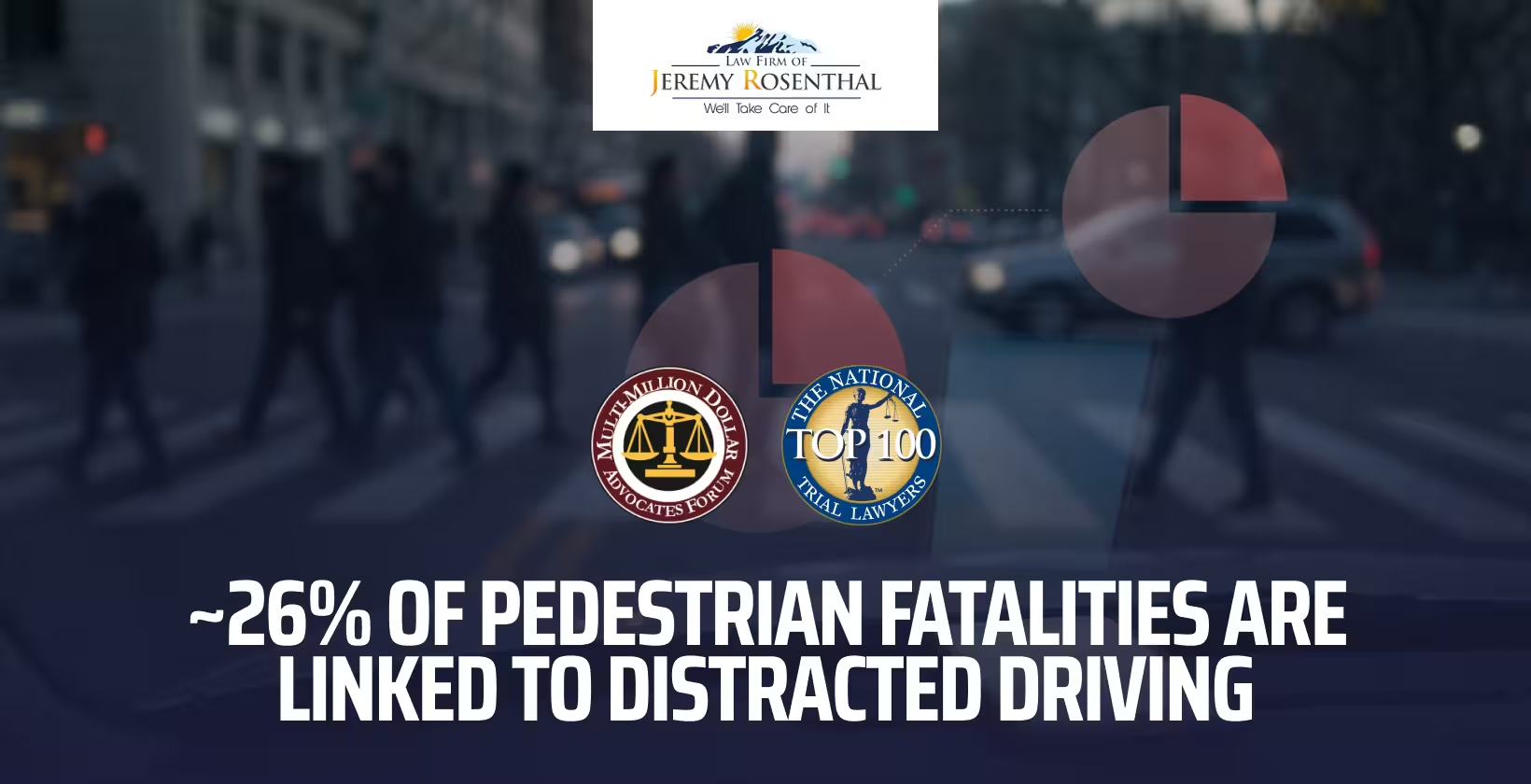
Speeding reduces a driver’s reaction time and increases both the severity of pedestrian injuries and the likelihood of fatal outcomes when vehicles strike people crossing Denver intersections or sidewalks. According to the Colorado Department of Transportation, speeding contributes to 31% of all traffic fatalities across the state based on their 2023 annual crash data analysis, and Colorado Revised Statutes Section 42-4-1101 establishes that drivers must operate at speeds reasonable and prudent for existing conditions regardless of posted limits. Drivers who exceed speed limits or travel too fast for weather, traffic, or visibility conditions breach their legal duty to exercise reasonable care, creating liability when their excessive speed causes pedestrian injuries. Evidence that can strengthen your case includes police accident reports documenting speed estimates, skid mark measurements and crash reconstruction analysis, witness testimony about vehicle velocity before impact, event data recorder information from the vehicle’s computer system, posted speed limit signs and traffic control devices, and medical records correlating injury severity with impact speed.
Failure to yield at crosswalks represents a fundamental violation of pedestrian right-of-way rules that Denver drivers must follow when people legally cross streets at marked or unmarked intersection crossings. The Federal Highway Administration reports that 23% of pedestrian fatalities occur at intersections where drivers fail to yield according to their Pedestrian Safety Guide, and Colorado Revised Statutes Section 42-4-802 mandates that drivers must yield the right-of-way to pedestrians within crosswalks on the roadway upon which the vehicle is traveling. A motorist establishes negligence per se when they violate this statute and cause injuries to a pedestrian who was lawfully using a crosswalk, shifting the burden of proof and strengthening the victim’s legal position. Evidence that can strengthen your case includes traffic signal timing records showing pedestrian walk signals, crosswalk markings and signage documentation through photographs, witness accounts of the driver’s failure to stop, surveillance footage from intersection cameras or nearby properties, police citations issued to the driver for right-of-way violations, and pedestrian clothing visibility analysis based on lighting conditions.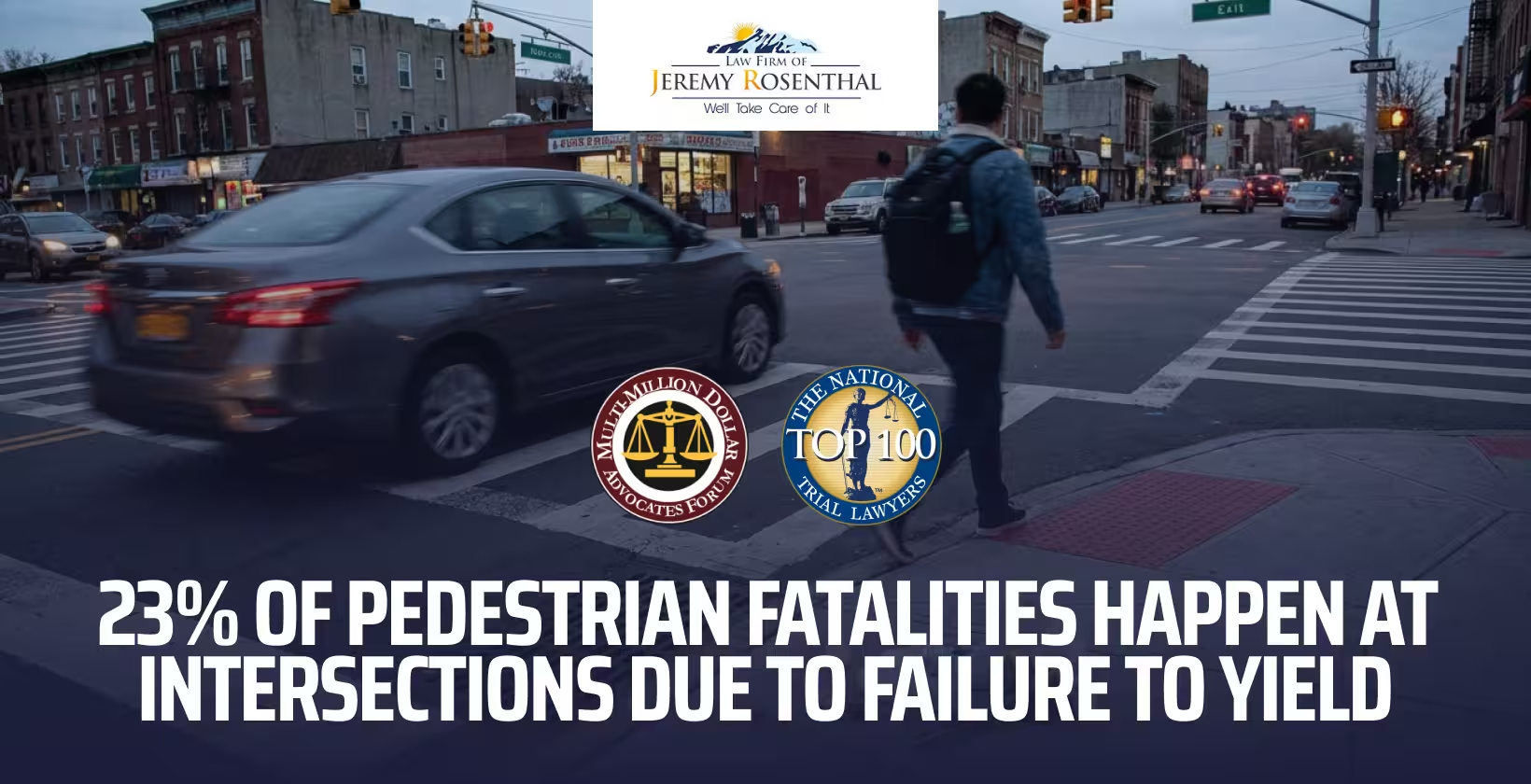
Drunk or impaired driving involves operating a vehicle while under the influence of alcohol, marijuana, prescription medications, or illegal substances that diminish reaction times, impair judgment, and reduce awareness of pedestrians in Denver roadways and parking areas. The National Highway Traffic Safety Administration documents that alcohol-impaired driving accounts for 17% of pedestrian fatalities nationwide according to their 2022 data compilation, and Colorado Revised Statutes Section 42-4-1301 establishes that drivers with blood alcohol concentrations (BAC) of 0.08% or higher commit per se DUI violations that create civil liability beyond criminal penalties. Impaired drivers who strike pedestrians face punitive damages claims in addition to compensatory damages because their conduct demonstrates willful and wanton disregard for public safety, allowing victims to recover additional compensation beyond medical expenses and lost wages. Evidence that can strengthen your case includes police reports documenting field sobriety tests and chemical test results, bar or restaurant receipts showing alcohol purchases before the crash, witness testimony about erratic driving behavior or visible intoxication, toxicology reports from blood or breath samples, video footage from traffic stops or booking procedures, and criminal court records of DUI charges or convictions.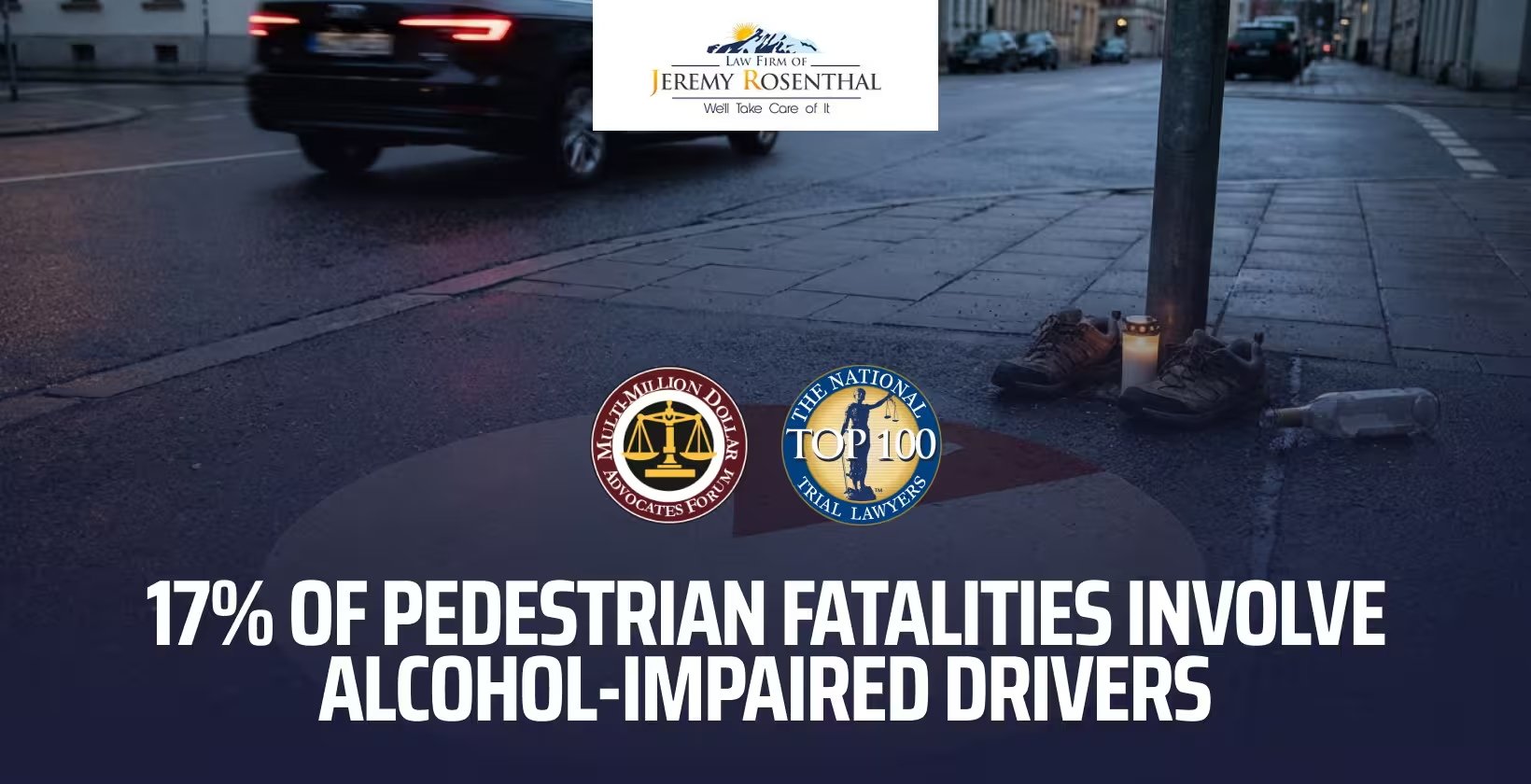
Poor visibility during weather events reduces driver sight distances and makes pedestrians less visible to motorists traveling through Denver streets during rain, snow, fog, or darkness conditions that demand heightened caution and reduced speeds. According to the Federal Highway Administration, weather-related crashes cause approximately 21% of all traffic accidents annually based on their Road Weather Management Program data, and Colorado Revised Statutes Section 42-4-1103 requires drivers to reduce speed and exercise increased caution when weather conditions create hazardous road surfaces or limited visibility. Drivers remain liable for pedestrian accidents occurring during adverse weather because they must adjust their driving behavior to match existing conditions, and failure to slow down or maintain proper lookout constitutes negligence regardless of weather challenges. Evidence that can strengthen your case includes National Weather Service records documenting conditions at the collision time, traffic camera footage showing visibility and precipitation levels, witness statements about weather-related driving difficulties, police accident reports noting environmental factors, vehicle headlight and wiper usage analysis, and pedestrian clothing reflectivity testing under similar conditions.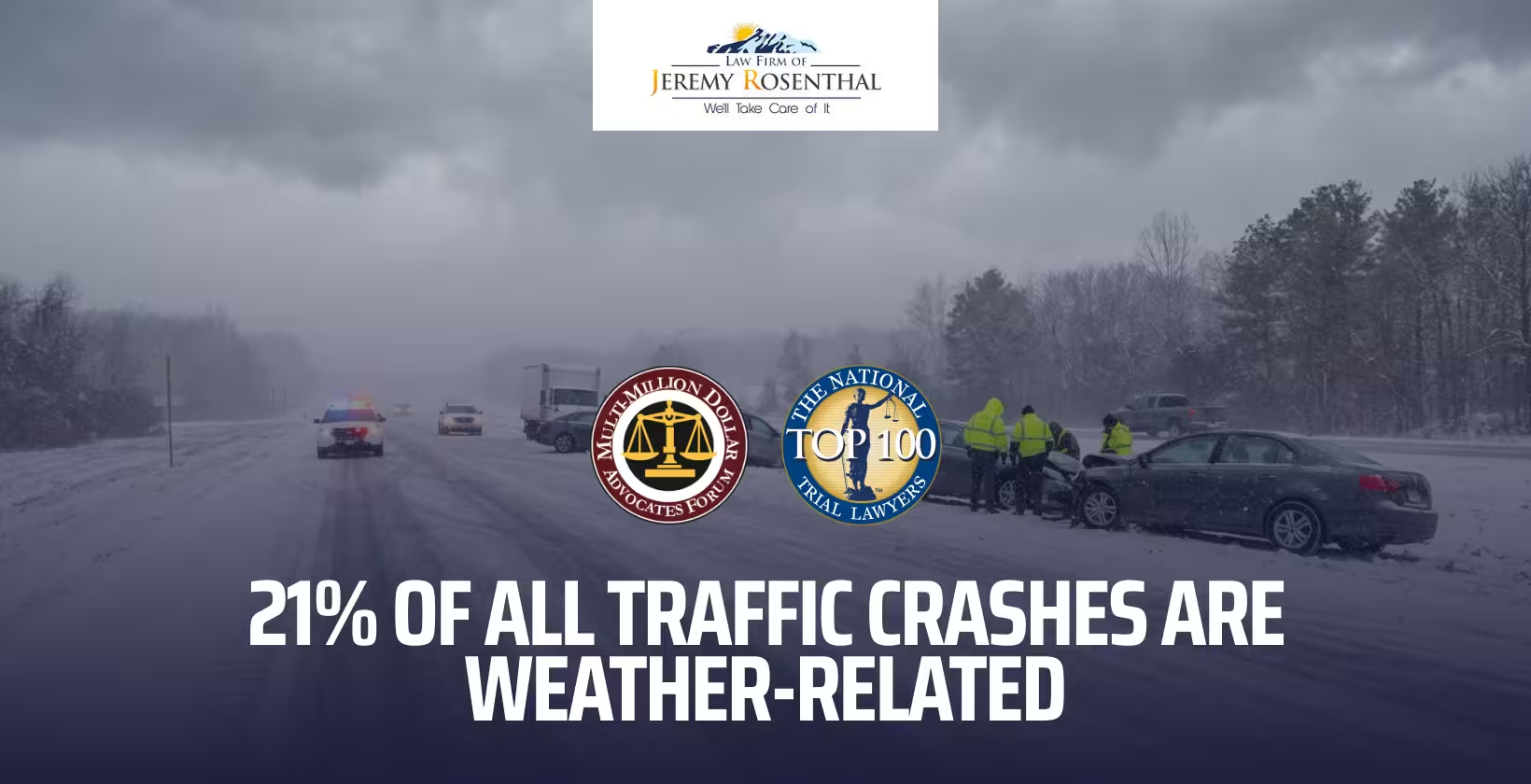
Jaywalking occurs when pedestrians cross streets outside designated crosswalks or against traffic signals, creating unexpected situations where Denver drivers may not anticipate someone entering the roadway between intersections or during red light phases. The Colorado Department of Transportation indicates that pedestrian violations contribute to approximately 18% of pedestrian-involved crashes statewide according to their traffic safety analysis, yet Colorado Revised Statutes Section 42-4-805 still requires drivers to exercise due care to avoid colliding with pedestrians regardless of whether the pedestrian was jaywalking or violating traffic control devices. A pedestrian’s violation of crossing laws does not automatically bar recovery but instead creates a comparative negligence analysis where both parties may share fault percentages, reducing but not eliminating the injured pedestrian’s compensation based on their degree of responsibility. Evidence that can strengthen your case includes crosswalk location maps showing distances to legal crossing points, driver speed and attentiveness documentation through witness accounts, vehicle sight line analysis proving adequate time to avoid the collision, police reports addressing fault determinations and violations, pedestrian visibility factors including clothing and lighting conditions, and accident reconstruction reports calculating avoidability despite the jaywalking violation.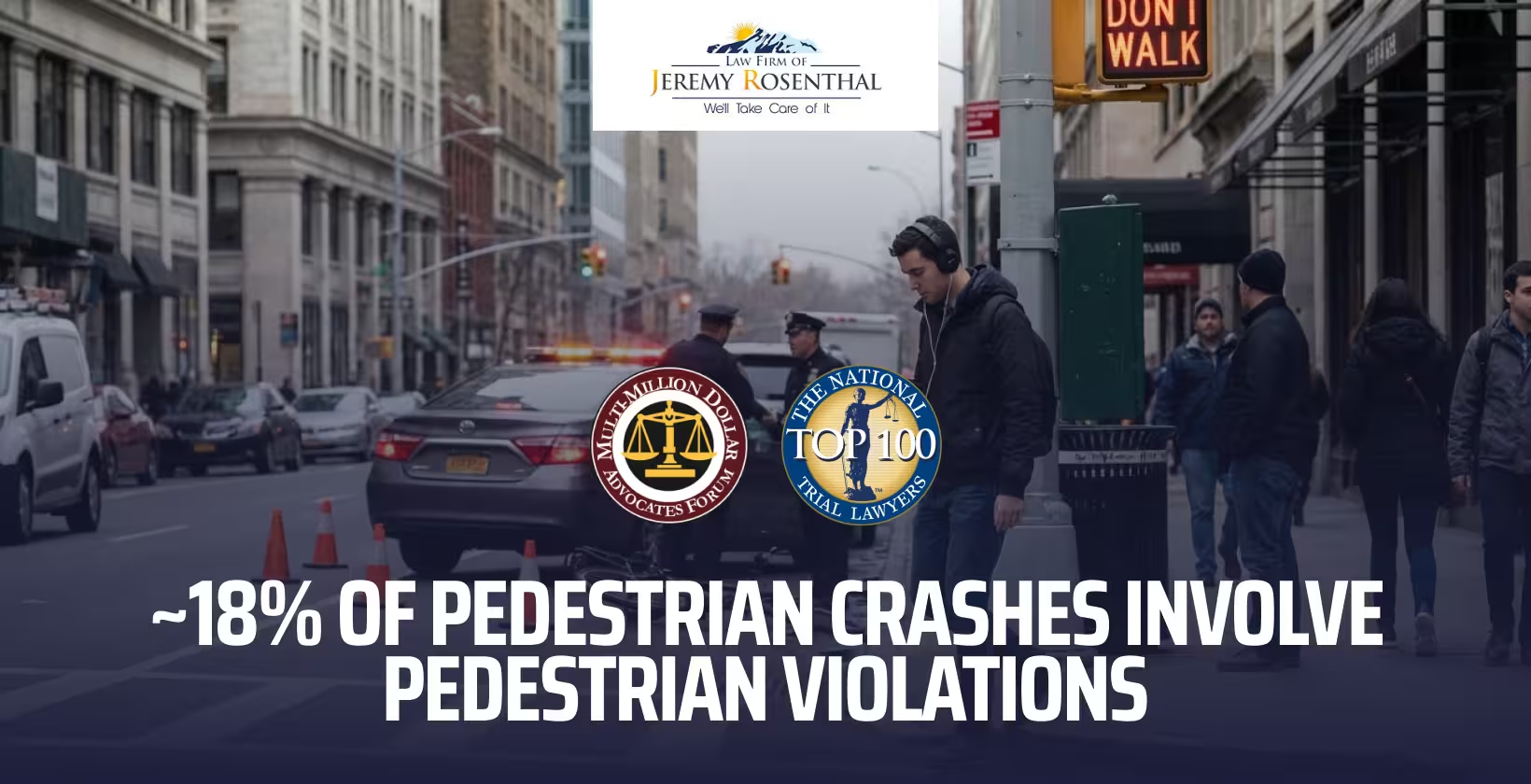
Left-hand turns without checking create dangerous situations when Denver drivers focus solely on oncoming traffic while turning across pedestrian crosswalks, failing to scan for people crossing the street they are entering at signalized intersections or mid-block locations. Research from the Insurance Institute for Highway Safety shows that turning vehicles account for 22% of pedestrian crashes at intersections according to their pedestrian crash analysis studies, and Colorado Revised Statutes Section 42-4-901 requires drivers making left turns to yield the right-of-way to pedestrians lawfully within the intersection or crosswalk area before completing their turning maneuvers. Drivers who complete left turns without adequately checking crosswalks establish negligence through their failure to maintain a proper lookout for pedestrians, particularly when pedestrians have the walk signal or are already within the crosswalk when the driver begins turning. Evidence that can strengthen your case includes intersection design schematics showing crosswalk locations and driver sight lines, traffic signal phasing records indicating pedestrian signal timing, witness testimony about driver attention and head position during the turn, surveillance footage capturing the turning sequence and pedestrian position, vehicle speed data showing hurried or aggressive turning behavior, and accident reconstruction analysis demonstrating when the driver should have detected the pedestrian.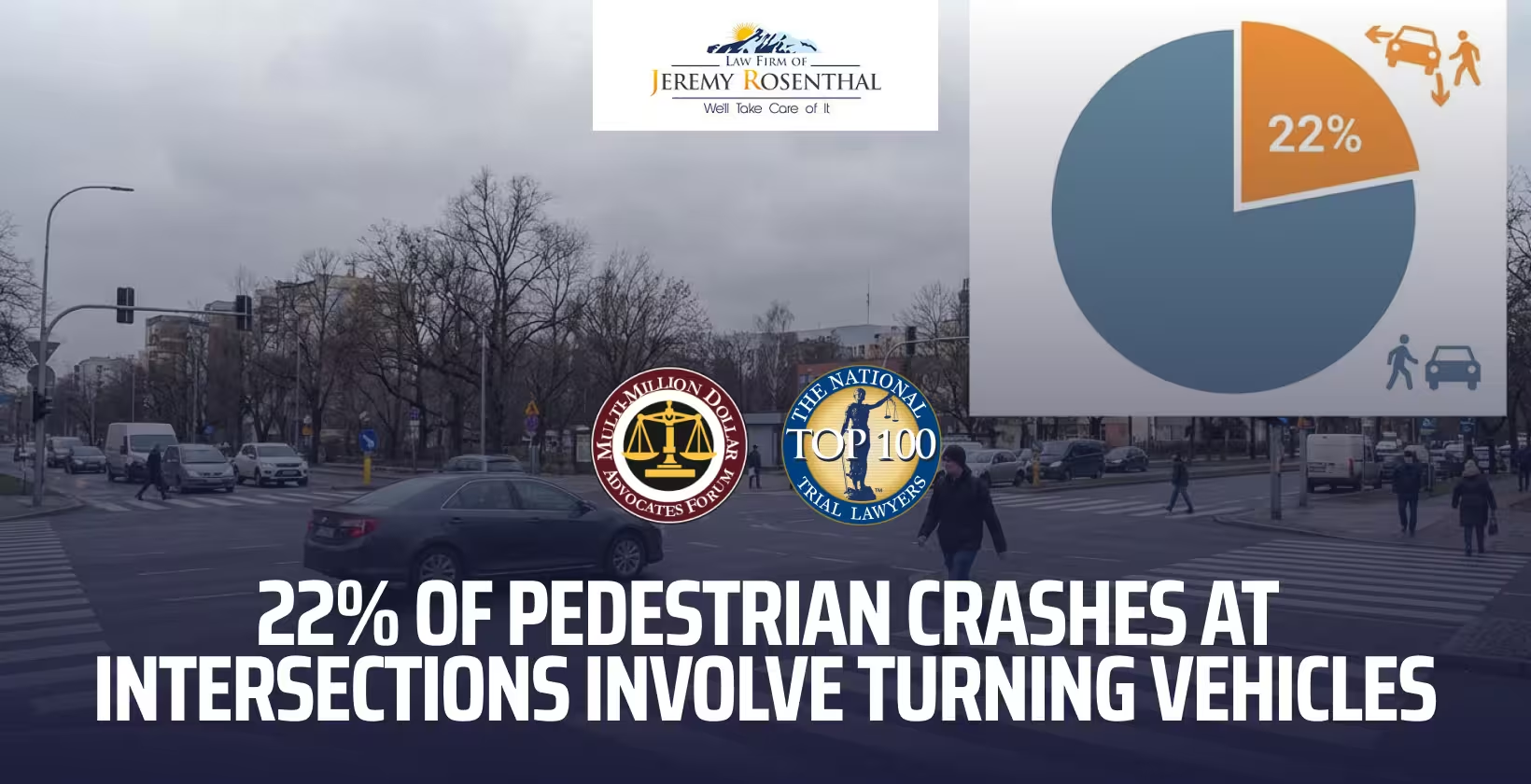
Drivers backing up without proper observation create significant dangers for pedestrians in Denver parking lots, residential driveways, and commercial loading zones, leading to collisions that often catch victims completely unaware and result in severe lower-body trauma. Colorado law requires drivers to yield the right-of-way to pedestrians when backing from parking spaces or driveways according to C.R.S. § 42-4-1206, and the National Highway Traffic Safety Administration (NHTSA) reports that backing crashes cause approximately 267 deaths annually nationwide, with children under five and adults over seventy comprising the majority of victims. Drivers who fail to check mirrors, use backup cameras, or scan their surroundings before reversing face liability for resulting pedestrian injuries under negligence principles that establish breach of reasonable care standards. Evidence that can strengthen your case includes parking lot surveillance footage, backup camera recordings, witness statements from nearby shoppers or residents, vehicle damage patterns showing point of impact, and medical records documenting compression injuries to legs or feet.
Pedestrian accidents concentrate in Denver’s downtown corridor, particularly along the 16th Street Mall, Colfax Avenue, and Federal Boulevard, where high volumes of foot traffic intersect with dense vehicle movement throughout business hours and evening entertainment periods. The Colorado Department of Transportation (CDOT) identified 1,847 pedestrian crashes across the Denver metro area during 2022, with central business districts accounting for 42 percent of serious injury collisions due to complex traffic patterns, delivery vehicle activity, and distracted driving near restaurants and retail establishments. These location-specific crash patterns establish that certain corridors present heightened dangers requiring increased driver vigilance, and failure to exercise appropriate caution in high-pedestrian zones strengthens negligence claims when collisions occur. Evidence that can strengthen your case includes crash location
Which Intersections or Areas in Denver Are High-risk for Pedestrians?
The intersection of Colfax Avenue and Federal Boulevard ranks among Denver’s most dangerous locations for pedestrians, joined by the confluence of Broadway and Alameda Avenue, the Speer Boulevard corridor through Capitol Hill, and multiple crossing points along busy Martin Luther King Jr. Boulevard where inadequate signal timing and high traffic speeds create collision risks. Denver’s Vision Zero Initiative documented that just ten intersections across the city accounted for 23 percent of all serious pedestrian injuries between 2019 and 2023 according to city traffic safety data, and Colorado’s failure-to-yield statute C.R.S. § 42-4-802 places clear responsibility on drivers to stop for pedestrians in marked or unmarked crosswalks at these high-risk locations. Drivers who proceed through known dangerous intersections without heightened awareness face stronger liability determinations when crashes occur because the hazardous nature of these areas demands exceptional caution. Evidence that can strengthen your case includes intersection design plans showing sight-line obstructions, traffic engineering studies identifying deficiencies, red-light camera footage if available, witness accounts from regular commuters familiar with the location, and Denver Department of Transportation maintenance records.
What Time of Day Are Pedestrian Accidents Most Likely to Happen?
Pedestrian accidents in Denver spike during evening rush hour between 5:00 PM and 8:00 PM when diminishing daylight, commuter fatigue, and increased pedestrian activity around restaurants and entertainment venues converge to create dangerous conditions that reduce driver reaction times and pedestrian visibility. The National Highway Traffic Safety Administration (NHTSA) reports that 76 percent of pedestrian fatalities occur during dark conditions according to 2022 crash data, and Colorado law requires drivers to exercise increased caution during limited visibility periods under C.R.S. § 42-4-217, which mandates headlight use from sunset to sunrise and during adverse weather. Drivers who fail to adjust their speed, attention level, and scanning patterns during high-risk evening hours demonstrate negligence that directly contributes to collision liability when pedestrians suffer injuries. Evidence that can strengthen your case includes sunset time calculations establishing lighting conditions, traffic camera timestamps showing vehicle speeds, bar or restaurant receipts placing the victim at the scene, weather reports documenting visibility factors, and eyewitness statements describing driver behavior immediately before impact.
Denver pedestrian accident lawyers provide investigation services, liability determination, insurance negotiations, medical documentation, settlement advocacy, and trial representation for injured victims struck by vehicles in crosswalks, intersections, and roadways. These attorneys handle every aspect of the legal process, from collecting evidence at crash scenes to presenting cases before juries when insurers refuse to offer fair compensation.

Investigación del caso y recopilación de pruebas
Attorneys gather crash scene photographs, witness contact information, police reports, traffic camera footage, and accident reconstruction data establishing fault and proving negligence claims comprehensively. Lawyers preserve physical evidence such as vehicle damage patterns, skid marks, and clothing worn during impact to demonstrate collision severity and driver liability.

Determinación de responsabilidad y análisis de fallas
Lawyers examine Colorado traffic laws, duty of care violations by motorists, and negligent actions including failure to yield, distracted driving, speeding through crosswalks, and improper turns to establish legal responsibility. Attorneys identify all liable parties including vehicle operators, vehicle owners, employers of commercial drivers, and municipalities responsible for dangerous road conditions to pursue full compensation from multiple sources.

Presentación y gestión de reclamaciones de seguros
Attorneys handle all communications with insurance adjusters, submit demand packages with supporting medical records and economic loss documentation, and prevent clients from making recorded statements that undermine claims. Lawyers ensure insurers receive proper notice of claims, respond to information requests with strategic disclosure, and document all bad faith tactics employed by carriers seeking to minimize payouts.

Documentación médica y coordinación del tratamiento
Lawyers work with treating physicians to obtain complete medical records, arrange independent medical examinations when disputes arise about injury severity, and calculate future treatment costs based on rehabilitation needs and permanent impairment. Attorneys coordinate with orthopedic surgeons, neurologists, physical therapists, and mental health professionals to document traumatic brain injuries, spinal cord damage, fractures, and post-traumatic stress disorders affecting victims long-term.

Negociación de acuerdos y cartas de reclamación
Attorneys present evidence-backed settlement demands itemizing medical bills, wage losses, diminished earning capacity, and pain and suffering with supporting documentation from medical providers and economic analysts. Lawyers counter lowball offers by highlighting strong liability evidence, permanent disability, and significant non-economic damages that justify higher compensation amounts through persistent negotiation.

Preparación de juicios y representación en sala
Lawyers file civil complaints in Colorado district courts, conduct discovery through depositions of drivers and witnesses, submit interrogatories and document requests, and retain biomechanical engineers and accident reconstruction specialists to testify about collision dynamics. Attorneys present cases to Denver juries when settlement negotiations fail, cross-examining defense witnesses, introducing exhibits proving negligence, and delivering closing arguments that persuade jurors to award damages reflecting true harm suffered.

Cálculo de daños y análisis económico
Attorneys calculate past medical expenses from hospital bills and treatment invoices, project future medical costs based on life care plans, determine lost earning capacity through vocational rehabilitation assessments, and value non-economic losses including physical pain, emotional distress, and diminished quality of life. Lawyers retain economic specialists who prepare detailed reports quantifying wage losses when injuries prevent victims from returning to previous occupations or require career changes accommodating permanent disabilities.

Resolución de gravámenes y gestión de facturas médicas
Lawyers negotiate reductions on medical liens asserted by health insurance carriers seeking reimbursement from settlements, resolve hospital liens filed under Colorado statutes, and ensure clients receive full recovery after satisfying lien obligations. Attorneys challenge inflated lien amounts, invoke contractual limitations on subrogation rights, and obtain waivers or compromises that preserve complete settlement proceeds for injured victims.

Defensa por negligencia comparativa
Lawyers counter insurance company arguments that victims share fault by jaywalking or failing to watch for traffic, presenting evidence that minimizes or eliminates client liability percentages under Colorado's modified comparative negligence law. Attorneys demonstrate driver violations of right-of-way rules, excessive speed, distracted behavior, and failure to exercise reasonable care that place primary responsibility on motorists, ensuring victims retain compensation rights even when minor fault is alleged.
Derecho de daños provides the legal foundation allowing injured pedestrians to pursue compensation from negligent drivers who cause collisions resulting in physical harm, financial losses, and emotional distress. Denver pedestrian accident claims operate primarily under negligence principles requiring victims to prove the driver owed a duty of care, breached that duty through actions like speeding or distracted driving, and directly caused documented injuries. Colorado follows a modified comparative negligence system under C.R.S. § 13-21-111, reducing recovery proportionally if the pedestrian shares fault but barring compensation entirely when the pedestrian bears 50% or greater responsibility. Tort law also addresses intentional torts such as assault when drivers deliberately strike pedestrians during road rage incidents, plus strict liability claims against municipalities for dangerous crosswalk conditions or malfunctioning traffic signals that contribute to collisions.
Denver laws protecting pedestrians after accidents include Denver Revised Municipal Code § 54-223 requiring drivers to yield to pedestrians in marked and unmarked crosswalks at intersections, while § 54-224 prohibits vehicles from overtaking other vehicles stopped for pedestrians. Denver’s Vision Zero Action Plan adopted in 2017 commits the city to eliminating traffic deaths by 2030, establishing enhanced enforcement in high-crash corridors along Colfax Avenue, Federal Boulevard, and Broadway where pedestrian fatalities occur most frequently. The Denver Department of Transportation and Infrastructure implements infrastructure changes including leading pedestrian intervals at 150+ intersections citywide giving walkers a three to seven second head start before vehicle traffic proceeds, reducing conflict with turning vehicles by 60% according to Federal Highway Administration research. These protections combine with Colorado’s comparative negligence statutes allowing injured pedestrians to recover damages even when partially at fault, creating multiple legal pathways for compensation after collisions.
Pedestrian accident victims in Denver possess specific legal rights protecting their ability to seek compensation and hold negligent parties accountable for collision-related harm.
Federal and Colorado regulations establish enforceable safety standards protecting pedestrians from traffic hazards and creating legal frameworks for accident liability determinations.
Vicarious liability holds employers, vehicle owners, and companies financially responsible for pedestrian injuries caused by drivers operating vehicles within the scope of employment or with permission, even when the actual driver lacks sufficient insurance coverage. Colorado courts apply respondeat superior doctrine making delivery companies liable when their drivers strike pedestrians during package deliveries, rideshare companies responsible for pedestrian collisions during active trips, and trucking firms accountable when commercial drivers cause crosswalk accidents while transporting cargo. Rosenthal Injury Law pursues vicarious liability claims against corporate defendants possessing deeper insurance coverage than individual drivers, maximizing available compensation for medical expenses, lost income, and permanent disabilities that exceed standard auto policy limits. Vehicle owners who lend cars to uninsured drivers also face vicarious liability under C.R.S. § 42-2-118 when those drivers negligently injure pedestrians, creating additional recovery sources beyond the driver’s personal assets and ensuring victims access adequate funds for long-term medical care and rehabilitation needs.
Multiple parties face joint liability in pedestrian accident cases when shared negligence contributes to collision circumstances, allowing injured victims to pursue compensation from all responsible defendants simultaneously rather than limiting claims to single at-fault parties. Denver pedestrian crashes often involve liability against the driver who struck the pedestrian, the vehicle owner if different from the driver, the driver’s employer when operating company vehicles, the rideshare or delivery company if applicable, plus the City of Denver or Colorado Department of Transportation when dangerous road conditions like faded crosswalk markings or malfunctioning pedestrian signals contribute to collisions. Colorado’s joint and several liability rules under C.R.S. § 13-21-111.5 allow full recovery from any defendant whose fault exceeds 50%, compelling defendants to negotiate settlements rather than risk disproportionate financial responsibility at trial. Attorneys identify all potential defendants during investigation phases by analyzing commercial vehicle registrations, employment relationships, municipal maintenance records, and insurance policies creating multiple recovery sources when individual defendants lack sufficient coverage to compensate for catastrophic injuries requiring lifelong medical care, lost earning capacity, and permanent disability accommodations.
Liability determination in Denver pedestrian accident cases depends on proving the driver violated specific traffic laws or breached general duty of care owed to pedestrians using public roadways and crosswalks. Attorneys establish negligence by demonstrating the driver failed to yield at marked crosswalks as required by C.R.S. § 42-4-802, operated while distracted in violation of C.R.S. § 42-4-239, exceeded safe speeds for conditions, or failed to exercise reasonable caution near schools and residential areas where pedestrian presence should be anticipated. Colorado’s modified comparative negligence system reduces recovery proportionally when pedestrians contribute to accidents by jaywalking outside designated crossing areas, walking against traffic signals, or wearing dark clothing at night without reflective materials, but allows compensation unless the pedestrian bears more than 49% responsibility. Liability analysis examines police accident reports documenting citations issued at crash scenes, surveillance footage showing signal timing and driver behavior, witness testimony corroborating right-of-way violations, plus physical evidence like skid marks indicating excessive speed or delayed braking responses that prove driver fault regardless of pedestrian actions immediately before impact.
Negligencia en la ley determination in Denver pedestrian accident cases requires proving that a driver breached their duty of care through actions or inactions that directly caused the collision and resulting injuries. Colorado follows a modified comparative negligence rule under C.R.S. § 13-21-111, which bars recovery if the pedestrian bears more than 50 percent fault for the accident. Attorneys examine whether the driver violated traffic laws such as failure to yield at crosswalks, distracted driving, speeding in residential zones, or running red lights, all of which establish breach of duty. Pedestrian behavior receives scrutiny as well, including jaywalking outside designated crosswalks, crossing against traffic signals, or walking while intoxicated. Denver police reports document preliminary fault assessments based on witness statements, physical evidence, and officer observations at the scene. A 2022 Colorado Department of Transportation study found that 34 percent of Denver pedestrian fatalities involved driver impairment, establishing clear negligence patterns. Comparative fault percentages reduce compensation proportionally, meaning a pedestrian assigned 20 percent fault for crossing mid-block receives 80 percent of total damages if the driver’s speeding caused primary collision responsibility.
Bystander negligence contributes to pedestrian accidents when third parties create hazardous conditions that cause or worsen collision circumstances, though such cases remain less common than driver or pedestrian fault scenarios. Colorado recognizes third-party liability when bystanders push pedestrians into traffic, distract drivers at critical moments, or create sudden obstacles that force evasive maneuvers resulting in pedestrian strikes. Property owners face premises liability if poorly maintained sidewalks, inadequate lighting, or obstructed sight lines force pedestrians into roadways where vehicles strike them. Construction companies bear responsibility when improperly marked work zones channel pedestrians into active traffic lanes without adequate warnings or barriers.
Traffic camera footage and witness statements provide critical objective evidence that reconstructs accident circumstances and establishes liability when physical evidence alone leaves fault determination ambiguous or contested. Denver operates 1,100 traffic cameras throughout the metropolitan area according to the Denver Department of Transportation and Infrastructure, capturing intersections where 60 percent of pedestrian collisions occur based on city collision data. Camera footage shows signal timing, vehicle speeds, pedestrian position within crosswalks, and driver behavior seconds before impact, eliminating reliance on conflicting party accounts. Witness statements corroborate or contradict driver and pedestrian versions of events, providing independent third-party perspectives that judges and juries weigh heavily during liability determinations. Colorado courts admit witness testimony under C.R.E. 602 when witnesses possess personal knowledge of accident events, making their observations admissible evidence. Multiple consistent witness accounts create compelling liability proof, particularly when witnesses describe drivers texting, running red lights, or failing to yield at marked crosswalks. The combination of camera footage and witness statements strengthens settlement negotiations by demonstrating clear fault patterns that insurance adjusters cannot easily dispute or minimize during claim evaluations.
Mechanical failure contributes to pedestrian collision fault when defective components such as brake systems, steering mechanisms, or tire blowouts cause drivers to lose vehicle control and strike pedestrians despite reasonable driving behavior. Colorado recognizes product liability claims under C.R.S. § 13-21-401 when manufacturers produce defectively designed or manufactured vehicle components that cause accidents, shifting fault from drivers to automotive companies. Brake failure cases require proving that proper maintenance occurred but manufacturing defects prevented adequate stopping power at pedestrian crossings. Third-party liability extends to mechanics who negligently repair critical safety systems, creating hazardous conditions that result in pedestrian strikes when repaired components fail during normal operation.
Photos and videos taken immediately after pedestrian accidents preserve crucial evidence showing vehicle positions, road conditions, traffic control devices, and injury severity before scene cleanup or memory deterioration affects reconstruction accuracy. Visual documentation captures skid marks indicating driver speed and braking response, vehicle damage patterns revealing impact angles and force, and crosswalk positioning proving pedestrian right-of-way status at collision moment. Colorado weather conditions including snow accumulation, ice patches, or wet pavement appear in photographs, establishing whether environmental factors contributed to driver inability to stop safely. Scene photos document traffic signal functionality, construction zone warnings, and sight line obstructions that support liability arguments during settlement negotiations or trial presentations.
Attorneys follow systematic investigation procedures to determine liability in law percentages and identify all potentially liable parties in pedestrian collision cases, building evidence foundations that support full compensation claims.
Attorneys secure dash camera data through immediate preservation letters, formal discovery requests, and sometimes court orders compelling evidence production before involved parties delete or destroy critical footage. Initial client consultations identify whether striking vehicles, nearby cars, or commercial trucks operated dash cameras that recorded collision sequences. Attorneys send spoliation letters within 48 hours demanding that vehicle owners preserve all electronic evidence including dash camera recordings, GPS data, and vehicle black box information under penalty of sanctions. Colorado discovery rules under C.R.C.P. 34 permit attorneys to request production of electronically stored information during litigation, compelling defendants to produce dash camera footage even when they resist voluntary disclosure.
Surveillance footage provides critical visual evidence documenting collision circumstances, driver behavior, and pedestrian positions immediately before impact.
Attorneys request footage within days of collisions because most systems automatically delete recordings after 30 to 90 days, making immediate preservation essential for case success.
Expert witness testimony strengthens pedestrian accident claims by translating complex technical evidence into persuasive courtroom explanations that establish liability and damages. Accident reconstruction specialists analyze skid marks, vehicle damage, and impact angles to determine vehicle speeds, driver reaction times, and collision dynamics that contradict driver accounts claiming they had no time to stop. Medical experts connect documented injuries directly to collision forces, explain treatment necessity, project future care requirements, and calculate lifetime disability costs when insurance companies dispute injury severity or claim pre-existing conditions caused symptoms. Biomechanical engineers testify about force levels during impacts, demonstrating how specific collision circumstances produced particular injuries when defense attorneys argue pedestrian injuries appear inconsistent with claimed accident severity. Traffic engineering experts evaluate intersection design, signal timing, crosswalk visibility, and pedestrian infrastructure to establish how dangerous conditions contributed to collisions when government entities deny responsibility. Economic experts calculate lost earning capacity, reduced retirement savings, and diminished household services when catastrophic injuries prevent victims from returning to previous employment or maintaining independent living. Colorado juries frequently rely on expert testimony when technical evidence contradicts common sense assumptions about how pedestrian accidents occur and what injuries victims should reasonably sustain.
Eyewitness statements provide independent third-party accounts corroborating collision circumstances when driver and pedestrian versions conflict about fault and accident dynamics. Attorneys interview witnesses immediately after collisions to document observations before memories fade, details blur, or witnesses become unavailable for depositions and trial testimony in cases extending months or years. Witness credibility strengthens considerably when their accounts match physical evidence, including vehicle positions, skid marks, traffic signals, and damage patterns that objective investigators document at crash scenes. Colorado courts allow witnesses to testify about driver behavior immediately before impacts, including excessive speeds, distracted driving, aggressive maneuvers, or traffic violations that directly caused collisions and establish negligence liability. Multiple consistent witness accounts outweigh conflicting driver statements, particularly when drivers have financial incentives to minimize fault or when collision trauma affects their memory accuracy about events immediately preceding impacts. Defense attorneys challenge witness testimony by questioning observation angles, attention focus, memory reliability, and potential biases, requiring attorneys to thoroughly prepare witnesses for depositions and trial cross-examination. Documented witness contact information becomes invaluable months after accidents when insurance adjusters deny liability and cases proceed toward litigation requiring sworn testimony supporting compensation claims.
Lawyers reconstruct accident scenes by combining physical evidence, witness accounts, photographic documentation, and technical analysis to establish precise collision sequences demonstrating driver liability. Attorneys visit crash locations within days of collisions to photograph sight lines, measure crosswalk distances, document signal timing, identify surveillance cameras, and observe traffic patterns matching accident conditions including time of day, weather, and lighting factors. Skid mark measurements, vehicle damage patterns, debris fields, and pedestrian impact locations provide mathematical data calculating vehicle speeds, braking distances, and collision angles that prove whether drivers had sufficient time and distance to stop before striking pedestrians. Accident reconstruction experts use specialized software creating three-dimensional scene models, animated collision sequences, and sight distance analyses demonstrating what drivers should have seen if they were attentive and obeying traffic laws. Medical injury patterns correlate with reconstruction findings when biomechanical evidence shows specific fractures, soft tissue damage, or head trauma consistent with calculated impact forces and pedestrian body positions during collisions. Attorneys compare reconstruction findings against driver statements, police reports, and insurance company conclusions to identify contradictions, expose false narratives, and build compelling evidence packages supporting settlement negotiations or jury presentations demanding full accountability for negligent driving causing catastrophic pedestrian injuries.
Cell phone data establishes distracted driving negligence when records show drivers were texting, calling, or using applications immediately before striking pedestrians in crosswalks or sidewalks. Attorneys subpoena phone records, app usage logs, and carrier metadata documenting exact timestamps when drivers sent messages, browsed the internet, checked social media, or engaged in phone conversations during periods matching collision times within seconds of impact. Colorado law prohibits texting while driving under C.R.S. 42-4-239, making phone records proving texting violations direct evidence of negligence per se that eliminates requirements to prove drivers breached duty of care standards. Data extraction specialists recover deleted messages, app activity, and screen-on times from phones when drivers attempt hiding distraction evidence after collisions by clearing browser histories, removing applications, or factory resetting devices. Phone tower records, GPS coordinates, and cellular handoff data corroborate driver locations, travel directions, and movement speeds when drivers claim they were elsewhere or traveling different routes when pedestrian strikes occurred. Defense attorneys argue phone activity alone doesn’t prove distraction caused accidents, requiring attorneys to combine phone evidence with witness testimony, surveillance footage, and accident reconstruction showing drivers had clear sight lines and adequate stopping distances to avoid collisions if they were attentive rather than staring at phone screens during critical seconds before impacts.
Rideshare and delivery vehicle accidents complicate liability determinations and insurance coverage because multiple parties may share responsibility depending on driver status when collisions occurred. Uber and Lyft maintain $1 million liability policies covering passengers and third parties, including pedestrians, when drivers have accepted ride requests and are transporting passengers or traveling to pick up passengers according to company insurance disclosure requirements. Coverage drops to state minimum liability limits when rideshare applications are open but drivers haven’t accepted trips, creating gaps where seriously injured pedestrians face inadequate compensation from standard personal auto policies excluding commercial activity. Delivery drivers for DoorDash, Grubhub, Amazon Flex, and similar platforms operate under varying insurance structures where companies deny liability claiming drivers are independent contractors rather than employees, shifting responsibility to driver personal policies that frequently exclude commercial deliveries. Attorneys investigate driver employment classifications, active delivery status, company insurance policies, and contractual indemnification clauses to identify all liable parties and available coverage sources when pedestrian injuries exceed individual driver policy limits. Multiple defendant cases require coordination among insurance companies, potentially including driver personal insurers, rideshare company commercial policies, and vehicle owner coverage if drivers were operating borrowed or rented vehicles during collisions. Colorado’s comparative negligence rules under C.R.S. 13-21-111 allow recovery even when pedestrians share partial fault, but rideshare companies aggressively dispute liability percentages to minimize payouts when their drivers strike jaywalking pedestrians or pedestrians crossing against signals.
Government entities face liability for dangerous sidewalk and crosswalk conditions when municipalities knew or should have known about hazards yet failed to repair defects or warn pedestrians. Under Colorado’s Governmental Immunity Act, victims must file written notice with government entities within 182 days of accidents as required by C.R.S. 24-10-109, including the date, time, place, circumstances, injuries sustained, and damages sought. Missing this deadline bars recovery. Proving government liability requires documenting prior complaints, maintenance records, inspection reports, and citizen requests establishing municipalities had actual or constructive notice of hazardous conditions for sufficient time to allow reasonable repairs before accidents occurred. Denver’s sidewalk maintenance responsibilities vary by location, with some areas maintained by the city and others by adjacent property owners, requiring investigation of municipal codes and maintenance agreements to determine which party failed to address dangerous conditions. Damage caps under C.R.S. 24-10-114 limit recovery to $350,000 per person and $990,000 per occurrence against government defendants, though these amounts are adjusted for inflation every four years by the Secretary of State. These statutory maximums restrict compensation when catastrophic injuries produce medical expenses, lost wages, and care costs exceeding the caps—limits that don’t apply to private defendants.
Attorneys investigate hit-and-run pedestrian accidents through systematic evidence collection that begins with securing police reports documenting officer observations, witness statements, and physical evidence collected at the crash scene. Your legal team examines surveillance footage from nearby businesses, traffic cameras, residential security systems, and dash cameras that captured vehicle descriptions, license plate numbers, or driver images during the collision. Attorneys canvas the accident area interviewing witnesses who saw the fleeing vehicle, coordinate with Denver Police Department investigators tracking down suspects through paint transfer analysis and vehicle damage patterns, and work with accident reconstruction specialists who analyze skid marks, debris fields, and impact points to determine vehicle type and speed. Lawyers review medical records establishing injury severity and treatment costs while preserving damaged clothing, personal belongings, and photographic evidence documenting visible injuries and property damage immediately after the crash.
You retain the right to sue after being struck outside a crosswalk, though Colorado comparative negligence laws allow defendants to argue you contributed to the collision by crossing mid-block or against traffic signals. Pedestrians crossing outside designated crosswalks must yield right-of-way to vehicles under Colorado Revised Statutes Section 42-4-805, yet drivers maintain a duty to exercise reasonable care and avoid striking pedestrians regardless of crossing location. Compensation reduced proportionally if courts assign you partial fault (a pedestrian found 30% responsible for mid-block crossing receives 70% of total damages), but you still recover substantial amounts when driver negligence contributed to the crash. Your case value strengthens considerably if the driver was speeding, distracted, impaired, or violated other traffic laws at the time of impact.
A typical pedestrian accident lawsuit in Denver requires 12 to 24 months from initial filing through settlement or verdict, though timelines vary based on injury severity, liability disputes, and court scheduling. Cases settle within 6 to 9 months when liability evidence clearly establishes driver fault, injuries reach maximum medical improvement quickly, and insurance companies offer reasonable compensation without protracted negotiations. Complex cases involving catastrophic injuries, disputed fault determinations, or multiple liable parties extend 18 to 36 months because medical treatment continues longer, expert testimony requires extensive preparation, and defense attorneys employ delay tactics hoping plaintiffs accept lower offers. Denver District Court civil dockets currently schedule trials 14 to 18 months after complaint filing according to Colorado Judicial Department data, though judges expedite cases involving severe injuries or elderly plaintiffs facing health complications.
To find an experienced and reliable pedestrian accident attorney near you, visit one of the regions listed below.

Área metropolitana de Denver
Norte de Colorado
Colorado Springs Region
Ladera occidental
Bring documentation to your first meeting with a Denver pedestrian accident lawyer to help evaluate your case. Essential items include the police report, medical records and bills, photographs of injuries and the accident scene, witness contact information, insurance policies, correspondence with insurance companies, and documentation of lost wages. This information helps your attorney assess liability, damages, and the strength of your claim.
Legal services provided by pedestrian accident attorneys encompass comprehensive representation from initial investigation through final settlement or trial verdict.
1. Investigación del caso y recopilación de pruebas: Attorneys gather police reports, obtain traffic camera footage, interview witnesses, hire accident reconstruction specialists, and document scene conditions to establish driver negligence and liability for your pedestrian injuries.
2. Medical Documentation Review: Legal teams analyze treatment records, consult with physicians about injury prognosis, calculate future medical needs, and establish causal connections between the collision and your diagnosed conditions to support damage claims.
3. Insurance Claim Filing and Management: Lawyers prepare demand packages, submit claims to at-fault driver’s insurance carrier, handle all adjuster communications, and protect you from tactics designed to minimize compensation or shift fault to pedestrians.
4. Settlement Negotiation: Attorneys present documented evidence, cite Colorado negligence law, leverage comparable case verdicts, and negotiate aggressively to secure fair compensation covering medical expenses, lost wages, pain and suffering, and permanent disability costs.
5. Litigation and Trial Representation: Legal professionals file lawsuits when insurance offers fall short, conduct discovery depositions, prepare expert witnesses, present evidence to juries, and argue your case through verdict if settlement negotiations fail to produce adequate results.
6. Lien Resolution and Payment Distribution: Lawyers negotiate reductions with medical providers holding treatment liens, resolve health insurance subrogation claims, satisfy Medicare or Medicaid reimbursement obligations, and ensure you receive fair net recovery after all creditors receive payment.
Yes, a Denver attorney can offer 24/7 availability for pedestrian injury cases. Rosenthal Injury Law understands that pedestrian accidents occur at any time—day or night, weekdays or weekends. Immediate legal guidance protects your rights when insurance companies contact you, helps preserve critical evidence, and ensures you avoid statements that could harm your claim. Round-the-clock availability means you can reach an attorney when you need help most, whether you’re in the emergency room or dealing with insurance adjusters hours after a collision.
You retain the right to change attorneys at any stage during your pedestrian accident case if communication breaks down, strategy disagreements emerge, or your lawyer demonstrates incompetence through missed deadlines or inadequate preparation. Colorado Rules of Professional Conduct allow clients to terminate representation at any time, though you remain responsible for paying your previous attorney reasonable fees for completed work if settlement or verdict occurs later. Switching lawyers proves beneficial when your current attorney lacks trial experience, ignores your input about settlement decisions, or fails to return calls within reasonable timeframes, as attorney-client relationships require mutual trust and clear communication to achieve optimal results.
Your pedestrian accident case warrants legal consultation if you suffered any injury requiring medical treatment, missed work time, or experienced ongoing pain following a collision caused by driver negligence such as speeding, distracted driving, or failure to yield at crosswalks. Strong cases feature clear driver fault, documented injuries with medical records, eyewitness testimony supporting your version of events, and economic damages exceeding minor first aid costs. Attorneys evaluate case strength during free consultations by reviewing police reports, assessing injury severity, calculating potential damage awards, and determining whether evidence supports successful claims under Colorado comparative negligence laws that reduce compensation proportional to any pedestrian fault percentage.
Finding qualified pedestrian accident attorneys in Denver requires evaluating multiple information sources to identify lawyers with relevant trial experience and proven settlement results.
1. Colorado Bar Association Referrals: Contact the Colorado Bar Association lawyer referral service at 303-860-1115, which connects you with pre-screened attorneys who meet specific practice requirements and maintain good standing with state licensing authorities.
2. Online Legal Directories: Search platforms like Avvo, Martindale-Hubbell, and Super Lawyers that provide attorney profiles, peer ratings, client reviews, and case result summaries showing track records in pedestrian injury claims throughout Denver and surrounding counties.
3. Personal Injury Attorney Websites: Review law firm websites that detail attorney credentials, trial verdicts, settlement amounts, case studies, and practice area focus to identify lawyers who regularly handle pedestrian collision cases rather than general practitioners with limited experience.
4. Client Testimonials and Reviews: Read Google reviews, Yelp ratings, and Better Business Bureau profiles that reveal how attorneys communicate with clients, respond to inquiries, and deliver results throughout the claim process from initial consultation through final settlement distribution.
5. Personal Referrals from Trusted Sources: Ask friends, family members, or professional contacts who experienced similar accidents about their attorney experiences, as firsthand recommendations provide insights into lawyer responsiveness, negotiation skills, and commitment to client interests during lengthy claim proceedings.
6. Initial Consultation Meetings: Schedule free case evaluations with multiple attorneys to compare communication styles, fee structures, strategy recommendations, and comfort levels before committing to representation, ensuring you select a lawyer whose approach matches your expectations and case needs.
Pedestrian accident attorneys at Rosenthal Injury Law serve Colorado communities where pedestrian-vehicle collisions frequently occur due to urban density and traffic patterns.
Nuestros abogados especializados en lesiones personales en Denver están listos para ayudarle a obtener la compensación que merece. Ya sea que haya sufrido lesiones en un accidente automovilístico, de motocicleta o cualquier otro incidente, estamos aquí para defender sus derechos. Comuníquese con nuestra oficina en Denver para programar su consulta gratuita hoy mismo.