 303-825-2223

Always Available, Serving 24/7
303-825-2223


When rideshare accidents occur, victims need dedicated legal representation to recover fair compensation while navigating insurance claims, medical documentation, and Colorado liability laws. Uber/Lyft/rideshare accidents in Denver create unique liability questions because multiple insurance policies may apply depending on whether the driver was offline, waiting for a ride request, en route to pick up a passenger, or actively transporting a rider when the collision occurred. Denver County accident victims face mounting medical bills from emergency treatment, diagnostic testing, surgical procedures, and ongoing rehabilitation while insurance companies for Uber, Lyft, and at-fault drivers attempt to minimize claim values or shift responsibility between multiple parties.
Car accident lawyers at Rosenthal Injury Law conduct thorough investigations to determine which insurance policies apply based on the driver’s app status at the collision moment, review accident reports filed with Denver Police Department or Colorado State Patrol, analyze medical records documenting injury severity and treatment costs, consult with accident reconstruction specialists who calculate vehicle speeds and impact forces, and negotiate with corporate insurance adjusters who employ tactics designed to reduce settlement amounts. Legal representation protects injured passengers, pedestrians, cyclists, and occupants of other vehicles from insurance company strategies that include recorded statement requests, early settlement offers before injury extent becomes clear, and attempts to blame victims for crashes caused by distracted or negligent rideshare drivers who failed to yield right of way or violated traffic regulations.
The benefits of hiring a Denver Uber/Lyft/rideshare accident lawyer are listed below:
Partnering with Jeremy Rosenthal means working with a Denver attorney dedicated to putting injury victims first. With a focus on responsive communication and thorough case preparation, clients consistently recognize the firm’s determination to help every accident victim recover the compensation they deserve.
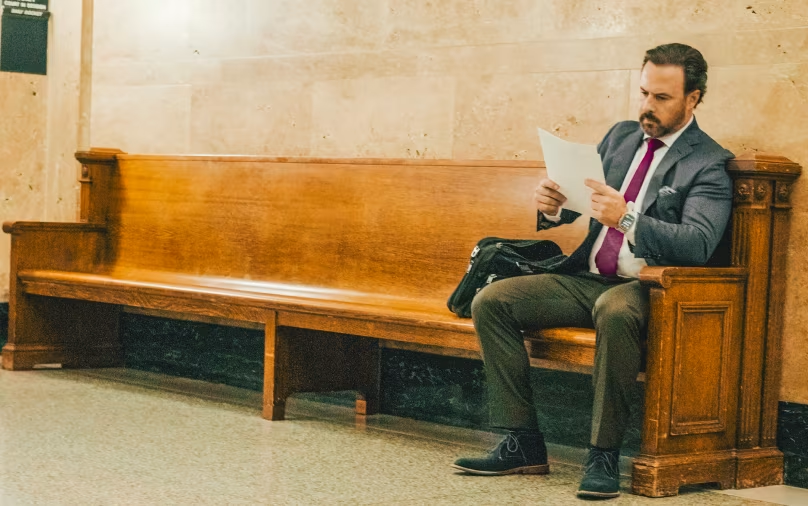
Jeremy Rosenthal represents injured passengers and drivers throughout Denver County after Uber/Lyft/rideshare collisions disrupt lives and create unexpected financial strain. Rosenthal Injury Law handles claims involving distracted rideshare operators, inadequate insurance coverage disputes, and multi-party liability questions that arise when commercial transportation services operate on Denver streets. Victims face mounting medical bills and lost income while rideshare companies employ claims adjusters trained to minimize settlement payouts and shift responsibility away from their platform drivers.
Jeremy Rosenthal brings trial-ready preparation to each rideshare collision case, investigating crash scenes to document skid marks and vehicle damage, obtaining driver logs and GPS data from rideshare platforms, and consulting accident reconstruction specialists who can testify about fault. The firm coordinates with treating physicians to document injury severity, negotiates with multiple insurance carriers (including the rideshare company’s commercial policy and the driver’s personal coverage), and files litigation in Denver County District Court when insurers refuse fair settlement offers. Rosenthal handles the legal process while injured clients focus on physical recovery and returning to normal activities after crashes involving commercial transportation services.
Attorney Jeremy Rosenthal is dedicated to helping his clients seek just compensation for their injuries regardless of the lengths he has to go to or the distances he may have to travel in order to get it. With over two decades of experience as a personal injury attorney in Colorado, Jeremy has represented clients with a wide variety of claims including slip and falls, car accidents, products liability, and dog bites. Before fighting for plaintiff’s rights, he worked in insurance defense, giving him invaluable insight into the tactics insurance companies use to lower case values. Jeremy is a SuperLawyers Rising Stars Honoree, has been rated in the Top 100 Trial Attorneys by The National Trial Lawyers, and is a member of the Million Dollar Advocates Forum.

Rosenthal Injury Law fights for rideshare accident victims against insurance companies that try to minimize payouts and shift blame. The firm’s attorneys bring focused litigation experience to every Uber/Lyft/rideshare collision case in Denver County courts.
The attorneys practice regularly in Denver County courts and understand the specific procedural requirements that affect rideshare accident claims. This local knowledge allows the legal team at Rosenthal Injury Law to file cases efficiently and anticipate how judges approach evidence disputes involving transportation network companies. Jeremy Rosenthal earned his J.D. From University of Denver Sturm College of Law, providing deep connections to the Colorado legal community.
Clients communicate directly with Jeremy Rosenthal throughout the legal process rather than being routed to paralegals or case managers. This personal attention means questions receive immediate answers and strategy decisions involve the injured party at every stage. The firm earned recognition as a highly responsive law firm in Denver because attorneys prioritize client communication over volume-based practices.
Rosenthal Injury Law earned membership in the Million Dollar Advocates Forum and recognition among the Top 100 National Trial Lawyers based on verdict and settlement results.
The attorneys act immediately to secure ride-sharing app data, vehicle black box information, and witness statements before this material disappears or becomes altered. Rosenthal Injury Law sends preservation letters to Uber and Lyft within days of crashes because transportation network companies often delete digital records after short retention periods. Early evidence collection strengthens negotiation positions and prevents defendants from controlling the narrative about what occurred.
The firm works with physicians, accident reconstructionists, and economic experts who can document the full scope of injuries and calculate future care needs. These professional relationships help Rosenthal Injury Law present detailed damage claims that account for ongoing treatment requirements rather than accepting insurance company valuations based solely on initial medical bills. The attorneys connect clients with specialists who understand rideshare collision injuries and provide treatment on a lien basis when insurance coverage proves insufficient.
The settlement amounts below reflect potential settlement ranges from successful Uber/Lyft/rideshare accident cases and negotiations in Denver. No fixed formula calculates individual awards since each rideshare accident case involves distinct circumstances and variables.
Personal injury attorneys can help you recover fair compensation for your accident claim. Contact us today to schedule your free consultation.
Medical treatment expenses accumulate rapidly following rideshare collisions, requiring victims to pay for emergency care, diagnostic tests, surgical interventions, and ongoing rehabilitation services throughout their recovery period. Denver hospitals bill for ambulance transport, CT scans, MRI imaging, orthopedic procedures, and physical therapy sessions that continue for months or years after the initial crash. Colorado law permits recovery of all rideshare accident medical bill costs directly caused by the collision, including future treatment expenses documented through physician testimony and medical expert analysis. Attorneys submit itemized billing statements, medical records, and provider liens to insurance companies while protecting your financial interests throughout settlement negotiations.
Income loss occurs when rideshare accident injuries prevent victims from performing their regular job duties, attending work shifts, or maintaining their previous earning capacity over weeks, months, or permanently. Attorneys calculate rideshare accident lost wages compensation by analyzing pay stubs, tax returns, employer statements, and W-2 forms that establish pre-accident earnings compared to post-collision income reductions. Colorado workers recover compensation for missed hourly wages, salary reductions, lost bonuses, forfeited commissions, unused vacation time, and employer-provided benefits including health insurance and retirement contributions. Self-employed individuals and contractors qualify for lost income recovery by submitting profit-and-loss statements, client contracts, and business records proving reduced earning capacity.
Physical pain and emotional suffering constitute substantial damages when rideshare accident injuries disrupt daily activities, limit mobility, cause chronic discomfort, and diminish quality of life for months or years following Denver collisions. Colorado courts award compensation for physical pain from broken bones, spinal cord damage, traumatic brain injuries, and soft tissue trauma that persists beyond initial treatment periods. Attorneys prove pain damages through medical records documenting injury severity, prescription medication lists showing ongoing pain management needs, and victim testimony describing how injuries affect sleep, recreation, family relationships, and household responsibilities. Multiplier methods calculate these damages by assessing injury permanence, treatment duration, disability ratings, and impact on life enjoyment compared to pre-accident conditions.
Vehicle repair after accidents requires compensation for collision damage, diminished value, rental car expenses, and total loss replacement costs when rideshare crashes destroy or disable your transportation. Denver repair shops provide estimates for bodywork, frame straightening, mechanical repairs, and parts replacement needed to restore vehicles to pre-accident condition according to Colorado insurance regulations. Total loss situations occur when repair costs exceed 80 percent of vehicle value, requiring insurance companies to pay fair market value based on comparable vehicle sales, mileage adjustments, and condition assessments. Attorneys negotiate property damage settlements separately from injury claims, ensuring you receive adequate compensation for transportation losses while pursuing medical expense recovery.
Psychological trauma manifests when rideshare collisions cause anxiety disorders, depression, post-traumatic stress disorder, and other mental health conditions that require psychiatric treatment and therapeutic intervention. Colorado recognizes emotional distress as compensable damage when victims develop clinically diagnosed conditions including panic attacks, sleep disturbances, social withdrawal, and fear of riding in vehicles following accidents. Mental health professionals document these conditions through diagnostic evaluations, treatment notes, therapy session records, and psychological testing results that establish causation between the crash and emotional symptoms. Attorneys prove emotional distress damages by presenting psychiatric testimony, medication records, counseling invoices, and victim statements describing how psychological trauma affects work performance, family relationships, and daily functioning.
Psychological trauma develops after rideshare accidents when victims experience persistent anxiety, depression, post-traumatic stress disorder (PTSD), or fear of driving that disrupts daily functioning and quality of life. Mental health effects after accidents include flashbacks, nightmares, social withdrawal, and panic attacks triggered by traffic situations or riding in vehicles. Colorado courts recognize emotional distress as compensable damage when documented through psychiatric evaluations, therapy records, and medical testimony proving the connection between the crash and psychological symptoms. Attorneys work with mental health professionals to demonstrate how trauma affects work performance, relationships, and personal activities.
Loss of income potential occurs when permanent injuries prevent victims from returning to previous careers or limit advancement opportunities in their chosen professions. Earning capacity vs loss of future earnings represents the difference between what victims would have earned throughout their working lives absent the injury and what they can now realistically earn given physical or cognitive limitations. Vocational experts analyze employment history, education, skills, and medical restrictions to calculate lifetime earning losses in rideshare accident cases. Economists project future wages accounting for inflation, promotions, and industry growth patterns that victims miss because disabilities prevent performing essential job functions.
Disability compensation addresses permanent physical or cognitive impairments that alter victims’ ability to perform basic life activities, work duties, or enjoy recreational pursuits they engaged in before rideshare accidents occurred in Denver. Physicians assign impairment ratings using American Medical Association guidelines that quantify functional limitations caused by spinal cord damage, traumatic brain injuries, amputations, or chronic pain conditions. Colorado law allows recovery for total disability preventing any gainful employment and partial disability reducing earning capacity or requiring workplace accommodations. Attorneys present medical evidence, vocational assessments, and life care plans demonstrating how disabilities create ongoing needs for assistance, adaptive equipment, and home modifications.
Loss of consortium compensates spouses for damages to marital relationships when rideshare accident injuries prevent intimate relations, companionship, household contributions, or emotional support that existed before crashes occurred. Consortium damages in Colorado require proving that physical injuries substantially diminished the quality of the marriage through loss of affection, sexual relations, assistance with daily tasks, or shared activities couples previously enjoyed together. Spouses file separate claims demonstrating how injuries to their partners created isolation, increased caregiving burdens, and destroyed plans for retirement or family growth. Attorneys gather testimony from family members, marriage counselors, and medical providers showing the profound impact catastrophic injuries have on intimate partnerships and household dynamics.
Punitive damages punish rideshare drivers or companies for willful, wanton, or grossly negligent conduct exceeding ordinary carelessness that causes accidents. Colorado Revised Statutes Section 13-21-102 caps punitive awards at the greater of three times compensatory damages or $500,000 unless circumstances involve fraud, intentional harm, or violations of specific consumer protection statutes. Courts award punitive damages when evidence shows drivers operated vehicles while intoxicated, engaged in street racing, ignored known mechanical defects, or violated traffic laws with conscious disregard for passenger safety. Juries consider the defendant’s financial condition, degree of reprehensibility, and deterrent effect needed to prevent future misconduct when calculating appropriate punitive awards beyond compensatory damages.
Rideshare accident recovery demands comprehensive physical therapy programs addressing musculoskeletal injuries, soft tissue damage, and mobility limitations caused by collisions. Injured passengers receive compensation for outpatient therapy sessions, occupational therapy appointments, chiropractic adjustments, and specialized rehabilitation equipment prescribed by medical providers. Colorado law permits recovery of all reasonable and necessary treatment expenses incurred during the healing process, including future therapy costs if permanent impairments require ongoing care. Attorneys coordinate with physical therapists and medical experts to document treatment progress, justify continued care recommendations, and calculate total rehabilitation expenses through detailed billing records and provider testimony.
Disfigurement after rideshare accident creates permanent physical alterations affecting appearance, self-esteem, and social interactions throughout a victim’s lifetime. Facial scarring, burn injuries, limb amputations, and visible deformities qualify for substantial compensation under Colorado tort law based on severity, location, and psychological impact of the disfigurement. Juries evaluate damages by considering the victim’s age, profession, public exposure requirements, and emotional distress caused by permanent physical changes that cannot be fully corrected through surgical intervention or cosmetic procedures. Attorneys present photographic evidence, expert testimony from plastic surgeons, and psychological evaluations demonstrating how scarring affects employment prospects, personal relationships, and overall quality of life.
Wongful death compensation provides financial recovery to surviving family members when fatal rideshare accidents result from driver negligence, vehicle defects, or third-party liability in collisions. Colorado Revised Statutes § 13-21-201 permits spouses, children, and parents to recover economic damages including funeral expenses, burial costs, lost financial support, and lost inheritance the deceased would have provided during their expected lifetime. Non-economic damages compensate survivors for loss of companionship, loss of parental guidance, loss of consortium, and emotional suffering caused by the premature death of a loved one. Attorneys calculate total damages by analyzing the deceased’s earning capacity, life expectancy, household contributions, and the emotional bond between the victim and surviving family members through testimony and financial records.
Types of legal fees determine how attorneys structure payment arrangements for rideshare accident representation in Denver, with most personal injury firms operating on contingency fee agreements requiring no upfront costs to injured clients. Contingency arrangements mean attorneys receive a percentage (typically 33-40%) of the final settlement or verdict only if they successfully recover compensation, eliminating financial barriers that prevent injured victims from accessing legal representation. Colorado Rules of Professional Conduct govern attorney fee agreements, requiring written contracts explaining percentage rates, case expense responsibilities, and how fees are calculated from gross recovery amounts. Attorneys advance case costs including expert witness fees, medical record retrieval, court filing fees, deposition expenses, and investigation costs, which are reimbursed from the settlement proceeds rather than paid directly by clients during the litigation process.
Severe injuries from rideshare collisions derail career advancement plans, prevent educational degree completion, and eliminate professional opportunities that victims would have achieved absent the accident. Students forced to withdraw from universities, professionals unable to complete licensing requirements, and workers losing promotions due to extended medical leave recover compensation for these missed opportunities under Colorado law by proving the causal connection between injuries and lost prospects. Attorneys document lost opportunities through academic records, employer testimony, vocational expert analysis, and economic calculations comparing pre-accident career trajectory with post-accident earning limitations caused by permanent disabilities. Younger victims typically receive higher awards since catastrophic injuries eliminate decades of potential career advancement, professional development, and educational achievements that were statistically probable before the collision occurred.
Common injuries in Denver Uber/Lyft/rideshare wreck cases create devastating physical, emotional, and financial consequences requiring comprehensive medical treatment and legal representation.
Insurance companies challenge whiplash claims by arguing delayed symptom reporting indicates pre-existing conditions rather than crash-related trauma
Defense attorneys cite gaps between collision dates and initial doctor visits to minimize settlement values and question injury severity.
Colorado applies modified comparative negligence rules that reduce compensation if claimants share fault exceeding 50%, making immediate medical documentation critical to establish causation between the rideshare collision and cervical injuries.
Proving concussions requires neurological testing and cognitive assessments since CT scans often show no visible structural damage in mild traumatic brain injuries
Insurance adjusters dispute concussion severity by pointing to normal imaging results and attributing symptoms to psychological stress rather than organic brain injury.
Colorado courts require expert medical testimony establishing causation between the rideshare collision and neurological symptoms, particularly when symptoms manifest days after the initial impact, making contemporaneous documentation of behavioral changes essential to overcome defense arguments about intervening causes.
Demonstrating types of fractures requires X-ray documentation showing break patterns, displacement severity, and surgical hardware placement confirming injury complexity.
Defense teams argue that osteoporosis or calcium deficiencies contributed to fracture susceptibility, reducing rideshare company liability for bone breaks.
Colorado statute C.R.S. § 13-21-102.5 caps noneconomic damages (pain and suffering) at $613,760 for claims accruing on or after January 1, 2020, with courts able to increase to $1,227,530 upon clear and convincing evidence. For cases filed on or after January 1, 2025, the cap is $1.5 million. Physical impairment and disfigurement are separately compensable categories without cap limitations under § 13-21-102.5(5), requiring detailed orthopedic testimony that fractures caused permanent functional limitations exceeding temporary healing periods
Establishing spinal cord injury severity requires American Spinal Injury Association (ASIA) impairment scale classifications distinguishing complete from incomplete neurological deficits.
Defense counsel challenges causation by investigating pre-existing degenerative spine conditions and arguing that crash forces were insufficient to cause severe cord damage.
Colorado courts permit recovery of future medical expenses based on present value calculations using expert testimony, but defendants frequently challenge life care plan assumptions about care needs and medical cost inflation rates, requiring thorough cross-examination preparation of rehabilitation specialists who establish ongoing attendant care requirements.
Proving traumatic brain injuries requires neuroimaging showing contusions, diffuse axonal injury patterns, or intracranial bleeding combined with neuropsychological deficits.
Insurance companies dispute TBI severity by hiring independent medical examiners who attribute cognitive problems to malingering or pre-existing psychological conditions
Colorado permits recovery for loss of enjoyment of life as a distinct damage category, requiring detailed testimony from family members, friends, and coworkers who observed personality changes and social withdrawal patterns following the rideshare crash, since these subjective losses often exceed quantifiable economic damages in severe traumatic brain injury cases.
Documenting types of internal injuries requires emergency CT scans showing fluid collections, organ lacerations, or vascular disruptions that justify surgical exploration.
Defense attorneys argue that delayed symptom reporting undermines causation claims and suggest alternative medical causes for internal bleeding unrelated to collisions.
Colorado follows the “discovery rule” tolling statute of limitations until injuries become apparent, which proves critical in internal bleeding cases where symptoms emerge days after rideshare crashes, but defendants challenge this tolling by arguing that reasonable persons would have sought medical attention immediately following collisions involving sufficient force to cause organ damage.
Establishing permanent value for lacerations and bruises requires plastic surgery consultations documenting disfigurement severity and scar revision feasibility using before-after photography
Insurance adjusters minimize soft tissue injury settlements by arguing wounds healed without complications and scars fade naturally over time without intervention.
Colorado courts recognize disfigurement as a distinct element of noneconomic damages separate from pain and suffering, requiring specific jury instructions on permanent scarring impacts, but defendants frequently move to exclude before-injury photographs arguing they inflame juror emotions rather than prove damages, making foundation testimony from family members about appearance changes essential to admissibility.
PTSD compensation requires documented psychiatric evaluations, treatment records showing therapy attendance, and expert testimony connecting psychological symptoms directly to the rideshare collision
Insurance carriers challenge psychological injury claims by arguing pre-existing mental health conditions or asserting insufficient physical trauma to justify emotional distress damages
Psychological injury claims face heightened scrutiny in Colorado courts, requiring clear medical causation linking the rideshare accident to diagnosed conditions through expert testimony that distinguishes trauma-induced disorders from pre-existing mental health issues.
Facial injury claims require detailed photographic documentation showing injury progression, plastic surgery consultations estimating reconstruction costs, and vocational experts assessing career impact if disfigurement affects employment prospects.
Insurers minimize facial injury claims by arguing scarring improves with time or claiming injuries result from plaintiff’s failure to wear seatbelts rather than driver negligence.
Colorado courts allow separate damages for both physical scarring and emotional distress from disfigurement, but plaintiffs must establish permanent impairment through medical expert testimony since temporary facial injuries generate substantially lower compensation awards.
Pelvic fractures demand immediate CT imaging showing fracture classification, surgical records detailing internal fixation procedures, and physical therapy documentation proving extended rehabilitation needs and functional limitations
Defense attorneys argue pelvic injuries result from pre-existing degenerative conditions or claim impact severity was insufficient to cause fractures based on vehicle damage assessments
Pelvic fracture cases require biomechanical experts to establish causation by demonstrating collision forces exceeding thresholds necessary to fracture bone, particularly when defendants argue low-speed impacts cannot generate sufficient energy to cause documented injuries.
Burn injury cases require wound care specialist documentation showing burn depth classification, skin graft surgery records if tissue replacement occurred, and infection treatment protocols proving complications extended recovery time.
Carriers challenge burn claims by asserting injuries occurred after the plaintiff exited the vehicle or arguing burns resulted from post-accident fire rather than rideshare driver negligence.
Denver Uber/Lyft/rideshare crash attorneys must establish causation linking burns directly to the collision rather than plaintiff actions after the crash, requiring fire origin analysis and accident reconstruction showing thermal injuries occurred during impact rather than escape attempts.
Numbness or tingling radiating down arms or legs
Muscle weakness preventing normal grip strength or walking
Burning sensations in affected areas without external cause
Loss of fine motor control affecting daily tasks
Foot drop causing tripping hazards and gait abnormalities
Chronic neuropathic pain resistant to standard medications
EMG and nerve conduction velocity study results
Neurologist examination notes documenting deficits
MRI imaging showing nerve compression or damage
Surgical records if nerve repair procedures performed
Pain management specialist treatment documentation
Vocational rehabilitation assessment showing work capacity.
Nerve damage requires electromyography (EMG) testing confirming nerve conduction deficits, neurologist evaluation establishing injury location and severity, and documentation proving conservative treatments failed before considering surgical decompression.
Insurance companies argue nerve symptoms stem from pre-existing conditions like diabetes or degenerative disc disease rather than acute trauma from the rideshare collision.
Nerve damage claims require testimony distinguishing acute traumatic injuries from chronic degenerative processes, particularly when defense medical examiners assert symptoms reflect pre-existing neuropathy rather than collision-related trauma documented through temporal proximity and objective diagnostic findings.
Internal injuries demand immediate CT imaging showing Organ failure or bleeding, surgical records documenting exploratory procedures or organ removal, and intensive care unit stays proving life-threatening complications developed.
Defense teams question injury severity by arguing imaging shows minor contusions rather than life-threatening damage or claiming delayed symptom reporting indicates non-crash causation.
Colorado law permits substantial damages for organ injuries proving permanent impairment, but plaintiffs must overcome defense arguments that pre-existing conditions contributed to organ vulnerability through medical expert testimony establishing acute traumatic causation rather than gradual disease progression.
Knee and leg injuries require MRI imaging confirming ligament tears or meniscal damage, orthopedic surgeon consultation recommending surgical intervention or explaining conservative treatment failure, and physical therapy records showing functional improvement plateaus.
Insurers minimize knee injury claims by asserting degenerative changes visible on imaging pre-dated the accident or arguing plaintiff’s obesity contributed more to symptoms than collision trauma
Knee injury litigation requires addressing Colorado’s comparative negligence statute when defendants argue plaintiff actions contributed to injury severity, particularly if failure to wear seatbelts allowed excessive dashboard contact, necessitating accident reconstruction proving injuries were unavoidable regardless of restraint use given collision dynamics and vehicle positioning.
Neck injury claims require comprehensive diagnostic imaging including X-rays, CT scans, and MRI studies to document cervical spine damage, herniated discs, and soft tissue trauma that insurance adjusters cannot visibly observe
Insurance companies attribute neck pain to pre-existing degenerative conditions, prior accidents, or delayed symptom reporting to minimize settlement obligations and challenge causation evidence
Neck injuries require immediate medical documentation because insurance adjusters scrutinize gaps between accident date and first treatment visit, using delays to argue injuries stemmed from unrelated causes rather than the rideshare collision itself.
Denver rideshare accident patterns reflect the city’s expanding transportation-network company operations across 155 square miles of urban terrain, with Uber and Lyft vehicles completing 38 million trips annually according to Colorado Public Utilities Commission data. The confluence of Interstate 25 and Interstate 70 creates sustained traffic density throughout downtown corridors, where rideshare vehicles constitute 12 percent of total vehicle miles traveled based on Denver Regional Council of Governments transportation studies. Mile High City streets accommodate 2,847 rideshare crashes per year according to Colorado Department of Transportation records, representing a 34 percent increase from 2019 baseline figures.
Denver experiences approximately 78 rideshare-involved collisions weekly according to Denver Police Department traffic collision reports, translating to 11 incidents daily across metropolitan boundaries. Denver County accounts for 19 percent of Colorado’s total transportation network company crashes based on state highway safety data, despite containing only 11 percent of the state’s population. Fatal rideshare accidents claim 23 lives annually in Denver according to National Highway Traffic Safety Administration statistics, while serious injury crashes resulting in hospitalization occur at a rate of 340 incidents per year based on Colorado Department of Public Health data. Year-over-year collision trends show rideshare accident frequency increasing 8 percent annually since 2020 according to Regional Transportation District safety analyses.
Downtown Denver registers the highest concentration of rideshare accidents with 847 reported collisions annually according to Denver traffic studies, driven by convention center traffic, stadium events, and Union Station passenger pickups creating perpetual congestion along 16th Street Mall corridors. Capitol Hill experiences 412 rideshare crashes per year based on Denver Police Department statistics, primarily concentrated near Colfax Avenue commercial districts where late-night bar closures generate surge pricing demand between 1 a.m. And 3 a.m. Cherry Creek shopping district accounts for 298 rideshare collisions annually according to Denver transportation data, with rear-end accidents dominating incident reports at valet zones and restaurant dropoff points along First Avenue. LoDo neighborhood rideshare accident rates reach 523 incidents per year based on Denver Public Works collision mapping, concentrated heavily around Coors Field during baseball season and Larimer Square entertainment venues on weekend evenings. Highland sees 267 rideshare crashes annually according to Denver Regional Council data, with pedestrian-involved incidents comprising 31 percent of total collisions when drivers fail to yield at unmarked crosswalks along commercial strips.
Uber and Lyft accidents occur approximately 2-3 times daily in Denver based on Colorado Department of Transportation rideshare incident data showing 800-1,100 reported crashes annually citywide. Denver experiences elevated rideshare collision rates because the city hosts 4.2 million annual visitors according to Visit Denver, creating constant demand for transportation network companies during peak travel periods, sporting events, and nightlife hours. The actual daily accident count fluctuates significantly depending on weather conditions, major events at venues like Ball Arena or Empower Field, and seasonal tourism patterns affecting ridership volume. Weekend nights produce higher collision frequencies than weekday mornings when intoxicated passengers, congested entertainment districts, and increased ride requests combine to elevate crash risk for drivers operating on platforms like Uber and Lyft throughout Denver County.
Attorneys help clients avoid future legal pitfalls by preserving evidence immediately after Uber/Lyft/rideshare collisions occur in Denver, which prevents spoliation claims and strengthens your position during settlement negotiations. Your legal team handles all communications with Uber, Lyft, and their insurance carriers, preventing recorded statements that adjusters manipulate to reduce payouts or deny claims entirely. Lawyers identify which insurance policies apply (driver’s personal coverage, Uber’s $1 million policy during trips, or underinsured motorist protection) based on the rideshare app status at collision time, which determines available compensation sources. Attorneys document injuries thoroughly through medical specialists who establish causation between the crash and your condition, creating records that prevent insurance companies from attributing injuries to pre-existing conditions months later.
After an Uber and Lyft accident, taking prompt action protects your health and legal rights.
Rear-end collisions occur when a following vehicle strikes a rideshare car from behind, often trapping passengers between competing insurance claims from both the rideshare driver and the at-fault motorist. A skilled rear-end collisions lawyer establishes liability through traffic camera footage, rideshare GPS data, witness statements, police reports, and vehicle damage patterns that demonstrate the trailing driver’s failure to maintain safe following distance under Colorado Revised Statutes § 42-4-1008. Denver County experiences rear-end crashes involving rideshare vehicles frequently along congested corridors such as I-25 and Colfax Avenue during rush hours. These collisions produce whiplash injuries, traumatic brain injuries, spinal cord damage, and soft tissue injuries that require immediate medical documentation through emergency room records, diagnostic imaging reports, orthopedic evaluations, neurological assessments, physical therapy notes, and employer wage loss statements.
T-bone accidents happen when a vehicle strikes the side of a rideshare car at intersections, exposing passengers to direct impact forces without the protection afforded by front or rear crumple zones. An experienced T-bone accidents attorney proves negligence through intersection camera footage, rideshare app timestamp data, traffic signal records, witness accounts, accident reconstruction analysis, and vehicle damage assessments that establish which driver violated right-of-way rules under Colorado Revised Statutes § 42-4-703. Denver experiences these crashes regularly at high-traffic intersections along Broadway, Federal Boulevard, and other arterial roads where rideshare drivers make frequent stops. Passengers suffer broken ribs, internal organ damage, pelvic fractures, and head trauma that necessitates comprehensive evidence collection including ambulance reports, surgical records, intensive care unit documentation, follow-up treatment plans, and calculations of lost earning capacity.
Sideswipe crashes develop when adjacent vehicles drift into rideshare lanes or when rideshare drivers merge improperly while responding to app navigation prompts, creating liability questions about whether the rideshare company’s technology contributed to the collision. A skilled sideswipe crashes lawyer builds cases through police accident reports, rideshare app navigation logs, dashcam recordings, highway surveillance footage, vehicle paint transfer analysis, and witness statements that document improper lane changes under Colorado Revised Statutes § 42-4-1007. These crashes occur throughout Denver County on multi-lane highways such as I-70 and I-225 where vehicles travel at high speeds. Victims sustain shoulder injuries, facial lacerations, broken arms, and psychological trauma that require documentation through emergency department records, orthopedic surgeon reports, mental health evaluations, prescription medication logs, and employer statements confirming missed work periods.
Head-on collisions represent the most severe rideshare crashes, occurring when vehicles cross center lines or median barriers and strike rideshare cars traveling in opposite directions, producing catastrophic injuries that generate complex claims involving both rideshare insurance policies and personal auto coverage. An experienced head-on collisions attorney demonstrates fault through accident scene photographs, skid mark measurements, vehicle debris field analysis, toxicology reports, rideshare GPS speed data, and witness testimony that establishes violations of Colorado Revised Statutes § 42-4-1001 requiring drivers to remain in proper lanes. Denver County sees these devastating crashes on undivided roadways and during wrong-way driving incidents on I-76 and other highways. Passengers endure spinal cord injuries, multiple bone fractures, traumatic amputations, and severe burns that demand extensive proof including life flight transport records, trauma center admission files, surgical procedure documentation, rehabilitation facility assessments, and expert testimony regarding permanent disability and future medical costs.
Multi-vehicle pileups trap rideshare vehicles between multiple colliding cars, creating complicated liability scenarios where several drivers and insurance companies dispute responsibility for injuries sustained by passengers who cannot control their vehicle’s position. A skilled multi-vehicle pileups lawyer identifies all liable parties through comprehensive police crash reports, traffic camera recordings, vehicle event data recorder downloads, rideshare trip logs, witness statements from multiple bystanders, and accident reconstruction expert analysis that sequences the collision chain under Colorado’s modified comparative negligence statute at Colorado Revised Statutes § 13-21-111. These chain-reaction crashes occur on Denver highways during adverse weather conditions, particularly on I-25 near downtown where traffic density remains high. Rideshare passengers experience complex injuries including internal bleeding, compression fractures, organ contusions, and post-traumatic stress disorder that require documentation through air ambulance transport records, multiple hospital admissions, specialist consultation reports, psychological treatment notes, and calculations addressing diminished quality of life.
Rideshare crashes occur when Uber or Lyft vehicles collide with other cars, pedestrians, or fixed objects while transporting passengers or waiting for ride requests along Denver’s busy corridors like I-25 and Speer Boulevard. A skilled pedestrian accidents attorney establishes liability through insurance investigation, app records, and corporate policy analysis when rideshare drivers cause harm to people walking near downtown intersections or residential pickup zones. These collisions produce traumatic brain injuries, spinal cord damage, multiple fractures, and internal organ trauma that demand months of surgical intervention and rehabilitation. Colorado Revised Statutes § 42-4-1412 requires drivers to yield to pedestrians in crosswalks, yet Denver County experiences pedestrian-rideshare collisions frequently when drivers focus on navigation apps instead of street conditions. Evidence includes traffic camera footage from city intersections, Uber or Lyft trip data showing driver location and speed, police accident reports with witness statements, medical records documenting injury progression, surveillance video from nearby businesses, pedestrian clothing and belongings showing impact patterns, and cell phone records proving driver distraction at the collision moment.
Bicycle crashes involving rideshare vehicles happen when Uber or Lyft drivers open doors into bike lanes, make sudden turns across cycling paths, or fail to check mirrors before merging on streets like 15th Street or the Cherry Creek Trail crossings in Denver. An experienced bicycle accident attorney proves negligence through door-strike analysis, bike lane violation documentation, and helmet camera footage showing the driver’s failure to observe cyclists before acting. Cyclists suffer clavicle fractures, road rash requiring skin grafts, facial injuries from pavement impact, and orthopedic damage to knees and wrists when thrown from their bicycles. Colorado Revised Statutes § 42-4-1412 mandates three feet of clearance when vehicles pass bicycles, but Denver sees these violations regularly during peak rideshare hours when drivers rush between fares. Evidence includes helmet camera recordings from the cyclist’s perspective, bicycle damage analysis showing impact force and angle, medical imaging of fracture patterns and soft tissue damage, traffic signal timing data from the intersection, rideshare app records proving the driver was logged in and active, witness statements from other cyclists or pedestrians nearby, and police reports documenting road conditions and vehicle positions after the crash.
Passenger exit accidents occur when Uber or Lyft riders open doors into moving traffic lanes, step into the path of approaching vehicles, or exit on the traffic side instead of the curb side along Denver’s high-volume streets like Colfax Avenue and Broadway. A skilled rideshare exit accidents lawyer establishes liability through driver training records, company safety protocol evidence, and traffic reconstruction showing whether the rideshare operator stopped in a safe location or created hazardous conditions by discharging passengers mid-block or in restricted zones. Passengers struck while exiting suffer lower extremity fractures from vehicle impacts, head trauma when knocked to the pavement, chest injuries from being pinned between the rideshare vehicle and passing traffic, and psychological trauma following the sudden collision. Colorado Revised Statutes § 42-4-1207 prohibits opening vehicle doors on the traffic side when it interferes with moving vehicles, yet Denver County records show passenger exit collisions happen frequently when drivers prioritize quick turnover over passenger safety. Evidence includes dashcam footage from the striking vehicle showing the door opening sequence, rideshare GPS data proving the stop location and duration, medical records documenting injury mechanisms and treatment plans, witness statements from nearby drivers or pedestrians who saw the exit, photographs of the drop-off zone showing inadequate space or prohibited stopping areas, traffic volume data from that time and location, and the rideshare driver’s statement about safety instructions given to the passenger before exit.
Uber/Lyft/rideshare accident settlements in Denver operate through negotiations between injury victims, rideshare companies, insurance carriers, and attorneys to resolve claims without trial proceedings. Colorado follows at-fault insurance principles, meaning the party responsible for causing the collision bears financial liability for resulting damages including medical expenses, lost wages, property damage, and pain and suffering. Rideshare companies maintain three-tiered insurance coverage that activates based on driver status at the time of collision: $50,000 per person and $100,000 per accident when drivers have apps open but no passenger, and $1 million per accident when transporting passengers or en route to pickups according to Colorado Public Utilities Commission regulations. Attorneys typically initiate settlement discussions by submitting demand letters documenting injuries, treatment costs, income losses, and liability evidence to relevant insurance carriers. Insurance adjusters review medical records, accident reports, witness statements, and damage assessments before making initial settlement offers that usually fall below claim values. Your legal team counters with documented proof of full damages, negotiating multiple rounds until reaching acceptable compensation or proceeding to litigation if settlement talks fail. Most rideshare accident claims resolve within three to nine months through negotiated settlements, avoiding lengthy trial processes while securing fair recovery for documented losses
Colorado operates under a fault-based insurance system for Uber and Lyft accidents, not a no-fault system, meaning injury victims pursue compensation directly from the at-fault party’s insurance carrier rather than their own policies regardless of blame. No-fault states require drivers to carry personal injury protection (PIP) coverage that pays their own medical bills and lost wages after any collision regardless of who caused the crash. Colorado eliminates this requirement, instead mandating that negligent drivers compensate injured parties through bodily injury liability coverage. Rideshare passengers injured in accidents file claims against the at-fault driver’s personal auto policy, Uber or Lyft’s commercial coverage, or both depending on driver app status and collision circumstances. This fault-based system allows victims to recover full damages including pain and suffering, emotional distress, and non-economic losses that no-fault systems typically restrict. Determining liability becomes critical in Colorado rideshare cases because compensation depends on proving the other driver’s negligence caused your injuries through traffic violations, distracted driving, speeding, or unsafe lane changes according to evidence gathered from police reports and witness accounts
Your rights after a Uber and Lyft accident in Denver include seeking financial recovery, accessing medical treatment, and pursuing legal claims against responsible parties who caused your injuries.
Understanding whether you need an Uber and Lyft accident attorney in Denver involves evaluating collision severity, insurance complications, injury extent, and claim obstacles that affect rideshare settlement outcomes.
Hire attorneys if your collision caused broken bones, traumatic brain injuries, spinal damage, internal organ injuries, or permanent disabilities requiring extensive medical treatment and long-term care.
Seek legal representation when insurance carriers deny valid claims, dispute liability, challenge injury causation, or offer settlements far below documented medical expenses and lost income.
Retain lawyers if your accident involves several at-fault drivers, rideshare company liability, vehicle defects, or road maintenance failures complicating claim investigations and settlement negotiations.
Contact attorneys when determining which insurance policy applies becomes difficult based on driver app status, passenger presence, or whether the rideshare driver was logged into multiple platforms simultaneously.
Engage legal professionals if insurance adjusters pressure you to accept quick settlements before completing medical treatment or understanding full injury impacts on work capacity and quality of life.
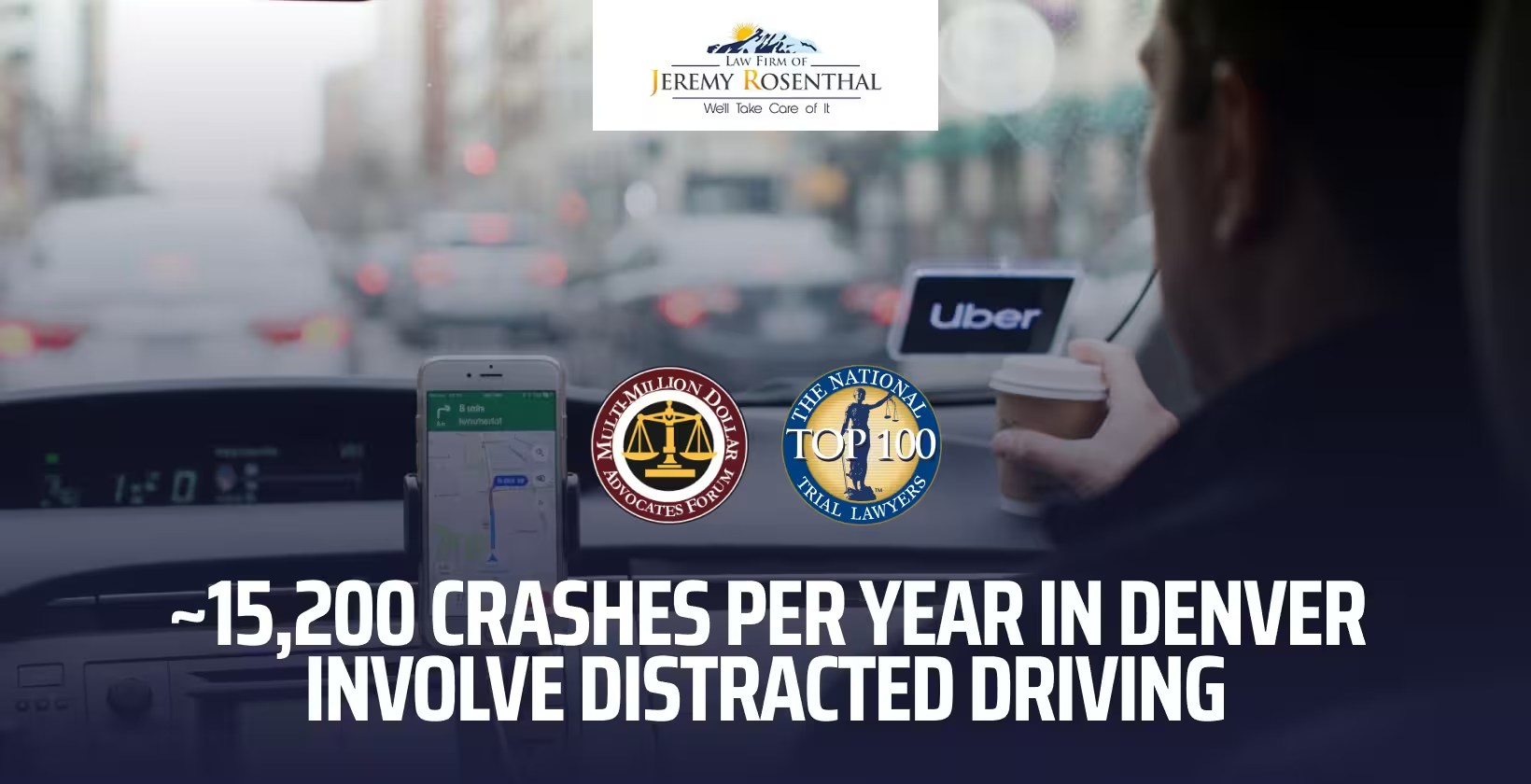
Distracted driving occurs when rideshare operators divert their attention from roadway conditions to interact with smartphone applications, GPS navigation systems, or passenger requests, creating dangerous gaps in situational awareness that frequently result in rear-end collisions and pedestrian strikes. Denver County experiences approximately 15,200 crashes annually involving distracted drivers according to Colorado Department of Transportation data, and Colorado Revised Statutes § 42-4-239 prohibits mobile electronic device use while operating a motor vehicle. This violation establishes negligence per se in civil litigation if the driver’s inattention directly caused the collision and resulting injuries. Evidence that can strengthen your case includes smartphone activity records, dispatch system timestamps, vehicle telematics data, witness statements confirming device usage, police reports documenting citation for distraction, and photographs showing phone positioning at impact.
Speeding violations by rideshare drivers stem from financial incentives to complete additional trips during peak demand periods, pushing operators to exceed posted limits on Denver arterial roads and residential streets where pedestrian traffic creates heightened collision risks. Research from the National Transportation Safety Board shows speeding contributes to 29 percent of fatal crashes nationwide, and Colorado Revised Statutes § 42-4-1101 establishes maximum speed limits that rideshare operators must follow regardless of passenger expectations or surge pricing pressures. Exceeding these statutory limits creates presumptive negligence in personal injury claims if speed was a substantial factor in causing the accident. Evidence that can strengthen your case includes black box data showing vehicle velocity, traffic camera footage, skid mark measurements, accident reconstruction analysis, citations issued at the scene, and witness testimony about reckless operation

Driver fatigue affects rideshare operators who work consecutive shifts exceeding 12 hours without adequate rest breaks, impairing reaction times and decision-making capacity in ways that mirror alcohol intoxication at 0.08 percent blood alcohol concentration according to National Highway Traffic Safety Administration studies. Rideshare drivers often extend their availability during evening hours and weekend periods when demand surges, creating dangerous conditions as cognitive function deteriorates. Colorado law recognizes fatigue as negligence if drivers knew or should have known their impaired condition created unreasonable risks to other road users. Evidence that can strengthen your case includes driver activity logs from the rideshare platform, shift duration records, eyewitness accounts of erratic driving patterns, electronic logging device data, medical evaluations documenting exhaustion, and expert testimony about fatigue’s impact on driving performance.

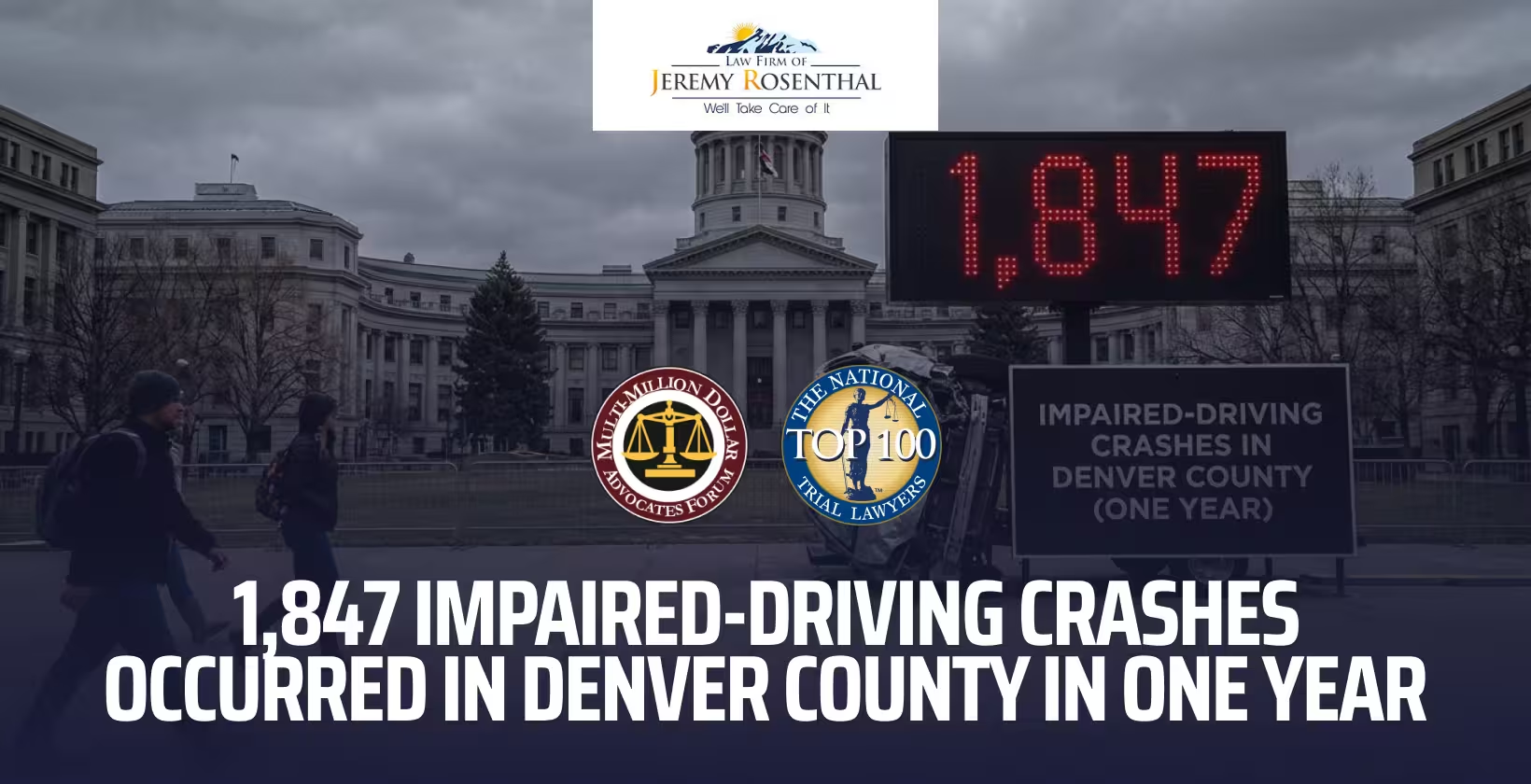
Drunk or drugged driving by rideshare operators represents a severe breach of duty, occurring when drivers operate vehicles while impaired by alcohol, marijuana, prescription medications, or illegal substances despite company policies and state criminal statutes prohibiting such conduct. Colorado Revised Statutes § 42-4-1301 establishes 0.05 percent blood alcohol content as the threshold for driving under the influence, with marijuana impairment creating additional prosecution grounds under amendment 64 implementing regulations. Denver County recorded 1,847 impaired driving crashes in 2022 according to Colorado Department of Transportation crash statistics, with rideshare incidents comprising a growing segment of these violations. Evidence that can strengthen your case includes chemical test results, field sobriety test performance, officer observations documented in police reports, toxicology analyses, dashcam footage showing erratic operation, and witness statements describing visible impairment signs
Poor weather conditions create hazardous driving environments during winter snowstorms, spring hail events, and sudden temperature drops that produce black ice on elevated roadways and bridge surfaces, yet rideshare drivers maintain a duty to adjust their operation to match current conditions. Colorado Revised Statutes § 42-4-1103 requires drivers to operate at speeds reasonable and prudent for existing conditions, meaning posted limits become legally excessive when precipitation, reduced visibility, or ice compromise traction and stopping distances. Denver experiences an average of 60 inches of annual snowfall according to National Weather Service data, creating extended periods when rideshare operators must reduce speeds and increase following distances. Evidence that can strengthen your case includes weather reports from the National Oceanic and Atmospheric Administration, road condition alerts issued by Colorado Department of Transportation, photographs showing precipitation or ice at the collision scene, vehicle damage patterns consistent with weather-related loss of control, and expert testimony about proper winter driving techniques

Unsafe lane changes occur when rideshare drivers execute sudden lateral movements across traffic lanes without proper signaling, mirror checks, or blind spot verification, often responding to last-minute passenger pickup instructions or attempting to reach specific curb locations. Colorado Revised Statutes § 42-4-1007 mandates that drivers signal continuously for at least 100 feet before changing lanes and verify the movement can be made safely without interfering with other traffic flow. The National Highway Traffic Safety Administration attributes approximately 538,000 crashes annually to improper lane changes, with urban rideshare operations in Denver creating elevated risks during congested periods. Evidence that can strengthen your case includes traffic camera recordings, dashcam video from other vehicles, witness statements describing the maneuver, vehicle damage location indicating side-impact collision, police reports citing improper lane change, and telematics data showing sudden steering inputs
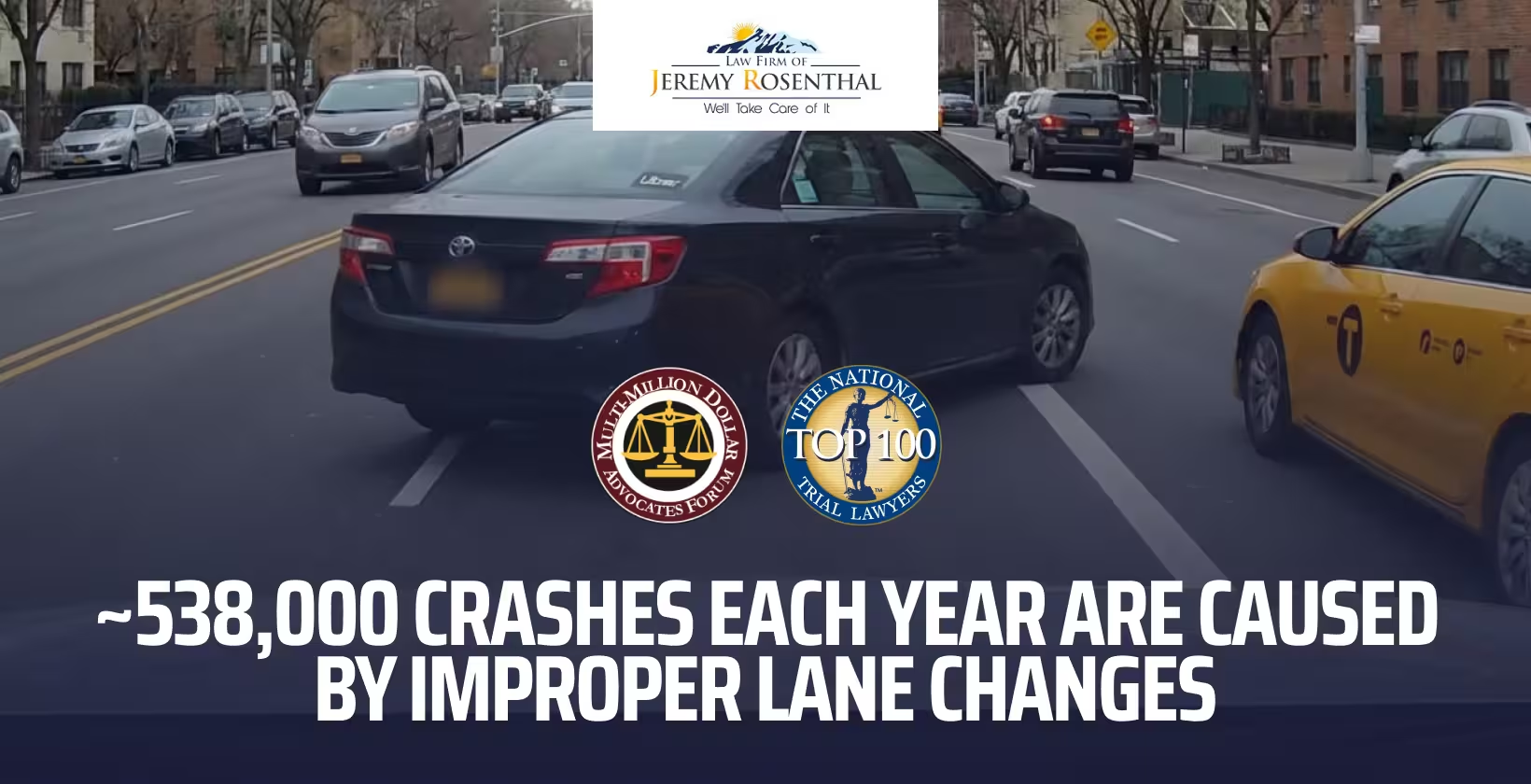
Vehicle maintenance issues develop when rideshare operators neglect required inspections, delay brake repairs, or continue operating with worn tires and defective lighting systems, creating mechanical failures that compromise vehicle control during Denver’s variable elevation driving conditions and steep grade descents. Colorado Revised Statutes § 42-4-235 requires all vehicles to maintain equipment in safe working condition, with specific regulations for brake performance, tire tread depth, and lighting function that rideshare vehicles must satisfy regardless of high mileage or intensive use patterns. Denver County crash data shows mechanical failures contribute to 4.2 percent of reported collisions according to Colorado Department of Transportation statistics, with brake system malfunctions representing the most common defect category. Evidence that can strengthen your case includes vehicle inspection records showing overdue maintenance, repair shop estimates documenting worn components, brake performance measurements taken after the collision, tire tread depth analysis, photographs of damaged parts, and testimony from certified mechanics about maintenance standards.

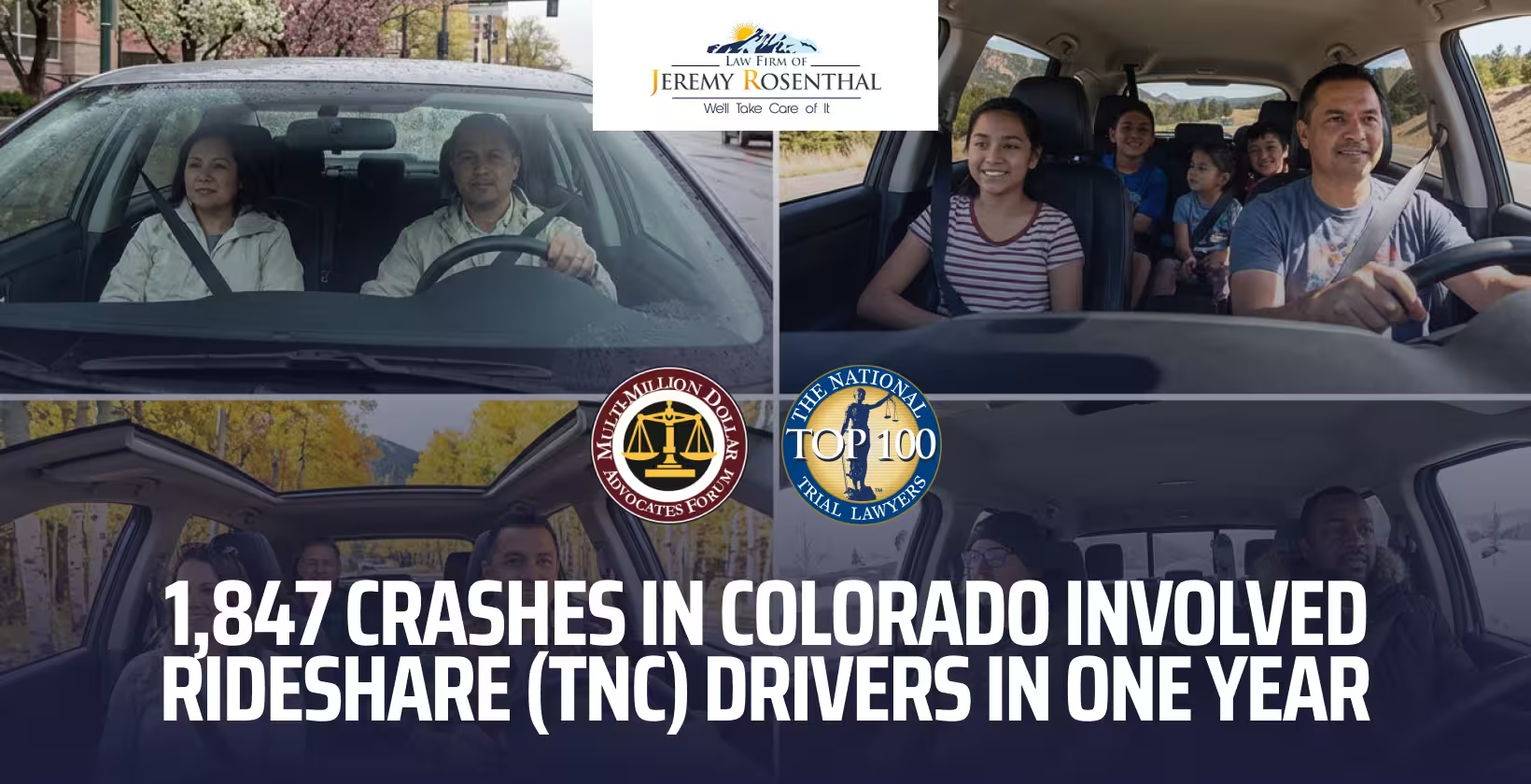
Rideshare companies permit drivers to operate vehicles with minimal training requirements, creating substantial collision risks when inexperienced operators lack the defensive driving skills necessary to anticipate hazards, respond to sudden traffic changes, and manage passenger distractions while navigating busy intersections and highway merges. Transportation Network Company (TNC) drivers caused 1,847 reported crashes in Colorado during 2022 according to Colorado Department of Transportation data, with Colorado Revised Statutes § 42-4-1401 requiring all commercial drivers to maintain reasonable and prudent control regardless of platform affiliation or driving experience. Rideshare platforms establish negligence when inadequate driver screening permits unqualified operators to accept rides, particularly if background checks failed to identify prior moving violations or suspended licenses. Evidence that can strengthen your case includes the driver’s complete MVR history, platform approval dates and screening records, dash camera footage showing erratic vehicle control, passenger accounts of unsafe driving behavior, GPS data revealing excessive speed or sudden lane changes, and maintenance records indicating vehicle familiarity issues
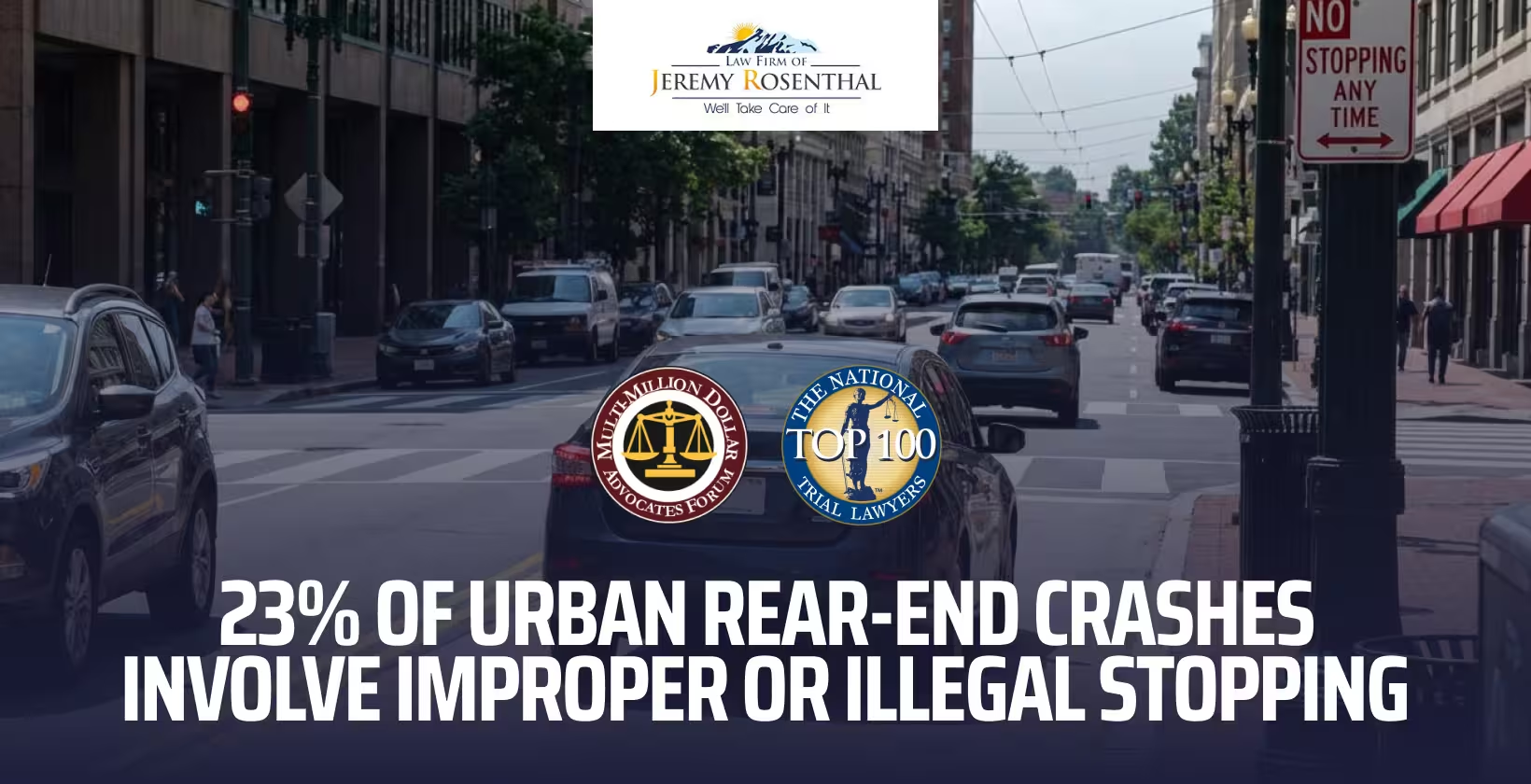
Illegal stopping creates collision hazards throughout Denver when rideshare drivers block traffic lanes during passenger pickups, double-park near popular entertainment districts along Larimer Street and Blake Street, or stop suddenly without checking mirrors or activating hazard lights to accept ride requests. The National Highway Traffic Safety Administration (NHTSA) reports that improper stopping contributes to 23 percent of urban rear-end collisions nationwide, with Denver Municipal Code § 54-472 prohibiting vehicles from stopping in travel lanes except when traffic conditions or emergencies require immediate halts. Drivers who violate stopping regulations face liability when their actions force following vehicles to brake suddenly or swerve into adjacent lanes, creating chain-reaction crashes that involve multiple parties. Evidence that can strengthen your case includes police citations for illegal stopping, intersection camera footage documenting the violation, witness statements from nearby motorists, app timestamp data showing ride acceptance immediately before the stop, photographs of final vehicle positions blocking traffic, and accident reconstruction analysis measuring stopping distances.
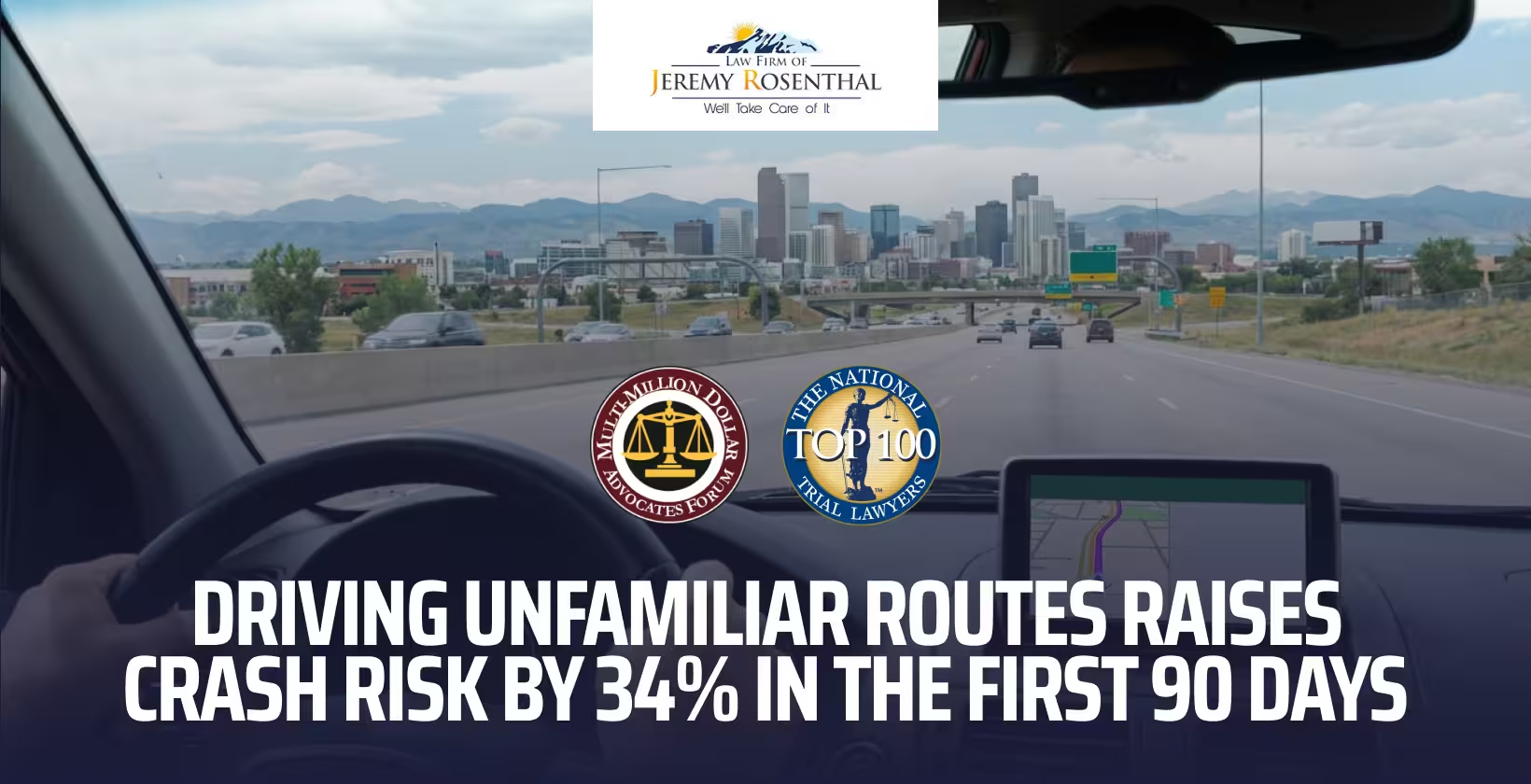
Denver’s complex roadway network challenges rideshare drivers unfamiliar with interstate merge patterns on I-25 and I-70, sudden lane restrictions through the Mousetrap interchange, construction detours in rapidly developing neighborhoods, and rush-hour traffic flows that shift dramatically between downtown business districts and residential areas in Park Hill or Capitol Hill. The Federal Motor Carrier Safety Administration (FMCSA) documents that unfamiliarity with local routes increases crash likelihood by 34 percent during the first 90 days of operation in new metropolitan areas, with Colorado Revised Statutes § 42-4-1007 requiring drivers to maintain awareness of roadway conditions and adjust speed accordingly when operating in unfamiliar territory. Rideshare drivers establish negligence when map application reliance causes them to miss critical signage, execute dangerous last-minute lane changes to reach exits, or misjudge traffic speeds while merging onto highways. Evidence that can strengthen your case includes the driver’s residential address and platform operating history, GPS routing data showing navigation errors, dash camera footage revealing confusion or hesitation, traffic camera recordings of improper lane usage, accident location analysis comparing local versus out-of-area driver crash rates, and witness observations of erratic navigation behavior.
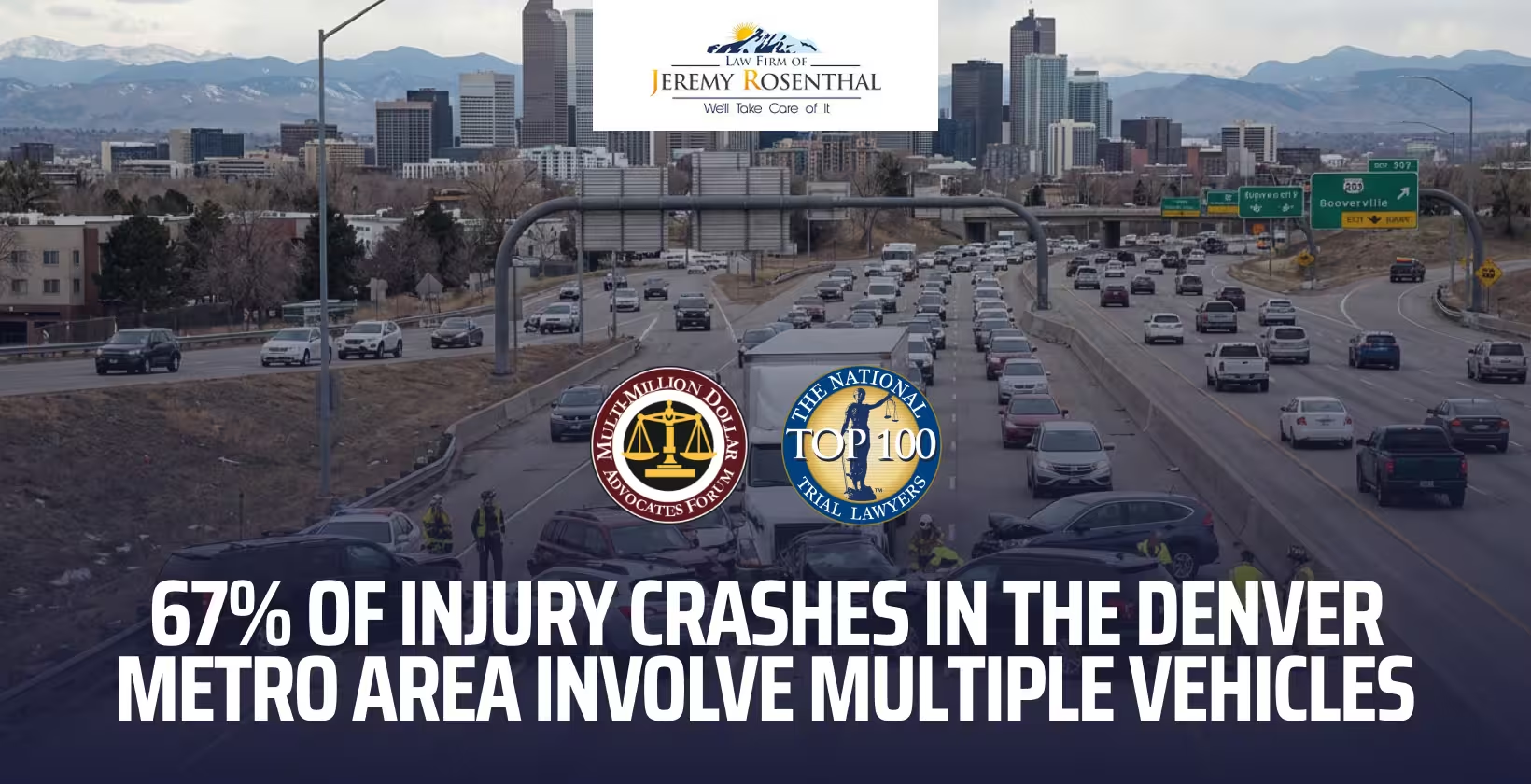
Rideshare accident liability extends beyond platform drivers when third-party motorists cause collisions involving Uber or Lyft vehicles carrying passengers through Denver’s congested corridors, creating complex insurance claims that require identifying all negligent parties and available coverage sources to recover full compensation for injuries. Colorado Department of Transportation statistics show that multi-vehicle crashes account for 67 percent of all injury collisions on Denver metro highways, with Colorado Revised Statutes § 42-4-1402 establishing that all drivers must exercise reasonable care to avoid collisions regardless of other vehicles’ commercial status or passenger capacity. Third-party negligence cases require thorough investigation to determine fault allocation between the rideshare driver and other motorists, particularly when multiple insurance policies apply and comparative negligence principles reduce recovery percentages. Evidence that can strengthen your case includes police accident reports identifying all involved parties, third-party driver citations for traffic violations, independent eyewitness accounts establishing fault, rideshare vehicle dash camera recordings, third-party insurance policy declarations, and accident reconstruction determining impact sequences and speeds.
Rideshare drivers working late-night shifts through Denver’s entertainment districts face impaired driving risks from fatigue, alcohol consumption between platform assignments, or prescription medication effects that diminish reaction times, blur vision, and compromise judgment when transporting passengers from bars and restaurants in LoDo or RiNo neighborhoods during peak weekend hours between 11 PM and 3 AM. The National Transportation Safety Board (NTSB) identifies drowsy driving as a factor in 21 percent of commercial vehicle crashes, with Colorado Revised Statutes § 42-4-1301 prohibiting operation of any motor vehicle while ability remains impaired by alcohol, drugs, or fatigue regardless of blood alcohol concentration measurements. Platform companies face potential negligence claims when algorithmic incentives encourage extended driving hours without mandatory rest periods, creating conditions where fatigued drivers accept rides despite diminished capacity to operate vehicles safely. Evidence that can strengthen your case includes driver shift logs showing consecutive hours worked, toxicology reports from blood or breath testing, prescription medication records indicating side effects, witness observations of erratic driving before the crash, surveillance footage from pickup locations showing driver behavior, and platform data revealing ride acceptance patterns during extended shifts

Unsafe passenger exchanges create collision hazards when rideshare drivers stop in prohibited zones near Denver International Airport terminals, open doors into bicycle lanes along 15th Street or Broadway without checking mirrors, or discharge passengers on highway shoulders after navigating to incorrect addresses through app guidance errors. Transportation research from the Colorado Department of Transportation indicates that passenger loading and unloading operations contribute to 892 crashes annually in the Denver metro area, with Colorado Revised Statutes § 42-4-1005 requiring drivers to ensure passengers can enter and exit vehicles safely without creating hazards for passing traffic or vulnerable road users. Rideshare drivers establish negligence when they prioritize convenience over passenger safety by stopping in travel lanes, failing to activate hazard lights during exchanges, or allowing passengers to exit toward traffic rather than curbside positions. Evidence that can strengthen your case includes photographs showing final stopping positions relative to curbs and traffic lanes, police reports documenting violations of passenger loading regulations, witness statements from nearby pedestrians or cyclists, app GPS data revealing pickup location discrepancies, surveillance footage from adjacent businesses, and municipal code violations issued at the crash scene

Denver Uber/Lyft/rideshare wreck lawyers provide investigation services, liability determination, insurance negotiations, medical documentation, settlement advocacy, and trial representation for injured victims. These attorneys handle claims involving Uber, Lyft, and other transportation network company drivers when crashes result from distracted driving, speeding, failure to yield, or other negligent conduct.
Attorneys gather crash scene photos, witness statements, police reports, surveillance footage, and accident reconstruction data establishing fault and proving negligence claims comprehensively. Lawyers review rideshare company GPS records, driver trip logs, and vehicle maintenance histories to build strong cases showing duty of care violations at the time of collision.
Lawyers examine traffic laws, duty of care violations, and negligent actions to establish legal responsibility and identify all liable parties for full compensation recovery. Attorneys analyze whether rideshare drivers violated Colorado traffic statutes, determine if transportation network companies bear vicarious liability under agency principles, and assess whether vehicle defects contributed to crash causation.
Attorneys handle all communications with insurance companies, submit demand packages with supporting evidence, and prevent clients from making statements that undermine claims. Lawyers address coverage disputes involving Uber’s $1 million liability policy, Lyft’s commercial insurance requirements, and personal auto policies that exclude rideshare activity under Transportation Network Company (TNC) endorsement provisions.
Lawyers work with treating physicians to obtain complete medical records, arrange independent examinations, and calculate future treatment costs including surgical interventions, rehabilitative care, and long-term disability accommodations. Attorneys document traumatic brain injuries, spinal cord damage, fractures, soft tissue trauma, and psychological conditions linking injuries directly to collision impact through detailed medical narratives and expert opinions.
Attorneys present evidence-backed settlement demands, counter lowball offers, and negotiate fair compensation for medical bills, lost wages, and pain and suffering resulting from rideshare collisions. Lawyers prepare comprehensive demand packages including economic damages calculations, earning capacity assessments, and documentation of permanent impairment ratings that justify settlement values exceeding initial insurance company offers.
Lawyers file civil complaints in Denver District Court, conduct discovery through depositions and interrogatories, retain accident reconstruction experts and medical specialists, and present cases at trial when settlement negotiations fail to produce adequate compensation. Attorneys prepare opening statements, examine witnesses, introduce physical evidence including crash data downloads and medical imaging, and deliver closing arguments that persuade juries to award full damages under Colorado tort law.
Attorneys calculate past and future medical expenses, lost earning capacity, property damage, and non-economic losses including pain, suffering, emotional distress, and loss of enjoyment of life to pursue full compensation available under Colorado statutes. Lawyers consult vocational rehabilitation specialists, life care planners, and forensic economists who quantify lifetime financial impacts of permanent disabilities, reduced work capacity, and ongoing medical needs stemming from catastrophic rideshare crash injuries.
Lawyers negotiate reductions on medical liens from health insurance carriers including Medicare, Medicaid, and private insurers, resolve hospital liens filed under Colorado’s medical lien statute (C.R.S. § 38-24-101), and ensure clients receive full recovery after lien payoffs from settlement proceeds. Attorneys communicate with Emergency Medical Services Authority (EMSA), Denver Health Medical Center, and other providers to reduce outstanding balances through subrogation negotiations and final distribution calculations.
Attorneys ensure all legal filings meet Colorado’s three-year personal injury statute of limitations under C.R.S. § 13-80-101, protect clients’ rights to compensation through timely complaint filing, and prevent case dismissals due to procedural deadline violations. Lawyers recognize shorter deadlines apply when claims involve government entities under the Colorado Governmental Immunity Act, requiring notice of claim within 182 days of injury occurrence.
Lawyers counter insurance company arguments that victims share fault through distracted walking, jaywalking, or failure to use crosswalks, presenting evidence that minimizes or eliminates client liability percentages under Colorado’s modified comparative negligence standard in C.R.S. § 13-21-111. Attorneys challenge defense contentions by demonstrating rideshare driver violations of right-of-way rules, unsafe lane changes, excessive speed, or intoxication that supersede any minor victim conduct as predominant crash causation factors.
Holding rideshare corporations liable requires proving direct company negligence rather than relying solely on vicarious liability theories that courts often reject based on independent contractor classifications. Legal teams establish corporate liability by demonstrating that companies failed to conduct adequate background checks, overlooked disqualifying criminal records or dangerous driving histories, or implemented deficient driver training programs that contributed to collision risks throughout Denver’s congested roadways. Rideshare companies face liability when their app interfaces distract drivers with constant notification alerts, unclear navigation instructions, or pressure to accept ride requests while operating vehicles at highway speeds on Interstate 25 or Interstate 70. Attorneys prove direct negligence by obtaining internal company documents through discovery procedures, revealing inadequate safety protocols, insufficient driver monitoring systems, or corporate policies prioritizing profit over passenger safety. Colorado law permits negligent entrustment claims when companies provide vehicle access to drivers with known dangerous propensities, creating independent grounds for corporate liability separate from employment relationship questions.
Accidents occurring when rideshare drivers operate vehicles without active app status rely primarily on the driver’s personal automobile insurance rather than corporate rideshare coverage policies. Colorado insurance requirements mandate minimum liability coverage of $25,000 per person and $50,000 per accident for bodily injury, plus $15,000 for property damage, though these minimums often prove insufficient for serious collision injuries requiring surgical intervention, extended hospitalization, or permanent disability accommodation. Injured victims pursue compensation through uninsured or underinsured motorist coverage on their own auto policies when negligent drivers carry only minimum required insurance, protecting against inadequate coverage scenarios common in off-app rideshare accidents. Determining app status at collision time becomes disputed frequently because drivers may claim offline status to avoid corporate insurance involvement, requiring attorneys to subpoena phone records, app usage logs, and GPS data that establish whether drivers had apps open when crashes occurred on Colorado Boulevard, Speer Boulevard, or other Denver thoroughfares. Off-app accidents eliminate the $1 million liability coverage that Uber and Lyft provide during active ride periods, substantially reducing available insurance funds for catastrophic injury compensation including traumatic brain injuries, spinal cord damage, or multiple bone fractures requiring reconstructive surgery.
Proving fault in rideshare accidents requires physical evidence, documentation, and witness testimony that establishes how the collision occurred and which party violated traffic laws. Police reports provide the foundation for fault determination by documenting officer observations, traffic violations, and preliminary liability assessments at the crash scene. Photographs and videos capture vehicle positions, damage patterns, skid marks, traffic signals, road conditions, and debris fields that reconstruct collision dynamics. Witness statements from passengers, pedestrians, or nearby motorists corroborate the sequence of events and contradict false claims from at-fault drivers. Rideshare app data reveals critical information including driver status (offline, waiting for requests, en route to pickup, or transporting passengers), trip details, GPS location tracking, and timestamps that determine which insurance policy applies. Medical records connect injuries directly to the accident by documenting treatment timelines, injury mechanisms, and physician assessments within hours of the collision
Mechanical failure contributes to liability in rideshare crashes when vehicle defects cause or contribute to the collision, shifting responsibility from driver error to vehicle maintenance negligence or manufacturing defects. Brake system failures, tire blowouts, steering mechanism malfunctions, and sudden acceleration problems create dangerous conditions that prevent drivers from controlling their vehicles safely. Rideshare drivers maintain responsibility for ensuring their vehicles meet safety standards through regular inspections, timely repairs, and compliance with manufacturer maintenance schedules according to Colorado regulations. Vehicle maintenance records, repair invoices, and inspection reports establish whether the driver knew about mechanical problems before the crash but continued operating the vehicle anyway.
Vehicle inspection records demonstrate whether rideshare drivers maintained their cars according to platform requirements and state safety standards before crashes occurred. Denver rideshare drivers must complete annual vehicle inspections covering brakes, tires, lights, steering, suspension systems, and other safety components according to Transportation Network Company regulations. Attorneys request inspection documentation to identify pre-existing mechanical problems that drivers ignored, connecting vehicle defects to collision causation and establishing negligence patterns.
Trip history and driver ratings reveal patterns of dangerous driving behavior, repeated traffic violations, and passenger safety complaints that strengthen negligence claims in rideshare accident cases. Driver ratings below 4.6 stars on Uber or Lyft platforms often indicate consistent problems with aggressive driving, distraction, route violations, or passenger discomfort according to platform data analysis. Trip logs document speeding patterns, hard braking frequency, rapid acceleration events, and late-night driving schedules that increase crash risk. Attorneys subpoena complete driver records to uncover prior incidents, passenger complaints about unsafe driving, previous accidents, and platform warnings that establish a pattern of negligent behavior predating your collision
Negligence in law in rideshare accidents requires proving the driver owed a duty of care, breached that duty through unsafe actions, directly caused the collision through that breach, and produced compensable injuries or damages. Colorado law establishes that all drivers must operate vehicles safely, obey traffic laws, maintain proper vehicle control, and avoid creating unreasonable risks to other road users. Common breaches include distracted driving while checking the rideshare app, speeding to complete trips faster, failing to yield right-of-way, running red lights or stop signs, and making unsafe lane changes without signaling. Attorneys gather police reports, traffic camera footage, cell phone records, app usage data, and accident reconstruction analysis to demonstrate how the driver’s specific actions violated safety standards. Comparative negligence rules in Colorado allow recovery even when you share partial fault, reducing your compensation proportionally based on your percentage of responsibility for the crash
To determine liability in law, attorneys conduct systematic investigations gathering evidence, analyzing applicable insurance policies, and identifying all potentially liable parties to build strong compensation claims.
1. Secure Physical Evidence: Attorneys obtain police reports, photograph vehicle damage, document road conditions, and preserve the accident scene before evidence disappears or gets altered.
2. Request Rideshare Platform Data: Lawyers subpoena trip records, driver status information, GPS tracking data, and app activity logs that establish whether the driver was actively working when the collision occurred.
3. Interview Witnesses: Legal teams locate passengers, pedestrians, and nearby motorists who observed the crash, collecting detailed statements that corroborate your account and contradict false narratives.
4. Analyze Insurance Coverage: Attorneys determine which insurance policy applies based on driver status, reviewing Uber’s $1 million liability policy, Lyft’s commercial coverage, or the driver’s personal auto insurance depending on trip phase.
5. Examine Vehicle Maintenance Records: Lawyers request inspection reports, repair histories, and manufacturer recalls to identify mechanical failures that contributed to the collision and expand liability beyond driver negligence.
6. Consult Accident Reconstruction Specialists: Attorneys retain engineers who analyze collision dynamics, calculate vehicle speeds, and produce visual reconstructions that demonstrate fault clearly to insurance adjusters and juries.
7. Review Driver Background: Legal professionals investigate the rideshare driver’s history including traffic violations, prior accidents, license suspensions, and platform complaints that establish dangerous driving patterns.
Photos and videos provide irrefutable documentation of collision conditions, vehicle positions, and injury severity before insurance companies can dispute the circumstances or minimize damage claims. Visual evidence captures details that police reports miss, including minor vehicle damage, road hazards, traffic signal positions, weather conditions, and the rideshare vehicle’s identification markings. Attorneys use scene photographs to counter false accident narratives, prove liability when drivers change their stories, and demonstrate injury causation when insurance adjusters claim pre-existing conditions caused your damages rather than the collision itself.
Attorneys secure app data, ride logs, and dash camera footage through formal legal requests sent directly to Uber and Lyft’s legal departments requesting preservation of electronic evidence. Lawyers issue preservation letters within days of the collision, demanding that rideshare companies maintain all trip data, driver information, GPS coordinates, and in-app communications related to the accident before automatic deletion occurs. Legal teams also file subpoenas during litigation to compel production of internal company records, driver background checks, and vehicle inspection logs when companies resist voluntary disclosure. Attorneys access dash camera footage from the rideshare vehicle, surrounding vehicles, and nearby businesses by identifying camera locations during scene investigations and submitting formal requests before footage cycles over typical 30-to-90-day retention periods
Surveillance footage used in rideshare accident cases includes traffic cameras at Denver intersections, business security systems along Colfax Avenue or 16th Street Mall, residential doorbell cameras capturing roadway activity, and parking garage recordings showing vehicle movements. Attorneys obtain traffic camera footage from the Colorado Department of Transportation and Denver Department of Transportation and Infrastructure by filing public records requests within weeks of the collision. Business owners provide security recordings from retail stores, restaurants, gas stations, and hotels when lawyers identify camera angles that captured the crash sequence. Residential Ring doorbell systems and Nest cameras often record street-level activity, providing crucial angles that contradict driver statements about speed, lane position, or traffic signal status at the moment of impact
Expert witness testimony proves critical in rideshare accident lawsuits because these professionals reconstruct collision mechanics, evaluate injury severity, and calculate long-term economic losses with scientific precision that juries trust. Accident reconstruction experts analyze skid marks, vehicle damage patterns, and physics principles to determine vehicle speeds, impact angles, and driver reaction times when physical evidence contradicts driver statements. Medical experts testify about injury causation, treatment necessity, and future care requirements, establishing direct connections between the collision and permanent disabilities. Economic experts calculate lifetime earning capacity losses, medical expense projections, and reduced quality of life damages using actuarial tables and labor market data that quantify abstract concepts like pain and suffering into concrete dollar amounts juries understand.
Eyewitness statements corroborate physical evidence and contradict false driver narratives by providing independent accounts of traffic signal colors, vehicle speeds, and pre-collision driver behavior that surveillance cameras miss. Attorneys interview witnesses at crash scenes to capture immediate recollections before memories fade or witnesses relocate beyond subpoena reach. Legal teams record detailed statements documenting what witnesses observed, their vantage points relative to the collision, and their ability to perceive events without visual obstructions. Witness testimony proves particularly valuable when rideshare drivers claim passengers caused accidents through sudden movements, when passengers dispute driver versions of collision circumstances, or when insurance companies question injury severity by suggesting pre-existing conditions rather than crash-related trauma caused the harm
A rideshare accident lawyer reconstructs crash scenes by combining physical evidence documentation, electronic data analysis, and expert consultation to create detailed visual presentations showing collision sequences. Attorneys photograph skid marks, debris patterns, vehicle final rest positions, road surface conditions, traffic control devices, and sight line obstructions within hours of the accident before weather or traffic removes these critical indicators. Legal teams analyze electronic control module data from vehicles, GPS coordinates from rideshare apps, and cell tower records to establish precise vehicle speeds and driver actions in the seconds preceding impact. Lawyers engage accident reconstruction experts who use engineering principles, computer simulations, and scale diagrams to demonstrate exactly how the collision occurred, which party violated traffic laws, and why alternative scenarios proposed by insurance companies defy physics.
Cell phone data proves rideshare driver negligence by revealing texting, app usage, or phone calls occurring at the exact moment collisions happen, directly contradicting driver denials of distraction. Attorneys subpoena phone records from wireless carriers showing call logs, text message timestamps, and data usage patterns that correlate with collision times documented in police reports. Legal teams also extract metadata from rideshare driver apps showing whether drivers accepted new ride requests, messaged passengers, or adjusted navigation settings while operating vehicles in traffic. Colorado law prohibits texting while driving under C.R.S. § 42-4-239, making phone records particularly damaging when they show drivers violated state statutes by manipulating mobile devices seconds before crashing into pedestrians, cyclists, or other vehicles on Denver streets.
Colorado rideshare laws establish tiered insurance coverage requirements that shift liability between drivers and companies depending on app status at collision time, creating complex insurance layering scenarios that determine available compensation. Colorado House Bill 16-1227 requires transportation network companies to maintain $1 million liability policies when drivers transport passengers or travel to pick up requested riders, while lower $50,000/$100,000/$30,000 coverage applies when drivers merely have apps activated without accepting trips. Colorado law classifies rideshare drivers as independent contractors rather than employees under most circumstances, limiting direct company liability unless companies negligently hired drivers with dangerous driving histories or failed to maintain required insurance. These statutory frameworks mean victims potentially access significantly different insurance pools based on precise timing of driver app status, requiring attorneys to investigate whether drivers had accepted ride requests, dropped off passengers moments before collisions, or operated vehicles during personal errands when only minimal coverage applies under Colorado transportation network company regulations.
Determining liability in rideshare crashes depends on the driver’s app status at the collision moment, which dictates which insurance policy applies and who bears financial responsibility. Uber and Lyft maintain three distinct coverage periods: offline (driver’s personal insurance applies), available/waiting for requests (rideshare company provides limited liability coverage up to $50,000 per person), and active trip status from passenger acceptance through drop-off (company’s $1 million policy activates). Attorneys examine driver app logs, GPS data, passenger trip receipts, and company records to establish the exact coverage period during impact. Multiple parties may share fault when drivers violate traffic laws while transporting passengers, rideshare companies fail to conduct proper background checks on drivers with dangerous histories, or vehicle defects contribute to collision severity requiring claims against manufacturers.
Filing complaints directly with Uber or Lyft after accidents allows victims to document injuries and initiate internal claim processes through company apps or websites, though these platforms typically route serious injury claims to third-party administrators who prioritize company interests over victim compensation. Rideshare companies require incident reports submitted through in-app systems within 24 hours, but victims should avoid providing recorded statements or accepting initial settlement offers without legal review since these tactics frequently undervalue legitimate injury claims. Your legal team negotiates with rideshare insurers, third-party claims administrators, and company legal departments to secure fair compensation while you focus on medical recovery, preserving evidence through independent documentation rather than relying solely on company-controlled reporting systems
Legal options available if a Lyft or Uber driver hits you include filing insurance claims, pursuing personal injury lawsuits, seeking uninsured motorist coverage, and negotiating settlements.
1. File a Claim Against the Rideshare Company’s Insurance: Submit claims directly to Uber or Lyft’s commercial insurance carrier for accidents occurring during active rides. These companies maintain $1,000,000 policies covering passenger injuries, pedestrian accidents, and collisions with other vehicles. This option provides substantial coverage beyond typical personal auto insurance policies.
2. Pursue a Personal Injury Lawsuit Against the Driver: File lawsuits against negligent rideshare drivers in Colorado District Court or County Court depending on damage amounts. This legal option allows you to pursue full compensation for medical bills, lost income, pain and suffering, and future care needs when insurance settlements prove inadequate.
3. Claim Through the Driver’s Personal Auto Insurance: Access the rideshare driver’s personal insurance policy if the accident occurred while the driver was offline or between rides. Personal policies apply when drivers haven’t activated the rideshare app. These policies typically provide lower coverage limits than commercial rideshare insurance policies.
4. File an Uninsured Motorist Claim With Your Insurer: Submit claims through your own uninsured or underinsured motorist coverage when the rideshare driver lacks adequate insurance or flees the accident scene. This option protects you when at-fault drivers cannot provide sufficient compensation for your injuries and damages resulting from the collision.
5. Negotiate a Settlement Before Filing Suit: Engage in settlement discussions with insurance adjusters to resolve claims without litigation. This option saves time and legal expenses while potentially securing compensation faster. However, accepting settlements requires carefully evaluating whether offers adequately cover all current and future damages from your injuries.
6. Pursue Claims Against Multiple Parties: Hold rideshare companies, drivers, other motorists, and vehicle owners jointly liable when multiple parties share fault. Colorado law allows victims to seek compensation from all negligent parties. This option maximizes available insurance coverage and ensures all responsible parties contribute to your damage recovery
Uber and Lyft’s $1 million liability policies activate when drivers accept ride requests through final passenger drop-off, covering medical expenses, lost wages, pain and suffering, and property damage caused by driver negligence during active trips in Colorado. The coverage period begins the moment drivers tap “accept” on passenger requests and continues through the entire trip including passenger pickup, transportation, and drop-off completion, protecting both passengers and third parties injured by rideshare driver actions. Attorneys obtain app status verification through subpoenas, timestamp analysis, and GPS records to prove the policy applied at collision time, since rideshare companies frequently dispute coverage by claiming drivers operated offline or between trips when accidents occurred.
Typical Uber and Lyft accident lawsuits in Denver take 12 to 24 months from filing through resolution, though settlement negotiations often conclude cases within 6 to 9 months when liability appears clear and insurance coverage proves adequate for documented injuries. Denver County District Court schedules jury trials approximately 18 months after complaint filing according to court docket management practices, but most rideshare cases settle before trial through negotiation, mediation, or arbitration processes that resolve disputes faster than courtroom litigation. Case duration depends on injury severity requiring extended treatment before maximum medical improvement determination, defendant cooperation levels during discovery when rideshare companies resist producing driver records, and court scheduling availability during peak litigation periods. Colorado’s three-year statute of limitations under Colorado Revised Statutes § 13-80-101 creates the absolute deadline for filing claims, though earlier case initiation allows attorneys more negotiation time and strengthens settlement leverage.
Contingency fee agreements in rideshare cases allow injured victims to hire attorneys without upfront costs, with legal fees calculated as a percentage (typically 33-40 percent) of final settlement or verdict amounts collected after case resolution. Attorneys advance all case expenses including court filing fees, expert witness costs, medical record retrieval charges, and deposition transcripts, recovering these costs only when cases produce compensation through settlements or trial verdicts. The arrangement eliminates financial barriers to legal representation since clients pay nothing unless attorneys secure monetary recovery, aligning attorney and client interests toward full compensation rather than billing hourly regardless of outcome. Written fee agreements specify the exact percentage, explain how costs get deducted from settlements, and outline client responsibilities for medical liens and case cooperation, protecting both parties through clear contractual terms approved under Colorado Rules of Professional Conduct.
Attorneys review medical records from emergency departments, primary care physicians, specialists, physical therapists, and mental health providers to document injury causation, nt necessity, and long-term prognosis supporting compensation demands in rideshare accident claims. Medical documentation establishes the direct connection between collision forces and diagnosed injuries through emergency room admission notes, radiological imaging results, surgical operative reports, and physician narratives explaining how accident trauma caused specific conditions. Lawyers consult independent medical experts who analyze treatment records, identify future care needs, and provide testimony countering insurance company doctors who minimize injury severity or claim pre-existing conditions caused symptoms. Rosenthal Injury Law employs medical chronologies organizing hundreds of pages into timeline formats, calculates economic damages from billing statements and fee schedules, and obtains treating physician affidavits confirming injuries resulting from the rideshare collision rather than unrelated causes. Records also reveal gaps in treatment that insurance adjusters exploit to argue injuries healed or weren’t serious, requiring attorneys to explain reasonable treatment delays caused by insurance authorization requirements, financial constraints, or medical provider availability rather than injury resolution.
Victims can recover future medical expenses after rideshare accidents when injuries require ongoing treatment, rehabilitation, or long-term care beyond initial hospitalization. Colorado law permits compensation for anticipated medical costs if medical testimony from specialists establishes their reasonable necessity, typically through treating physicians who document expected surgical procedures, physical therapy sessions, medication needs, or assistive device requirements over the patient’s lifetime. Rideshare crashes causing traumatic brain injuries, spinal cord damage, or severe orthopedic trauma often generate millions in future medical expenses that insurance companies initially resist paying. Attorneys calculate these costs by consulting medical economists who project treatment expenses using current pricing data, inflation adjustments, and life expectancy tables, then present this evidence during settlement negotiations or trial testimony to secure full compensation for anticipated care needs.
Pain and suffering compensation in rideshare accident cases addresses physical discomfort, emotional distress, loss of life enjoyment, and diminished quality of life resulting from collision injuries. Colorado applies no statutory cap on pain and suffering damages in most injury cases, allowing juries to award amounts reflecting injury severity, recovery duration, permanent impairment levels, and impact on daily activities including recreational pursuits, family relationships, or career advancement. Insurance adjusters typically calculate initial pain and suffering offers by multiplying medical expenses by factors ranging from 1.5 for minor soft tissue injuries to 5 or higher for catastrophic injuries involving permanent disability, disfigurement, or chronic pain conditions. A rideshare passenger suffering multiple fractures, six months of rehabilitation, and permanent mobility limitations might recover $200,000 in pain and suffering damages based on $40,000 in medical expenses. Attorneys strengthen these claims by presenting medical records documenting pain levels, photographs showing injury progression, personal journals describing daily struggles, and testimony from family members observing lifestyle changes that demonstrate the collision’s lasting effects on the victim’s physical and emotional wellbeing.
Passengers in serious rideshare crashes typically receive compensation ranging from $100,000 to over $1 million depending on injury severity, medical costs, wage loss duration, and available insurance coverage. Uber and Lyft maintain $1 million liability policies covering passengers during active trips, providing substantially higher limits than standard personal auto policies that cap at $25,000 per person under Colorado minimum requirements. Important: Colorado caps noneconomic damages (pain and suffering) at $613,760 for claims accruing on or after January 1, 2020, with courts able to increase to $1,227,530 upon clear and convincing evidence. For cases filed on or after January 1, 2025, the cap is $1.5 million. Economic damages (medical expenses, lost wages) remain unlimited. Catastrophic injuries including spinal cord damage, traumatic brain injuries, or multiple fractures generating $500,000 in medical expenses, permanent disability preventing future employment, and severe pain might justify settlements approaching policy limits. Passengers can maximize compensation by stacking multiple insurance policies: the rideshare company’s $1 million policy, the at-fault driver’s personal coverage, other drivers’ liability insurance, and their own underinsured motorist benefits. Attorneys maximize passenger compensation by identifying all liable parties (rideshare drivers, other motorists, vehicle manufacturers), exhausting every available insurance policy, and presenting comprehensive evidence of economic losses and non-economic damages that justify full policy limits or jury verdicts exceeding initial settlement offers.
Compensation covers emotional distress from rideshare accidents when victims experience diagnosable psychological conditions including post-traumatic stress disorder, anxiety disorders, or depression requiring mental health treatment. Colorado recognizes emotional distress as compensable non-economic damages separate from physical pain, allowing recovery when psychological injuries stem directly from collision trauma, serious bodily harm, or witnessing catastrophic events during the crash. Mental health professionals must document symptoms, diagnose specific conditions, and establish causation linking psychological harm to the accident through clinical evaluations and treatment records that insurance companies accept as legitimate injury claims rather than speculative suffering.
Police reports serve as crucial evidence establishing collision facts, witness accounts, traffic violations, and preliminary fault determinations that attorneys use to build rideshare accident claims. Denver Police Department officers document scene conditions, vehicle positions, road markings, weather factors, and driver statements immediately after crashes occur, creating official records less susceptible to memory deterioration or self-serving revisions that parties might attempt weeks later during claim negotiations. Reports identify responding officers whose testimony attorneys may later secure, list witnesses with contact information before they become unavailable, and note citation issuances that establish statutory violations supporting negligence claims under Colorado traffic laws. Attorneys obtain reports within days after accidents through formal requests to Denver Police Records Division, analyze officer narratives for favorable facts like statements admitting fault or observations documenting rideshare driver distraction, and reference report findings during demand letters that pressure insurance adjusters to accept liability when official documentation contradicts their insured driver’s version of events. Police reports carry substantial evidentiary weight because judges permit their admission at trial under business records exceptions to hearsay rules, though officers’ conclusions about fault remain subject to challenge and do not bind courts or juries to accept those determinations as final findings on negligence questions.
Traffic violation codes most relevant to Uber and Lyft accidents include careless driving, following too closely, distracted driving, failure to yield, and speeding violations.
The statute of limitations for filing rideshare accident lawsuits requires victims to initiate legal action within three years from the collision date under Colorado Revised Statute 13-80-101. This three-year deadline applies to personal injury claims against rideshare drivers, rideshare companies, and other negligent parties, creating an absolute bar to recovery if plaintiffs fail to file suit before expiration unless specific exceptions apply including fraudulent concealment or plaintiff’s legal incapacity. Denver County District Court maintains jurisdiction over rideshare accident cases involving damages exceeding $25,000, while Denver County Court handles smaller claims falling below that threshold. Property damage claims carry a separate three-year limitations period under C.R.S. 13-80-101, allowing vehicle owners to pursue compensation for repair costs independent of bodily injury claims. Attorneys recommend initiating legal consultation within weeks after accidents occur rather than waiting years because critical evidence deteriorates, witnesses become unavailable, and insurance companies destroy claim files after limitation periods expire, though the formal filing deadline provides victims with months to complete medical treatment, document full injury extent, and calculate comprehensive damages before commencing litigation that may continue through settlement negotiations or trial proceedings lasting additional months beyond the initial complaint filing.
Attorneys calculate damages in rideshare accident cases by totaling all economic losses, quantifying non-economic suffering, and applying Colorado’s modified comparative fault rules to final settlement values. Economic damages include medical expenses (emergency room visits, surgery costs, rehabilitation fees, prescription medications), lost wages (documented pay stubs showing missed work), property damage (vehicle repair estimates or replacement value), and future care needs (expert testimony projecting long-term treatment requirements). Non-economic damages account for pain, suffering, emotional distress, and diminished quality of life, typically calculated using multipliers (1.5x to 5x economic damages depending on injury severity) or per diem rates (daily compensation amounts multiplied by recovery days). Attorneys review medical records, consult economic experts, analyze wage documentation, and research comparable jury verdicts to establish comprehensive damage valuations that reflect both current losses and future impacts if permanent injuries occurred during the rideshare collision.
Colorado’s modified comparative fault doctrine reduces compensation by your percentage of responsibility, barring recovery entirely if you bear 50% or more fault in the rideshare accident. The doctrine operates under C.R.S. § 13-21-111, requiring courts to assign fault percentages to all parties (rideshare driver, passenger, third-party motorists, pedestrians) based on their contribution to the collision. A passenger who distracts the Uber driver receives reduced damages proportional to that distraction’s role in causing the crash, while a Lyft passenger injured when a drunk driver strikes the rideshare vehicle typically bears zero fault and recovers full damages. Insurance companies aggressively investigate passenger conduct, reviewing ride app messages, witness statements, and driver accounts to attribute partial fault and minimize payouts. Attorneys counter fault allegations by gathering evidence proving the rideshare driver’s negligence (speeding, distracted driving, traffic violations) or third-party responsibility (red light violations, failure to yield) exceeded any minor passenger actions during the ride.
Police reports serve as crucial evidence establishing collision facts, witness accounts, traffic violations, and preliminary fault determinations that attorneys use to build rideshare accident claims. Denver Police Department officers document scene conditions, vehicle positions, road markings, weather factors, and driver statements immediately after crashes occur, creating official records less susceptible to memory deterioration or self-serving revisions that parties might attempt weeks later during claim negotiations. Reports identify responding officers whose testimony attorneys may later secure, list witnesses with contact information before they become unavailable, and note citation issuances that establish statutory violations supporting negligence claims under Colorado traffic laws. Attorneys obtain reports within days after accidents through formal requests to Denver Police Records Division, analyze officer narratives for favorable facts like statements admitting fault or observations documenting rideshare driver distraction, and reference report findings during demand letters that pressure insurance adjusters to accept liability when official documentation contradicts their insured driver’s version of events. Police reports carry substantial evidentiary weight because judges permit their admission at trial under business records exceptions to hearsay rules, though officers’ conclusions about fault remain subject to challenge and do not bind courts or juries to accept those determinations as final findings on negligence questions.
Traffic violation codes most relevant to Uber and Lyft accidents in Denver include careless driving, following too closely, distracted driving, failure to yield, and speeding violations.
The statute of limitations for filing rideshare accident lawsuits requires victims to initiate legal action within three years from the collision date under Colorado Revised Statute 13-80-101. This three-year deadline applies to personal injury claims against rideshare drivers, rideshare companies, and other negligent parties, creating an absolute bar to recovery if plaintiffs fail to file suit before expiration unless specific exceptions apply including fraudulent concealment or plaintiff’s legal incapacity. Denver County District Court maintains jurisdiction over rideshare accident cases involving damages exceeding $25,000, while Denver County Court handles smaller claims falling below that threshold. Property damage claims carry a separate three-year limitations period under C.R.S. 13-80-101, allowing vehicle owners to pursue compensation for repair costs independent of bodily injury claims. Attorneys recommend initiating legal consultation within weeks after accidents occur rather than waiting years because critical evidence deteriorates, witnesses become unavailable, and insurance companies destroy claim files after limitation periods expire, though the formal filing deadline provides victims with months to complete medical treatment, document full injury extent, and calculate comprehensive damages before commencing litigation that may continue through settlement negotiations or trial proceedings lasting additional months beyond the initial complaint filing.
Attorneys calculate damages in rideshare accident cases by totaling all economic losses, quantifying non-economic suffering, and applying Colorado’s modified comparative fault rules to final settlement values. Economic damages include medical expenses (emergency room visits, surgery costs, rehabilitation fees, prescription medications), lost wages (documented pay stubs showing missed work), property damage (vehicle repair estimates or replacement value), and future care needs (expert testimony projecting long-term treatment requirements). Non-economic damages account for pain, suffering, emotional distress, and diminished quality of life, typically calculated using multipliers (1.5x to 5x economic damages depending on injury severity) or per diem rates (daily compensation amounts multiplied by recovery days). Attorneys review medical records, consult economic experts, analyze wage documentation, and research comparable jury verdicts to establish comprehensive damage valuations that reflect both current losses and future impacts if permanent injuries occurred during the rideshare collision.
Colorado’s modified comparative fault doctrine reduces compensation by your percentage of responsibility, barring recovery entirely if you bear 50% or more fault in the rideshare accident. The doctrine operates under C.R.S. § 13-21-111, requiring courts to assign fault percentages to all parties (rideshare driver, passenger, third-party motorists, pedestrians) based on their contribution to the collision. A passenger who distracts the Uber driver receives reduced damages proportional to that distraction’s role in causing the crash, while a Lyft passenger injured when a drunk driver strikes the rideshare vehicle typically bears zero fault and recovers full damages. Insurance companies aggressively investigate passenger conduct, reviewing ride app messages, witness statements, and driver accounts to attribute partial fault and minimize payouts. Attorneys counter fault allegations by gathering evidence proving the rideshare driver’s negligence (speeding, distracted driving, traffic violations) or third-party responsibility (red light violations, failure to yield) exceeded any minor passenger actions during the ride.
Typical court procedures for Uber and Lyft accident lawsuits in Denver include filing complaints, serving defendants, discovery processes, settlement negotiations, pre-trial motions, and trial proceedings.
Economic damages that can be claimed in Uber and Lyft accident cases include medical expenses, lost wages, property damage, rehabilitation costs, and future earning capacity losses.
Lost wages get calculated using documented pay records showing actual income missed during recovery periods, while loss of earning capacity requires vocational expert analysis projecting reduced lifetime earnings if permanent injuries prevent returning to pre-accident employment levels. Attorneys gather pay stubs, W-2 forms, tax returns, and employer statements confirming hourly rates or salaries, then multiply daily earnings by documented missed workdays (sick leave, unpaid time off, reduced hours) to establish past lost wages recoverable in the rideshare accident claim. Loss of earning capacity applies when injuries create permanent limitations (chronic pain, mobility restrictions, cognitive impairments) preventing performance of previous job duties, requiring vocational rehabilitation experts to calculate the difference between pre-accident earning potential and post-injury capacity based on transferable skills, education, work history, and labor market conditions in Denver. Self-employed individuals and gig economy workers face additional documentation challenges, requiring tax returns, bank statements, client contracts, and business records proving pre-accident income levels and post-injury revenue reductions directly attributable to the collision.
Non-economic damages in wrongful death rideshare cases compensate surviving family members for emotional suffering, loss of companionship, and psychological trauma resulting from the fatal Uber or Lyft collision under Colorado’s wrongful death statute C.R.S. § 13-21-203.
For wrongful death lawsuits filed on or after January 1, 2025, noneconomic damages are capped at $2.125 million under C.R.S. § 13-21-102.5(3). This cap does not apply to wrongful death cases arising from felony homicide.
Surviving spouses recover damages for loss of consortium (companionship, affection, sexual relations, emotional support) that the marriage provided before the rideshare accident killed their partner, with damage amounts varying based on marriage length, relationship quality, and surviving spouse’s age.
Children claim damages for loss of parental guidance, nurturing, education, and emotional support that the deceased parent would have provided throughout their developmental years and into adulthood. Parents of deceased minor children recover damages for grief, mental anguish, and loss of the parent-child relationship, though Colorado law limits these claims to parents of unmarried children without descendants.
Additional non-economic damages include loss of society (the deceased’s presence in family activities, holidays, milestones), emotional distress from witnessing the death or its immediate aftermath, and the psychological impact of adapting to life without the deceased family member’s presence and contributions to household functioning.
Punitive damages become available in rideshare accident lawsuits only when clear and convincing evidence proves the defendant acted with fraud, malice, or willful and wanton conduct beyond ordinary negligence under Colorado law C.R.S. § 13-21-102.
The court requires plaintiffs to demonstrate that the rideshare driver or company exhibited conscious disregard for others’ safety through conduct like drunk driving (blood alcohol content significantly exceeding legal limits), reckless speeding in school zones or residential areas, deliberate traffic violations causing collisions, or fraudulent concealment of known vehicle defects creating crash risks.
Punitive damage amounts are capped at the greater of three times the compensatory damages awarded or $500,000 under Colorado statute. However, the cap may be removed entirely when defendants’ conduct involves fraud, intentional harm, or violations of specific consumer protection statutes.
Rideshare companies face punitive exposure when evidence shows corporate policies encouraged unsafe driver practices, inadequate background checks allowed dangerous drivers on the platform, or systematic failures to maintain vehicle safety standards resulted in preventable accidents causing serious injuries or deaths to passengers or other road users.
Partial fault in a rideshare accident does not prevent you from recovering compensation under Colorado’s modified comparative negligence law, which allows recovery if your fault remains below 50 percent. Colorado Revised Statutes § 13-21-111 reduces your compensation award by your percentage of fault, meaning a victim 30 percent responsible for an accident receives 70 percent of the total damages awarded. The determination of fault percentages involves analyzing police reports, witness statements, traffic camera footage, vehicle damage patterns, and violation of traffic laws by all parties involved in the collision. Insurance adjusters for Uber’s $1 million liability policy or Lyft’s commercial coverage assign fault percentages during claim investigations, frequently attempting to inflate your responsibility to reduce their payout obligations. Attorneys challenge these assignments by gathering contradictory evidence such as electronic logging device data showing the driver’s speed, rideshare app records indicating distraction, and expert accident reconstruction demonstrating how the driver’s actions caused the collision. Your partial fault claim becomes unrecoverable only if evidence establishes you bear 50 percent or greater responsibility, making thorough evidence collection critical to protecting your right to compensation
A rideshare driver leaving an accident scene creates criminal and civil complications that attorneys address through strategic evidence gathering and insurance claim filing. Colorado law requires drivers involved in accidents to remain at the scene, exchange information, and render aid under C.R.S. § 42-4-1601, making departure a criminal offense that strengthens your civil claim through establishing driver negligence and consciousness of guilt. The rideshare app records capture driver identification, vehicle information, route data, and GPS location at collision time, providing documentation even when drivers flee before information exchange occurs. Your legal team files uninsured motorist claims against your own policy while simultaneously pursuing Uber’s or Lyft’s commercial coverage, which remains active if the driver had accepted a ride request or transported a passenger at accident time. Police reports documenting hit-and-run incidents become critical evidence establishing the driver’s identity through license plate information, witness descriptions, and rideshare company cooperation with law enforcement investigations.
Evaluating rideshare accident attorneys requires examining specific qualifications that indicate their ability to handle cases involving complex insurance structures and corporate defendants.
1. Verify Rideshare-Specific Experience: Review the attorney’s case history specifically involving Uber and Lyft accidents rather than general car accident experience, asking how many rideshare cases they have handled and what settlements or verdicts they secured against transportation network companies.
2. Assess Insurance Negotiation Success: Examine the attorney’s track record negotiating with James River Insurance, which underwrites Uber’s commercial policies, and with Lyft’s insurance carriers to understand their familiarity with rideshare coverage structures and liability determination processes.
3. Review Trial Preparation Capability: Determine whether the attorney has taken rideshare cases to trial rather than settling all claims early, indicating their willingness to pursue full value when insurance companies offer inadequate compensation.
4. Examine Resource Availability: Confirm the attorney maintains relationships with accident reconstruction experts, medical professionals, and rideshare technology specialists who provide testimony about app usage, driver distraction, and collision causation.
5. Check Colorado Bar Standing: Verify the attorney holds an active Colorado law license through the Colorado Supreme Court Attorney Registration database and review any disciplinary history that might indicate ethical concerns.
6. Evaluate Communication Systems: Ask about case management processes, client update frequency, and staff availability to ensure you receive consistent information throughout the claims process.
7. Assess Fee Structure Transparency: Request written contingency fee agreements detailing percentage rates, cost reimbursement policies, and payment terms to understand your financial obligations before signing representation contracts.
Rideshare accident attorneys fulfill specific duties that protect your legal rights and secure full compensation recovery throughout the claims process.
1. Investigate All Liability Sources: Attorneys identify every responsible party including the rideshare driver, other motorists, vehicle owners, Uber or Lyft as corporate entities, and third parties whose negligence contributed to the collision.
2. Determine Applicable Insurance Coverage: Legal professionals analyze whether the driver operated in personal mode, waiting for requests, en route to pickup, or transporting passengers to determine which insurance policy applies under Colorado’s three-tier rideshare coverage system.
3. Preserve Critical Evidence: Attorneys send spoliation letters to rideshare companies demanding preservation of app data, driver records, GPS information, and vehicle maintenance logs before companies delete or overwrite electronic records.
4. Calculate Complete Damages: Lawyers quantify all economic losses including medical expenses, lost wages, diminished earning capacity, and property damage while also assessing non-economic damages such as pain, suffering, and emotional distress.
5. Negotiate With Multiple Insurers: Legal teams communicate simultaneously with the driver’s personal insurance, rideshare company commercial policies, and other drivers’ carriers to secure complete recovery from all available sources.
6. Handle Medical Liens: Attorneys negotiate reductions in medical liens from health insurance companies, Medicare, Medicaid, and medical providers to increase your net settlement recovery after lien satisfaction.
7. File Court Actions: Lawyers initiate litigation in Denver County District Court when insurance negotiations fail to produce fair compensation, preparing complaints that outline liability theories and damage claims.
8. Represent You at Trial: Attorneys present evidence, examine witnesses, cross-examine defense experts, and deliver closing arguments if cases proceed to jury trial after unsuccessful settlement discussions.
Victims receive comprehensive legal representation addressing the unique complications rideshare accidents create through corporate insurance structures and multiple liability sources. Attorneys handle all communication with insurance adjusters, preventing victims from making recorded statements that companies use to devalue claims or establish contributory negligence defenses.
Legal professionals coordinate medical treatment by connecting clients with specialists who understand personal injury documentation requirements and often provide treatment on liens, delaying payment until case resolution when victims lack adequate health insurance coverage.
Your legal team conducts independent investigations that recreate accident circumstances through witness interviews, surveillance footage analysis, and expert reconstruction, developing evidence that counters insurance company fault determinations favoring their insured drivers.
Representation extends through settlement negotiations where attorneys leverage evidence strength to demand fair compensation, rejecting lowball offers that fail to account for future medical needs, permanent impairment, or lost earning capacity requiring vocational expert testimony to quantify economic losses accurately.
Rideshare accident attorneys specialize in personal injury law with concentrated focus on motor vehicle collision cases involving commercial transportation companies and their complex insurance structures. This specialization encompasses tort law principles governing negligence claims, insurance law regulating commercial liability policies and coverage disputes, and transportation network company regulations that Colorado Public Utilities Commission enforces under state statutes. Attorneys master the intersection between traditional car accident litigation and modern app-based transportation platforms, understanding how rideshare companies structure their insurance to minimize liability exposure through three-tiered coverage systems that activate based on driver status at collision time. The practice area requires knowledge of corporate liability doctrines that determine when Uber and Lyft face direct responsibility versus merely providing insurance coverage for independent contractor drivers, involving agency law principles and statutory employer doctrines that courts apply inconsistently across jurisdictions.
You retain the right to change legal representation at any stage of your rideshare accident case if dissatisfaction with communication, strategy, or results prompts seeking new counsel. Colorado Rules of Professional Conduct permit clients to terminate attorney relationships at any time, though you remain responsible for compensating your former attorney for work completed under quantum meruit principles or according to your fee agreement terms. The transition process requires filing a substitution of counsel form with Denver County District Court if litigation has commenced, while pre-litigation cases simply need written termination notice to your current attorney and a new representation agreement with replacement counsel who requests your case file transfer. Your new attorney negotiates fee division with your former lawyer to prevent double payment, typically allocating percentages based on work completed by each firm if your case settles or reaches a verdict after the transition occurs.
Attorneys collect multiple types of evidence to establish liability and damages in rideshare accident cases, including police reports that document the collision scene, identify involved parties, and record initial fault assessments. Digital evidence proves particularly valuable in these cases because rideshare apps generate timestamped trip data, GPS coordinates, driver ratings, and vehicle identification information that confirms whether the driver was actively transporting passengers or waiting for ride requests when the collision occurred. Attorneys obtain medical records and billing statements that link injuries directly to the accident, photograph vehicle damage and road conditions, secure witness contact information, and gather driver employment records from Uber or Lyft to determine which insurance policy applies based on the driver’s status at the time of impact. Electronic logging device (ELD) data and dashcam footage strengthen cases when commercial vehicles or third parties contribute to the collision, while social media posts from involved parties sometimes reveal admissions of fault or demonstrate injury severity through documented lifestyle changes following the accident
Lawyers investigate rideshare accidents involving commercial vehicles or third parties by first identifying all potentially liable entities through corporate registration searches, commercial driver qualification files, and fleet ownership records. The investigation expands beyond the immediate rideshare driver to examine whether semi-trucks, delivery vans, or other commercial operators violated federal motor carrier safety regulations, exceeded hours-of-service limits, or failed to maintain vehicles properly according to inspection standards.
Attorneys subpoena electronic logging device data from commercial vehicles to verify speed, braking patterns, and driver fatigue indicators while requesting maintenance records that reveal mechanical defects or inspection failures. Third-party liability gets established when attorneys prove that vehicle owners, employers, or maintenance contractors contributed to accident causes through negligent hiring, inadequate training, or defective repairs that made collisions more likely to occur on Denver roads.
Social media posts can be used as evidence in rideshare accident cases when they contradict injury claims, reveal activities inconsistent with reported limitations, or demonstrate consciousness of fault through admissions or apologies. Insurance adjusters regularly monitor Facebook, Instagram, Twitter, and TikTok profiles searching for photographs showing physical activities that conflict with medical testimony about mobility restrictions, pain levels, or disability claims filed after Denver collisions.
Posts claiming minor injuries immediately after an accident but requesting substantial damages later undermine credibility during settlement negotiations or trial proceedings. Attorneys advise clients to maintain privacy settings, avoid discussing accident details online, and refrain from posting photographs that could be misinterpreted as evidence of full recovery when injuries still limit daily activities and require ongoing medical treatment.
Attorneys consult with medical experts to translate complex injury evidence into persuasive testimony that establishes causation, quantifies future treatment needs, and counters insurance company medical evaluations that minimize injury severity.
Medical experts review diagnostic imaging, surgical notes, and rehabilitation progress to explain how collision forces caused specific injuries like traumatic brain injuries, spinal cord damage, or internal organ trauma that may not manifest immediately after Denver rideshare accidents.
These specialists provide opinions about permanent impairment ratings, life care planning costs, and the reasonable necessity of ongoing treatments when insurance adjusters dispute whether proposed surgeries or therapies stem directly from accident injuries versus pre-existing conditions. Expert testimony becomes particularly valuable in cases involving soft tissue injuries, psychological trauma, or delayed symptom onset that insurance companies frequently challenge as unrelated to the collision or exaggerated for financial gain during settlement discussions
1. Emergency Medical Services and Ambulance Transportation: Ambulance fees, emergency medical technician services, helicopter transport, and emergency room charges are recoverable medical expenses. These immediate care costs establish medical documentation linking injuries to accidents. Insurance companies must reimburse reasonable emergency treatment expenses necessary for stabilizing victims following rideshare collisions regardless of treatment location or transport method.
2. Hospital Stays and Inpatient Care: Overnight hospitalizations, intensive care unit stays, hospital room charges, nursing care, meals, and facility fees qualify as claimable medical expenses. Extended hospital stays often result from serious injuries like traumatic brain injuries, spinal cord damage, or multiple fractures. Documentation through itemized hospital bills supports reimbursement claims for all reasonable inpatient services.
3. Surgical Procedures and Operating Room Costs: Expenses for surgeries, anesthesia, surgeon fees, operating room charges, and post-operative monitoring are recoverable damages. Complex procedures addressing internal injuries, orthopedic repairs, or reconstructive surgeries generate substantial medical bills. Multiple surgeries may be necessary when initial procedures fail or complications develop, making all related surgical expenses claimable under Colorado law.
4. Diagnostic Testing and Medical Imaging: X-rays, CT scans, MRI scans, ultrasounds, blood tests, and other diagnostic procedures establish injury severity and treatment plans. These tests provide objective evidence supporting damage claims and justify medical necessity for treatments. Repeated imaging throughout recovery tracks healing progress and identifies complications requiring additional interventions, making all diagnostic costs recoverable.
5. Physical Therapy and Rehabilitation Services: Physical therapy sessions, occupational therapy, speech therapy, pain management treatments, and chiropractic care help victims regain function and mobility. Rehabilitation often continues for months or years following serious accidents. Both completed therapy sessions and future treatments recommended by physicians constitute recoverable expenses when reasonably necessary for injury recovery.
6. Prescription Medications and Medical Equipment: Costs for prescribed pain medications, antibiotics, anti-inflammatory drugs, medical devices, wheelchairs, crutches, and home care equipment are claimable expenses. Long-term medication needs for chronic pain or permanent injuries generate ongoing costs. Durable medical equipment including hospital beds, shower chairs, and mobility aids necessary for daily living qualify as reasonable medical expenses.
1. Future Surgical Procedures and Medical Interventions: Claims include anticipated surgeries, revision procedures, and medical interventions required years after accidents. Medical experts testify about future surgical needs based on injury severity, treatment outcomes, and long-term prognosis. Insurance companies must compensate victims for all reasonably probable future procedures necessary to address permanent injuries or complications.
2. Ongoing Physical Therapy and Rehabilitation Needs: Long-term rehabilitation costs are recoverable when injuries require continuous physical therapy, occupational therapy, or pain management treatments. Permanent disabilities often necessitate lifelong therapy to maintain mobility and function. Life-care planners calculate these costs by projecting treatment frequency, duration, and inflation-adjusted expenses over victims’ remaining lifespans.
3. Chronic Pain Management and Medication Costs: Claims cover prescription medications, pain management injections, nerve blocks, and other treatments addressing chronic pain conditions resulting from accidents. Permanent injuries frequently cause ongoing pain requiring continuous medical intervention. Future medication costs are calculated using current prescription prices adjusted for inflation and expected treatment duration.
4. Assistive Devices and Durable Medical Equipment: Long-term claims include wheelchairs, prosthetics, orthotics, mobility aids, and home medical equipment necessary throughout victims’ lives. These devices require periodic replacement, maintenance, and upgrades as technology advances. Life-care plans account for device replacement schedules and associated costs over expected lifespans.
5. Home Healthcare and Personal Care Services: Claims compensate victims for in-home nursing care, personal attendants, and assistance with daily living activities when permanent disabilities prevent independent functioning. Catastrophic injuries may require 24-hour care for feeding, bathing, medication management, and mobility assistance. These substantial long-term costs are calculated based on hourly care rates and lifetime needs.
6. Psychological Counseling and Mental Health Treatment: Long-term mental health care including therapy sessions, psychiatric medications, and counseling services are recoverable when accidents cause lasting psychological trauma. Post-traumatic stress disorder, depression, and anxiety often require years of treatment. Mental health professionals evaluate long-term therapy needs and testify about anticipated treatment costs.
Attorneys build legal cases after app-based rides by first establishing which insurance policy applies based on the driver’s status when the collision occurred (offline, waiting for requests, en route to pickup, or actively transporting passengers). Case construction begins with obtaining the rideshare company’s driver history, vehicle inspection records, and insurance policy details through formal discovery requests that compel Uber or Lyft to produce internal documents typically shielded from public access.
Attorneys then correlate app-generated trip data with police reports, witness statements, and traffic camera footage to create chronological accident reconstructions that identify fault, establish causation, and quantify damages through medical bills, wage loss documentation, and expert testimony about future impacts.
The legal strategy addresses unique rideshare complexities including multiple insurance layers, corporate liability shields, and driver classification disputes that affect compensation sources available for injuries sustained during rides arranged through smartphone applications.
Attorneys submit claims for compensation after gathering sufficient evidence to establish liability, document injuries, and calculate damages from the rideshare accident. The timing depends on several factors including the completion of medical treatment, collection of accident reports, and identification of all liable parties (the rideshare driver, the platform company, or other motorists).
Lawyers typically wait until clients reach maximum medical improvement before submitting claims because early submissions risk undervaluing injuries that worsen over time or require additional treatment. The submission occurs after attorneys compile police reports, medical records, wage loss documentation, and photographic evidence creating a complete damage picture. Colorado’s three-year statute of limitations for personal injury claims provides sufficient time for thorough case preparation, though attorneys submit claims promptly once evidence collection completes to avoid unnecessary delays in securing compensation
Settlement value calculations combine economic damages (quantifiable financial losses) with non-economic damages (subjective harm) to determine appropriate compensation amounts. Attorneys evaluate medical expenses including emergency care, surgery, physical therapy, and future treatment costs documented through provider bills and expert testimony. Lost wages calculations incorporate pay stubs, tax returns, and employment records showing income reduction during recovery, while property damage assessment uses repair estimates and vehicle replacement costs. Non-economic factors include pain severity, disability duration, emotional distress intensity, and life quality reduction measured through medical testimony and daily activity limitations. Settlement multipliers range from 1.5 to 5 times medical expenses depending on injury severity, with catastrophic injuries like spinal cord damage or traumatic brain injury commanding higher multipliers than soft tissue injuries.
The average settlement for a rideshare accident in Colorado ranges from $15,000 to $150,000 depending on injury severity, medical expenses, and liability clarity. Minor injuries with soft tissue damage typically settle between $15,000 and $35,000. Moderate injuries requiring surgery settle between $50,000 and $100,000. Severe injuries causing permanent disabilities or catastrophic harm often exceed $150,000, with some cases reaching $1,000,000 policy limits when serious injuries justify higher compensation amounts
Economic damages represent measurable financial losses directly resulting from the rideshare accident, including medical treatment costs, lost income, and property damage requiring concrete documentation for recovery. Medical expenses encompass emergency room visits, ambulance transport, diagnostic imaging (MRI, CT scans, X-rays), surgical procedures, prescription medications, physical therapy sessions, and future medical care projected by healthcare providers. Lost wages include hourly pay or salary missed during recovery, reduced earning capacity if injuries prevent returning to previous employment, and lost business opportunities for self-employed individuals documented through tax returns and profit-loss statements. Property damage covers vehicle repair costs, replacement value if the car becomes totaled, rental car expenses during repair periods, and personal property damaged during the collision (phones, laptops, clothing). Out-of-pocket expenses include travel costs to medical appointments, home modification expenses for disability accommodations, and medical equipment purchases (wheelchairs, crutches, braces) necessary for recovery. Attorneys compile receipts, invoices, pay stubs, and expert economic testimony establishing the precise financial impact the accident creates on victims’ lives.
Non-economic damages compensate for subjective losses that lack precise monetary values, including physical pain, emotional suffering, and reduced quality of life following rideshare accidents. Pain and suffering represents the physical discomfort, chronic pain, and bodily harm victims endure during recovery and potentially for life if permanent injuries develop from the collision. Emotional distress encompasses anxiety, depression, post-traumatic stress disorder, sleep disturbances, and psychological trauma affecting mental health and daily functioning documented through mental health provider treatment records. Loss of enjoyment compensates inability to participate in previously enjoyed activities like sports, hobbies, social gatherings, and recreational pursuits that injuries make difficult or impossible. Disfigurement damages address permanent scarring, burns, or physical alterations affecting appearance and self-confidence, particularly when visible injuries impact professional opportunities or social interactions. Loss of consortium applies when injuries damage relationships with spouses or family members, reducing companionship quality, intimate relations, and emotional support within households. Colorado caps non-economic damages at $613,760 for claims accruing on or after January 1, 2020, with courts able to increase to $1,227,530 upon clear and convincing evidence of justification. For cases filed on or after January 1, 2025, the cap is $1.5 million under C.R.S. § 13-21-102.5.
Attorneys represent accident victims injured while riding in, driving near, or walking around Uber or Lyft vehicles during collisions caused by negligent parties in Denver. Passenger representation covers individuals injured while using rideshare services who suffer harm from driver negligence, mechanical failures, or third-party collisions requiring claims against multiple insurance policies. Pedestrian and cyclist representation assists vulnerable road users struck by rideshare vehicles at crosswalks, bike lanes, or sidewalks seeking compensation for severe injuries including broken bones, head trauma, and spinal cord damage. Other motorist representation helps drivers and passengers in vehicles hit by negligent Uber or Lyft drivers who run red lights, fail to yield, or drive distracted while transporting passengers. Family member representation extends to relatives of fatally injured victims filing wrongful death claims against responsible parties when rideshare accidents result in loss of life. Attorneys identify all liable parties including the rideshare driver, the platform company (if the driver was actively transporting passengers or en route to pickups), third-party motorists, vehicle manufacturers for defective parts, and government entities responsible for dangerous road conditions.
Attorneys file lawsuits when insurance companies refuse fair settlement offers, deny legitimate claims, or delay negotiations beyond reasonable timeframes despite clear liability evidence. The decision to litigate occurs after demand letters receive inadequate responses, settlement negotiations reach impasses, or insurers employ bad faith tactics attempting to minimize payouts through unreasonable claim denials. Lawyers file complaints in Denver District Court or federal court depending on damage amounts and party citizenship, initiating formal discovery processes including depositions, interrogatories, and document requests compelling evidence disclosure. Litigation timelines extend from filing through trial, typically spanning 12 to 24 months before reaching resolution through jury verdicts or settlement agreements negotiated during mediation sessions. Strategic filing decisions consider statute of limitations deadlines (three years in Colorado for injury claims), evidence strength, insurance policy limits, and client willingness to endure litigation stress versus accepting available settlement offers.
Passengers can file claims for compensation regardless of which driver caused the collision because rideshare companies carry $1 million liability insurance policies covering passenger injuries during active trips. You recover damages from either the Uber or Lyft driver if their negligence caused the crash, from third-party drivers who struck the rideshare vehicle, or from both parties when shared fault applies under Colorado’s modified comparative negligence rules. Rideshare platforms maintain contingent liability insurance protecting passengers even when drivers carry personal auto policies that exclude commercial activity coverage, creating multiple recovery sources for serious injuries. Passenger claims proceed through either the rideshare company’s insurance (when drivers were transporting passengers or en route to pickups) or through at-fault third-party insurers (when other motorists caused collisions involving rideshare vehicles). Your claim value depends on injury severity, medical expenses, lost wages, and pain levels documented through treatment records rather than your status as passenger, driver, or pedestrian during the accident.
You have a valid case when a road hazard caused your rideshare accident if government entities or property owners failed to maintain safe roadway conditions. Denver County maintains responsibility for city streets while Colorado Department of Transportation oversees state highways, creating liability when potholes, missing signage, inadequate lighting, or debris caused your collision. Your case succeeds by proving the government entity knew or should have known about the dangerous condition, had reasonable time to repair it, and failed to act. Road hazard claims against government entities in Colorado require filing formal notice within 182 days according to Colorado Revised Statutes § 24-10-109, making immediate documentation critical for preserving your right to compensation
Attorneys reading crash reports analyze officer narratives, driver statements, witness accounts, vehicle positions, and contributing factors to identify liability patterns and inconsistencies that strengthen your claim. Police reports from Denver Police Department contain critical details including weather conditions, road surface quality, traffic signal status, estimated speeds, and preliminary fault determinations that establish accident circumstances. Attorneys examine whether officers documented the rideshare driver’s app status, passenger count, or distraction evidence that proves negligence. Insurance crash reports often contain adjuster conclusions that conflict with physical evidence, requiring attorneys to compare damage patterns, skid marks, and injury locations against claimed impact sequences. Skilled attorneys identify report gaps where officers failed to document critical details like rideshare company involvement, creating opportunities to introduce supplemental evidence through witness depositions or accident reconstruction experts who provide technical analysis.
Attorneys negotiate with rideshare insurance companies by presenting comprehensive demand packages that document liability, quantify damages, and establish claim value through medical records, economic analysis, and legal precedent. Uber maintains $1 million liability coverage when drivers transport passengers while Lyft provides identical protection, but insurers initially offer lowball settlements that ignore long-term medical needs and lost earning capacity. Attorneys counter inadequate offers by preparing detailed settlement memoranda that include treating physician narratives, vocational rehabilitation assessments, and life care plans demonstrating future damages. Negotiation strategies involve setting firm deadlines, threatening litigation when insurers delay tactics become apparent, and leveraging trial preparation costs that companies want to avoid. Rosenthal Injury Law uses structured negotiation protocols that typically achieve settlements 3 to 4 times higher than initial insurance offers according to firm case data from 2022-2024.
Insurance companies operating in Denver must acknowledge your rideshare accident claim within 10 business days and provide settlement decisions within 30 days after receiving complete documentation according to Colorado Revised Statutes § 10-3-1115. Companies frequently request extensions when disputes arise over liability determination, injury causation, or damage valuation, extending negotiations from weeks to months depending on case circumstances. Insurers use delay tactics including repeated requests for redundant medical records, independent medical examinations, or accident reconstruction analysis that postpones payment while your bills accumulate. Your claim settlement timeline accelerates when attorneys submit comprehensive demand packages that preemptively address insurer questions with expert reports, itemized damages, and supporting documentation that eliminates justification for delay.
Colorado insurance law affects rideshare accident claims by requiring $25,000 per person and $50,000 per accident minimum liability coverage under C.R.S. § 10-4-620, though Uber and Lyft maintain substantially higher commercial policies during active rides. State law mandates insurers investigate claims promptly, respond to communications within reasonable timeframes, and refrain from unfair settlement practices under Colorado’s Unfair Claims Settlement Practices Act (C.R.S. § 10-3-1104). Insurance companies must provide specific reasons when denying claims or reducing settlement offers, creating accountability when adjusters apply arbitrary valuation methods. Colorado follows modified comparative negligence rules under C.R.S. § 13-21-111, barring recovery when you bear more than 50% fault while reducing damages proportionally when you share partial responsibility for the collision circumstances.
Attorneys use evidence-based negotiation strategies that include presenting medical expert declarations, economic damage calculations, and comparative settlement data from similar rideshare cases to establish claim value anchors that insurers must address. Attorneys leverage Colorado’s bad faith insurance laws by documenting unreasonable delays, inadequate investigations, or lowball offers that create additional liability for insurance companies refusing fair settlements. Strategic timing involves submitting demands after maximum medical improvement documentation becomes available, ensuring insurers cannot argue about ongoing treatment needs or uncertain prognoses. Attorneys present litigation cost analyses showing companies face expert witness fees, deposition expenses, and trial preparation costs exceeding the difference between current offers and fair settlement amounts, creating financial incentive for reasonable resolution before filing suit
To sue Uber or Lyft’s insurance provider or driver after an accident, file a complaint in District Court or County Court within three years. Identify all defendants including the driver, rideshare company, and insurance carriers. Serve defendants with summons and complaint, conduct discovery, and pursue settlement negotiations or trial to recover compensation for your injuries.
Avoiding certain statements to insurance adjusters protects your claim from devaluation tactics companies use to reduce settlement amounts. Never apologize or accept blame at the accident scene or during recorded statements, as insurers interpret these admissions as liability acknowledgment regardless of actual fault. Avoid providing recorded statements without attorney representation because adjusters frame questions to elicit damaging responses that undermine your case. Never discuss injury severity prematurely, since symptoms like whiplash, traumatic brain injuries, and soft tissue damage manifest days or weeks after collisions according to emergency medicine research. Avoid signing medical release authorizations that grant insurers access to unrelated health records they use to argue pre-existing conditions caused your injuries. Never accept initial settlement offers without legal consultation, as these proposals typically represent a fraction of fair compensation before attorneys calculate total damages including future medical expenses.
Rideshare collision attorneys recover economic and non-economic damages reflecting the full impact crashes have on victims’ lives and financial stability. Economic damages include medical expenses covering emergency transport, hospitalization, surgery, physical therapy, prescription medications, and assistive devices like wheelchairs or crutches required during recovery. Lost wages compensation addresses income reduction during treatment and recovery periods, while diminished earning capacity accounts for permanent disabilities preventing return to previous employment. Property damage reimbursement covers vehicle repair or replacement costs, rental car expenses, and personal belongings destroyed in collisions. Non-economic damages compensate for pain and suffering, emotional distress, and loss of enjoyment of life. Colorado caps non-economic damages at $613,760 for claims accruing on or after January 1, 2020, with courts able to increase to $1,227,530 upon clear and convincing evidence. For cases filed on or after January 1, 2025, the cap is $1.5 million. Physical impairment and disfigurement are separately compensable without cap limitations under C.R.S. § 13-21-102.5(5). Punitive damages apply when rideshare drivers demonstrate gross negligence, like driving while intoxicated or deliberately ignoring traffic laws. Punitive damages are capped at the greater of three times compensatory damages or $500,000 under C.R.S. § 13-21-102, though exceptions exist for fraud or intentional harm
Attorneys handling wrongful death or catastrophic injury claims pursue full compensation through comprehensive damage assessment and strategic litigation against multiple liable parties. Wrongful death claims filed under Colorado Revised Statutes Section 13-21-201 allow surviving spouses, children, or parents to recover funeral expenses, medical bills incurred before death, loss of financial support, and loss of companionship the deceased provided to family members. Serious injury claims involving traumatic brain injuries, spinal cord damage, amputations, or permanent disabilities require extensive medical documentation linking injuries to the collision and projecting lifetime care costs through expert testimony. Attorneys coordinate with accident reconstruction specialists, medical professionals, vocational rehabilitation experts, and economists who quantify economic losses spanning decades if injuries prevent gainful employment. Settlement negotiations address immediate medical expenses, ongoing rehabilitation costs, home modifications for accessibility, and psychological counseling for trauma survivors according to documented treatment plans.
Future earning loss compensation addresses income reduction caused by permanent disabilities, diminished work capacity, or career limitations resulting from collision injuries. Attorneys calculate these damages by analyzing your pre-accident income, career trajectory, educational background, and medical prognosis establishing work restrictions your treating physicians document through functional capacity evaluations. Lost earning capacity differs from lost wages because it projects income reduction over your remaining work life, typically 20 to 40 years depending on age at injury occurrence. Vocational rehabilitation experts testify regarding job market limitations, retraining requirements, and salary reductions you face when injuries prevent return to previous occupations requiring physical labor, extended standing, or cognitive demands. Colorado courts award future earnings compensation when medical evidence proves permanent impairment prevents performance of essential job functions, like commercial drivers losing CDL licenses after traumatic brain injuries or construction workers unable to lift heavy materials following spinal surgeries.
To find a reliable Uber/Lyft/rideshare accident attorney near you in Denver, visit one of the regions listed below

Denver County, Denver proper, Capitol Hill, Highland, Cherry Creek, Five Points, Washington Park, University Hills, and Montbello neighborhoods along Interstate 25, Interstate 70, Colfax Avenue, and Federal Boulevard.
Aurora, Centennial, Littleton, Englewood, Greenwood Village

Lakewood, Arvada, Westminster, Golden, Wheat Ridge, Edgewater

Thornton, Commerce City, Brighton, Northglenn, Federal Heights

Castle Rock, Highlands Ranch, Parker, Lone Tree, Castle Pines
Boulder, Longmont, Lafayette, Louisville, Broomfield

Fort Collins, Loveland, Estes Park
Greeley, Evans
Bring to your first meeting with an Uber/Lyft/rideshare accident lawyer in Denver the accident report, photographs of the scene and injuries, medical records and bills, insurance correspondence, the rideshare driver’s information, witness contact details, and your ride receipt. Include documentation of lost wages, vehicle repair estimates, and any written statements you provided. Organize documents chronologically to help your attorney evaluate your case efficiently and provide accurate legal guidance.
Legal representation for rideshare accidents encompasses investigation, negotiation, litigation, and recovery services that protect your financial interests throughout the claims process.
Yes, attorneys offer 24/7 availability for Uber and Lyft injury cases because rideshare accidents occur at all hours. Accidents don’t follow business schedules—they happen during late-night rides, early morning commutes, and weekend trips. Immediate legal guidance helps preserve evidence, document injuries, and protect your rights before insurance companies contact you with settlement offers. Around-the-clock availability ensures you receive prompt answers to urgent questions, guidance on medical treatment documentation, and instructions for preserving critical evidence regardless of when your accident occurs
Yes, attorneys offer 24/7 availability for Uber and Lyft injury cases because rideshare accidents occur at all hours. Accidents don’t follow business schedules—they happen during late-night rides, early morning commutes, and weekend trips. Immediate legal guidance helps preserve evidence, document injuries, and protect your rights before insurance companies contact you with settlement offers. Around-the-clock availability ensures you receive prompt answers to urgent questions, guidance on medical treatment documentation, and instructions for preserving critical evidence regardless of when your accident occurs.
Switching attorneys remains your legal right throughout the claims process if your current representation fails to meet professional standards, communicate effectively, or pursue your case with appropriate diligence and skill. You can terminate the attorney-client relationship at any time by sending written notice, though your original lawyer may claim a portion of future settlement proceeds for work already completed depending on the fee agreement language and how far the case progressed before termination occurred. The new attorney typically negotiates fee division with your former counsel using quantum meruit principles that compensate each lawyer proportionally for their contribution to the final recovery amount.
Switching attorneys remains your legal right throughout the claims process if your current representation fails to meet professional standards, communicate effectively, or pursue your case with appropriate diligence and skill. You can terminate the attorney-client relationship at any time by sending written notice, though your original lawyer may claim a portion of future settlement proceeds for work already completed depending on the fee agreement language and how far the case progressed before termination occurred. The new attorney typically negotiates fee division with your former counsel using quantum meruit principles that compensate each lawyer proportionally for their contribution to the final recovery amount
Your rideshare accident case warrants attorney consultation if you sustained any injury beyond minor bruising, incurred medical expenses exceeding basic emergency room evaluation costs, or experienced property damage that insurance adjusters dispute or undervalue significantly. Most attorneys offer free case evaluations allowing you to understand claim strength without financial obligation, and cases become stronger when clear liability exists (rear-end collisions, traffic violations, intoxicated drivers), injuries require ongoing treatment or create permanent limitations, and damages exceed the at-fault driver’s personal insurance policy limits triggering coverage under Uber or Lyft’s commercial policies that provide up to $1 million liability protection during active trips according to Colorado Department of Regulatory Agencies insurance requirements. You should contact legal counsel before accepting any settlement offer, giving recorded statements to insurance adjusters, or signing medical release authorizations that grant companies access to your complete health history including pre-existing conditions they might use to minimize compensation
The best ways to find an Uber and Lyft rideshare accident attorney in Denver include online research, referrals, bar association directories, consultations, reviews, and accident-specific searches.
Comparing These Methods: Online directories provide broad attorney lists but lack personal insights, while referrals offer trusted recommendations but limited options. Bar associations ensure professional standards but don’t guarantee rideshare case experience. Consultations allow direct evaluation but require time investment. Reviews provide client perspectives but may be biased. Rideshare-specific searches narrow options effectively but require verifying actual case experience.
The Best Method: Combining rideshare-specific searches with free consultations and review verification produces optimal results. Start by identifying attorneys who handle Uber and Lyft accidents regularly, review their client feedback thoroughly, then schedule consultations with top candidates to assess their approach and compatibility with your needs before making your final selection
Rosenthal Injury Law represents rideshare accident victims throughout Denver County and surrounding Colorado communities where Uber and Lyft operate extensive transportation networks.
Primary Denver County Communities:
Neighboring Counties:
Major Corridor Coverage:
Statewide Representation: Colorado residents injured in rideshare accidents anywhere statewide receive representation, including Fort Collins, Colorado Springs, Pueblo, Grand Junction, and mountain resort communities where Uber and Lyft provide tourist transportation services according to Colorado Public Utilities Commission rideshare service area designations
Uber and Lyft accidents involve multiple insurance layers and commercial liability rules that traditional car accidents do not require, creating additional legal considerations during claims. Denver rideshare cases operate under Colorado’s Transportation Network Company (TNC) regulations mandating specific insurance coverage levels depending on whether the driver had an active passenger, was en route to pickup, or was offline when the collision occurred. Traditional accidents involve only the at-fault driver’s personal auto policy and potentially your own uninsured motorist coverage, while rideshare crashes require determining which insurance applies from the driver’s personal policy, Uber or Lyft’s contingent liability coverage, or the company’s $1 million commercial policy. Liability disputes arise more frequently in rideshare cases since both the driver and the transportation network company may deny responsibility, claiming the accident occurred during an uninsured period or that the driver violated platform terms. Corporate entities like Uber and Lyft employ dedicated legal teams and insurance adjusters who aggressively contest claims to minimize payouts, whereas traditional accidents typically involve individual drivers and standard insurance adjusters without the same institutional resistance to settlement.
Uber/Lyft/rideshare accidents in Denver can have catastrophic consequences, so it is important to retain legal representation as soon as possible. Schedule a consultation with our team today.
Our experienced Denver personal injury attorneys are ready to help you recover the compensation you deserve. Whether you’ve been injured in a car accident, motorcycle crash, or any other incident, we’re here to fight for your rights. Contact our Denver office to schedule your free consultation today.
At Rosenthal Injury Law, we fight tirelessly for personal injury victims throughout Denver and Colorado. Our commitment is simple: put you first, respond quickly, and pursue maximum compensation for your injuries. We don’t get paid unless you win.
Law Firm of Jeremy Rosenthal
600 17th Street, Suite 2803K,
Denver, CO, 80202
*By Appointment Only


